Academic Expert Program

Functional Diagnostics*

Functional Diagnostics*

part-time


Functional Diagnostics*

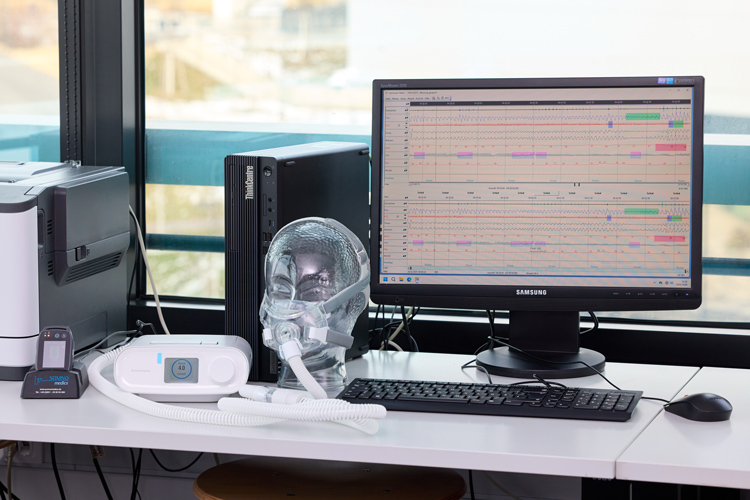
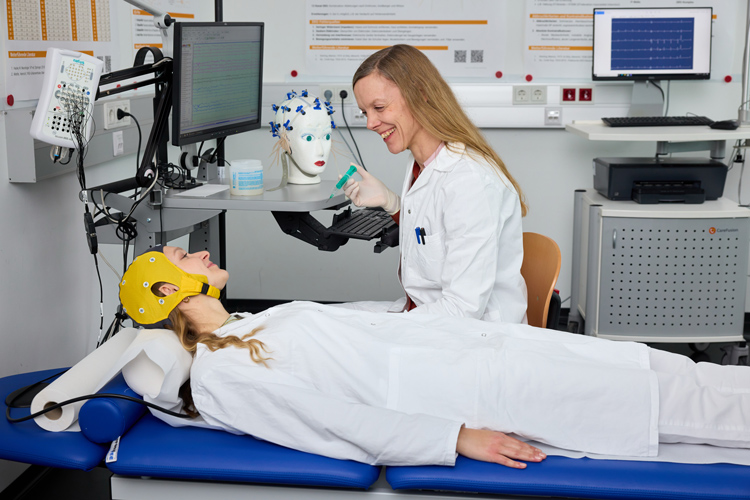
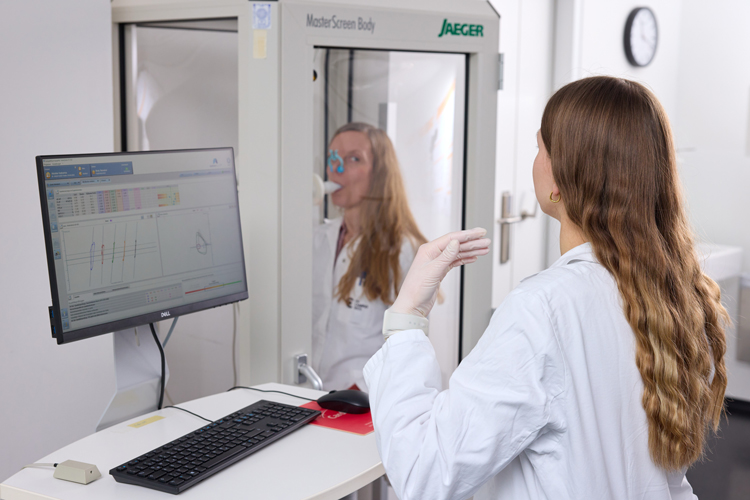
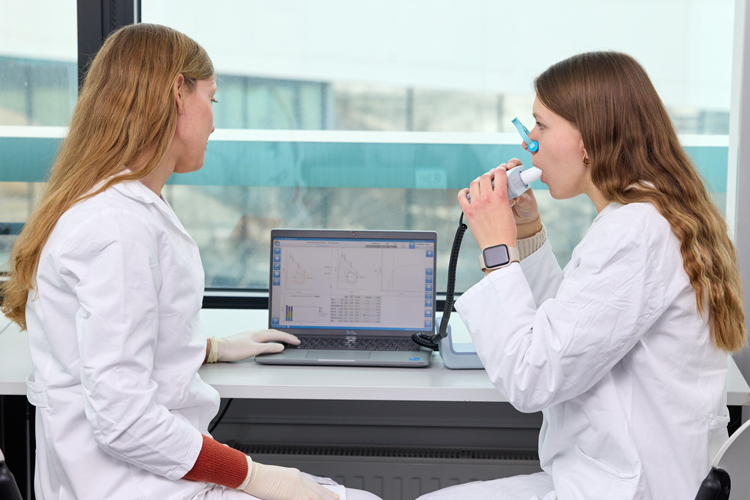
The Academic Expert Program Functional Diagnostics qualifies you for the evidence-based analysis and resolution of complex diagnostic and therapeutic issues in pulmonary, sleep medicine, cardiological, and neurological functional diagnostics. Scientifically sound content, modern teaching methods, and hands-on work with state-of-the-art equipment combine innovation with clinical expertise. With flexible learning formats and few campus-based sessions, the program is ideally suited for completion alongside your professional work.

Department
Health Sciences

Highlights

  • Specialized in-depth study in cardiology, pulmonology, and neurology

  • Diagnostics in sleep medicine

  • Ultrasound

  • State-of-the-art research and laboratory infrastructure

  • Seamless progression to the Master’s (CE) in Health Studies


    Facts

    Final degree

    Academic Expert in Functional Diagnostics*

    Duration of course
    2 semesters
    Organisational form
    part-time

    Tuition fee

    Once payent € 7.350,-1

    + ÖH-Contribution + optional costs for additional services, if applicable2

    ECTS
    60 ECTS
    Language of instruction
    German

    Application Wintersemester 2026/27

    01. March 2026 - 15. June 2026

    Study places

    18

    1 Alternative payment plan for semester fees available upon request. Full details on tuition fees can be found in the general tuition regulations
    2 The costs depend on the additional services selected from the University of Applied Sciences Campus Vienna, such as work clothing, licenses, tutorials, or excursions.
    * Subject to approval by the relevant bodies or AQ Austria.


    Before the studies

    This program in continuing education is designed for biomedical scientists in functional diagnostics who wish to deepen and expand their knowledge in a targeted manner and elevate their expertise to a new professional level. It also opens up new opportunities for anyone seeking to specialize or change careers within the field of functional diagnostics. If you have an interest in scientific work and evidence-based clinical practice, this program in continuing education offers you the ideal framework for further developing your diagnostic skills.

    Why you should study with us

    Deeper expertise. Further career advancement.

    In-depth, practice-oriented specialization with a clear professional profile.

    Science meets application

    Current research, modern teaching methods, and digital learning formats combine scientific insights with practice-oriented learning.

    Continuing education without compromise

    Thanks to few on-campus sessions and a high proportion of online learning, the program can be easily balanced with work and personal life—flexible, predictable, and practice-oriented.

    Relevant admission requirements

    The relevant admission requirements for this academic expert program are:

    • a completed Bachelor’s degree in biomedical science in accordance with FH-MTD-AV or
    • a diploma in biomedical science in accordance with FH-MTD-AV or
    • an equivalent or higher-level final degree from a domestic or foreign post-secondary or tertiary educational institution in the field of biomedical science.

    If a post-secondary degree (e.g., diploma) is presented, the following must also be provided:

    • a general university entrance qualification, evidenced by an
      • Austrian secondary school leaving certificate (AHS, BHS, higher education entrance qualification) or
      • a certificate of a limited higher education entrance qualification for the respective field of study or
      • an equivalent foreign certificate
    • or, alternatively, by subject-specific supplementary exams in German (B2).

    Additional requirements

    In addition, proof of valid registration in the Health Professions Register must be provided.

    Language requirements for admission

    The required language level according to the Common European Framework of Reference for Languages (CEFR) is at least

    • German - level B2.

    Legalization of foreign documents

    Applicants may require legalization of documents from countries other than Austria in order for them to have the evidential value of domestic public documents. Information on the required legalizations can be found here in PDF format.

    Translation of your documents

    For documents that are neither in German nor English, a translation by a sworn and court-certified interpreter is required. Your original documents should have all the necessary legalization stamps before translation so that the stamps are also translated. The translation must be firmly attached to the original document or a legalized copy.

    Online application - uploading documents

    As part of your online application, upload scans of your original documents including all required legalization stamps. For documents not issued in German or English, scans of the corresponding translations must also be uploaded. The head of the study program decides on the equivalence of international (higher) education qualifications. Therefore, your documents can only be checked as part of the ongoing application process.

    Applicants with a German "Fachhochschulreife"

    The German "Fachhochschulreife" (German advanced technical college entrance qualification) is not formally equivalent to the Austrian general university entrance qualification. Whether access to the Bachelor's degree program is possible via a relevant professional qualification and which additional examinations must be taken for this is decided by the head of the degree program or study program after reviewing the application documents in the course of the admission procedure. In your online application in the selection field "Relevant admission requirement", please select the item "Foreign limited higher education entrance qualification".

    Your path to studying at Hochschule Campus Wien begins with your registration on our application platform. You can start your application directly in your online account or activate a reminder if the application phase has not yet started.

    Documents for your online application

    Proof of identity

    • passport or
    • identity card or
    • Austrian driving license (proof of citizenship required) or
    • residence permit (proof of citizenship required)

    Proof of citizenship

    Proof of citizenship is only required if you have uploaded an Austrian driving license or residence permit as proof of identity. For foreign documents, please upload them together in one file:

    • scan of the original document and
    • legalization (if necessary - find out here) and
    • German or English translation by a certified legal interpreter (if the original document was not issued in German or English)

    Change of name - proof

    • e.g. marriage certificate - only required if your current name does not match the name on your proof of identity or on the documents required to prove the admission requirements

    PRÜFEN - Proof of fulfillment of the relevant admission requirement

    • Bachelor's certificate of … or
    • Diploma certificate of … or
    • proof of another relevant degree in the field of Biomedical Science of at least the same level of higher education from a recognized domestic or foreign post-secondary educational institution

    If you have not yet completed your studies, please upload proof of all courses completed to date as part of the relevant degree program, including ECTS credits.


    Proof of registration in the register for professionals

    Proof of valid registration in the Austrian Registry of Health Care Professions


    Curriculum vitae in tabular form in German


    Letter of motivation in German


    Legalizations and translations, if applicable

    • see tab “Foreign documents and degrees” above

    Your application is valid once you have completely uploaded the required documents. If you do not have all the documents at the time of your online application, please submit them immediately upon receipt by email to the administration of your study program (see section “Contact”).

    After completing your online application, you will receive an email confirmation with information on the next steps.

    The admission procedure consists of two stages. 

    Formal review

    The first stage is your online application. We will review the submitted documents to verify that you meet the formal admission requirements. The second step is a personal admission interview, during which we would like to learn more about your motivations, skills, and knowledge. 

    Admission interview

    The next step is a structured admission interview. A documentation form is used to assess the applicants’ educational and professional motivation.´

    We assess professional and social qualifications, including motivation, clarity of goals, performance, and perseverance. This process ensures that the program’s quality standards are maintained for students and reduces the risk of dropouts. If necessary, the interview can also be conducted online via video call.

    Applicants are ranked according to criteria assessed during the admission interview. Evaluations are documented in a transparent manner in accordance with the established criteria. The selection criteria are exclusively subject-related. 
     

    Learn more about the program's content and structure; we'll also answer any questions you may have about admission requirements and the application process.

    Dates

    • Thu, 23rd April 2026, 6.00pm
    • Wed, 20th May 2026, 6.00pm
    • Fri, 12th June 2026, 5.00pm
    • Tue, 30th June 2026, 5.00pm

    Join one of the appointments above using the Zoom-Link The same link is valid for all of the above appointments. (Link: https://hcw-ac-at.zoom.us/j/99069263976)


    During the studies

    Hochschule Campus Wien is distinguished by its extensive expertise and large network. As the only university of applied sciences in Austria, Hochschule Campus Wien trains students in all seven legally regulated advanced medical, therapeutic, and diagnostic health professions, as well as in midwifery. The Vienna Healthcare Group is an important partner in the areas of education, research, and development.

    Modern infrastructure and professional community

    We also work closely with the professional association biomed austria. Professional events such as the annual conference of biomedical scientists are held regularly on our campus. At our attractive main campus, you will also benefit from our modern infrastructure, which includes L2 laboratories (safety level 2 laboratories). In addition, you will gain access to an interdisciplinary professional community. There is great potential in research projects at the interface of health and engineering. 

    Wide range of functional tests

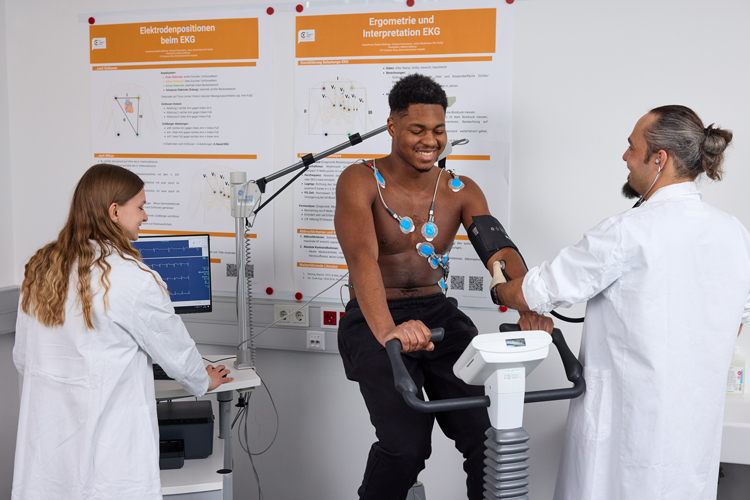
    In the Academic Expert Program Functional Diagnostics, you will acquire in-depth expertise in the performance, analysis, and interpretation of cardiological, pulmonological, neurological, and sleep medicine functional tests—ranging from resting and stress diagnostics to the evaluation of complex functional disorders. In addition, you will focus on the safe use, calibration, and digital networking of systems for functional diagnostics and deepen your skills in interdisciplinary collaboration at diagnostic interfaces. Through journal clubs and practice-oriented project work, you will develop your own research questions in the field of functional diagnostics, methodically evaluate your results, and present your findings in professional discussion forums, thereby combining scientific work with innovative approaches.

    • Targeted specializations and various areas of functional diagnostics
    • Up-to-date content and methods, as well as practical exercises
    • Science, research, and ethics: From concept to publication—simulation of research projects and participation in journal clubs.
    • Management and law: In-depth study of the MTD Act, quality management according to ISO 15189, and strategic planning for freelance practice.
       

    Module Review courses in anatomy, physiology, histology, pathology
    1 SWS
    5 ECTS
    Start your studies | SE

    Start your studies | SE

    1 SWS   1 ECTS

    Content

    • Introduction to the degree program and the learning environment
    • Overview of the curriculum and study program
    • ECTS system and workload planning
    • Milestone planning and semester structure
    • Risk management and buffer times in the curriculum
    • Team building and communication rules in the year group
    • Setting up learning networks and collaboration platforms
    • Portfolio work to document subject specialization

    Teaching method

    • Interactive introductory session
    • Group work / team building
    • Peer learning
    • Workshop on study planning
    • Portfolio work
    • Reflection sessions
    • Blended learning (optional for materials)

    Examination

    Continuous assessment

    Literature

    Die Fachliteratur wird in Abstimmung mit der jeweiligen Lehrperson ergänzt.

    Teaching language

    Deutsch

    1 SWS
    1 ECTS
    anatomy | VO

    anatomy | VO

    0 SWS   1 ECTS

    Content

    • Organization and structure of the human organism
    • Repetition of basic anatomical knowledge
    • Structure-function relationships and their interpretation
    • Anatomical variants vs. standard findings
    • Networking of anatomical knowledge with medical-therapeutic specialties
    • Clinical relevance of anatomical structures

    Teaching method

    • Blended learning (digital modules, self-study)
    • Interactive learning platforms
    • Case-based exercises (structure-function relationships)
    • Peer learning / group work

    Examination

    Final exam

    Literature

    • Aumüller, G., et al.: Anatomie, Duale Reihe, 2. Auflage (Thieme, Stuttgart, 2010)
    • Platzer, W., et al.: Taschenatlas Anatomie  12. Auflage (Thieme, Stuttgart, 2018)

    Teaching language

    Deutsch

    1 ECTS
    pathology | VO

    pathology | VO

    0 SWS   2 ECTS

    Content

    • Causes of disease and underlying mechanisms (etiology, pathogenesis)
    • Analysis of etiology-pathways
    • Morphological tissue changes of important diseases
    • Interpretation of histological and imaging findings
    • Classification of pathological patterns (e.g. forms of necrosis, degrees of dysplasia)
    • Linking pathological changes with diagnostic results
    • Significance of various diseases for patients
    • Selection of diagnostic and therapeutic options from guidelines

    Teaching method

    • Lecture
    • Case discussions and interactive discussions
    • Problem-Based Learning (PBL)
    • blended learning
    • Peer learning / group work
    • Digital image analysis

    Examination

    Final exam

    Literature

    • Böcker, W. et al: Lehrbuch Pathologie, 6. Auflage (Elsevier, München, 2019);
    • Riede, U.-K. et al: Allgemeine und spezielle Pathologie, 2. Auflage (Springer, Berlin, 2017)

    Teaching language

    Deutsch

    2 ECTS
    physiologie | VO

    physiologie | VO

    0 SWS   1 ECTS

    Content

    • Basic concepts of physiology
    • Structure and function of the human organism
    • Physiological processes in the organ systems
    • Structure-function relationships
    • Anatomical variants and their functional significance
    • Linking physiological principles with diagnostic applications

    Teaching method

    • Lecture
    • Interactive discussions
    • Blended learning (digital modules presence)
    • Problem-Based Learning (PBL)
    • Peer learning / group work
    • Case studies on the application of physiological principles

    Examination

    Continuous assessment

    Literature

    • Silbernagl, S., et al: Physiologie. 9. Auflage (Thieme, Stuttgart, 2019)
    • Silbernagl, S., Despopoulos, A.: Taschenatlas Physiologie. 9. Auflage (Thieme, Stuttgart, 2018)

    Teaching language

    Deutsch

    1 ECTS
    Module scientific work

    scientific work

    1 SWS   5 ECTS

    Examination

    : Portfolio (individual work) with preparation of a Critically Appraised Topic (CAT) including a well-founded research question, documented literature research, structured summary of evidence and reflective presentation of the methodological approach.

    1 SWS
    5 ECTS
    Scientific work and literature research | SE

    Scientific work and literature research | SE

    0.5 SWS   2 ECTS

    Content

    • Derivation and justification of scientific questions
    • Structuring research questions (e.g. PICO)
    • Systematic literature research in subject-specific databases
    • Critical selection and documentation of relevant literature
    • Reflection on the opportunities and limitations of AI-supported research

    Teaching method

    • Problem-oriented learning
    • Research-based and self-directed learning
    • Guided literature research exercises
    • Moderated peer learning
    • Reflection tasks / learning journal

    Examination

    Module exam

    Literature

    • Ritschl, V., Weigl, R. und Stamm, T.: Wissenschaftliches Arbeiten und Schreiben. Verstehen, Anwenden, Nutzen für die Praxis. 1. Auflage (Springer-Verlag, Berlin Heidelberg 2016).
    • Niedermair, K.: Recherchieren und Dokumentieren. 1. Auflage (Huter & Roth KG, Wien, 2010).

    Die Fachliteratur wird in Abstimmung mit der jeweiligen Lehrperson ergänzt.

    Teaching language

    Deutsch

    0.5 SWS
    2 ECTS
    Evidence-based practice and critically appraised topic | SE

    Evidence-based practice and critically appraised topic | SE

    0.5 SWS   3 ECTS

    Content

    • Fundamentals of evidence-based practice
    • Evidence hierarchies and study designs
    • Critical evaluation of scientific studies
    • Evidence assessment methods (e.g. GRADE)
    • Creation of structured CATs
    • Derivation of practice-relevant conclusions and critical reflection on the quality of evidence

    Teaching method

    • Structured literature discussion
    • Guided Critical Appraisal
    • Project-oriented learning (CAT creation)
    • Self-directed learning
    • Presentation and feedback formats
    • Collegial peer feedback

    Examination

    Module exam

    Literature

    Die Fachliteratur wird in Abstimmung mit der jeweiligen Lehrperson ergänzt.

    Teaching language

    Deutsch

    0.5 SWS
    3 ECTS
    Module Taking medical history, communication and conversation skills
    1 SWS
    5 ECTS
    Taking medical history, communication and conversation skills | ILV

    Taking medical history, communication and conversation skills | ILV

    1 SWS   5 ECTS

    Content

    Data collection-documentation, anamnesis etc.,
    Role plays, case studies

    Teaching method

    E-learning, blended learning/delivering and activating form, flipped classroom

    Examination

    Continuous assessment: Practical examination and reflection discussion


    Literature

    Die Fachliteratur wird in Abstimmung mit der jeweiligen Lehrperson ergänzt.

    Teaching language

    Deutsch

    1 SWS
    5 ECTS
    Module Cardio-pulmonological, neurological basics
    1.5 SWS
    5 ECTS
    Cardio-pulmonological, neurological basics | ILV

    Cardio-pulmonological, neurological basics | ILV

    1.5 SWS   5 ECTS

    Content

    Repetition of the contents of the ILV Functional Diagnostics in the Bachelor's program, additionally BGA

    Teaching method

    Scripts, flipped classroom, presenter and activating form

    Examination

    Final exam

    Literature

    Die Fachliteratur wird in Abstimmung mit der jeweiligen Lehrperson ergänzt.

    Teaching language

    Deutsch

    1.5 SWS
    5 ECTS
    Module Patient safety, management and ergonomics
    1 SWS
    5 ECTS
    Ergonomics | ILV

    Ergonomics | ILV

    0.5 SWS   3 ECTS

    Content

    Patient positioning, ergonomic working

    Teaching method

    Blended learning, flipped classroom, delivering and activating form

    Examination

    Continuous assessment

    Literature

    Die Fachliteratur wird in Abstimmung mit der jeweiligen Lehrperson ergänzt.

    Teaching language

    Deutsch

    0.5 SWS
    3 ECTS
    Patient safety and management | VO

    Patient safety and management | VO

    0.5 SWS   2 ECTS

    Content

    Patient education and step-by-step diagnostics, sources of error

    Teaching method

    E-learning, scripts

    Examination

    Continuous assessment

    Literature

    Die Fachliteratur wird in Abstimmung mit der jeweiligen Lehrperson ergänzt.

    Teaching language

    Deutsch

    0.5 SWS
    2 ECTS
    (5 ECTS of your choice)
    Module Sleep medicine
    1.5 SWS
    5 ECTS
    PSG: Implementation, interpretation & therapy | ILV

    PSG: Implementation, interpretation & therapy | ILV

    1 SWS   3 ECTS

    Content

    PSG, PG derivation, interpretation, CPAP/APAP therapy, mask adjustments, BGA and possibly arterial blood sampling

    Teaching method

    Flipped classroom, blended learning, presenting and
    activating form, simulation

    Examination

    Module exam

    Literature

    Die Fachliteratur wird in Abstimmung mit der jeweiligen Lehrperson ergänzt.

    Teaching language

    Deutsch

    1 SWS
    3 ECTS
    Sleep - Basics | VO

    Sleep - Basics | VO

    0.5 SWS   2 ECTS

    Content

    Physiology and pathologies of sleep

    Teaching method

    E-learning, scripts

    Examination

    Module exam

    Literature

    Die Fachliteratur wird in Abstimmung mit der jeweiligen Lehrperson ergänzt.

    Teaching language

    Deutsch

    0.5 SWS
    2 ECTS

    Module Biomedical findings in functional diagnostics, job description and legal framework
    1 SWS
    5 ECTS
    Roles and legal framework | VO

    Roles and legal framework | VO

    0.5 SWS   1 ECTS

    Content

    • Legal requirements and compliance in the diagnostic process
    • Evidence-based interpretation of findings and their influence on quality
    • Creation of standardized, legally correct findings
    • Interdisciplinary communication in the diagnostic context
    • Strategies for quality assurance and error prevention
    • Overview of relevant legal framework conditions for healthcare professions

    Teaching method

    • Lecture
    • Interactive discussions
    • Case discussions (legal and diagnostic issues)
    • Problem-Based Learning (PBL)
    • blended learning
    • Peer learning / group work
    • Exercises on the preparation of findings and legal assessment

    Examination

    Continuous assessment

    Literature

    Die Fachliteratur wird in Abstimmung mit der jeweiligen Lehrperson ergänzt.

    Teaching language

    Deutsch

    0.5 SWS
    1 ECTS
    Biomedical findings in functional diagnostics | VO

    Biomedical findings in functional diagnostics | VO

    0.5 SWS   4 ECTS

    Content

    Legal framework/assessment, interpetation,
    QM, legal situation, professionalization/portfolio

    Teaching method

    E-learning, blended learning, scripts, case studies

    Examination

    Continuous assessment

    Literature

    Die Fachliteratur wird in Abstimmung mit der jeweiligen Lehrperson ergänzt.

    Teaching language

    Deutsch

    0.5 SWS
    4 ECTS
    Module Research and ethics in functional diagnostics
    1 SWS
    5 ECTS
    Ethics in functional diagnostics | VO

    Ethics in functional diagnostics | VO

    0.5 SWS   2.5 ECTS

    Content

    • Analysis of ethical principles and guidelines in the context of functional diagnostics.
    • Evaluation of the relevance of these principles for clinical decision-making processes.
    • Reflection on moral dilemmas in the performance of diagnostic procedures.
    • Argumentation of evidence-based solutions for ethical issues.
    • Discussion of legal and data protection requirements in functional diagnostics.
    • Importance of data protection and scientific integrity for patients' rights.

    Teaching method

    • E-Learning
    • Scripts
    • Case studies
    • Lecture (VO) with interactive elements.
    • Discussions on ethical and legal issues.
    • Case studies to analyze moral dilemmas.
    • Group work to develop evidence-based solutions
    • Literature work
    • Reflection exercises on data protection and ethical standards.

    Examination

    Continuous assessment

    Literature

    Die Fachliteratur wird in Abstimmung mit der jeweiligen Lehrperson ergänzt.

    Teaching language

    Deutsch

    0.5 SWS
    2.5 ECTS
    Research in functional diagnostics | VO

    Research in functional diagnostics | VO

    0.5 SWS   2.5 ECTS

    Content

    • Analysis of scientific literature on functional diagnostics and evaluation of the quality of evidence for clinical application.
    • Reflection on methodological approaches in research and their influence on the validity and stability of diagnostic procedures.
    • Development of research designs for the investigation of specific questions in functional diagnostics.
    • Justification of the choice of methods and statistical procedures.
    • Critical interpretation of research results and derivation of practice-oriented recommendations for clinical diagnostics.

    Teaching method

    • Lecture (VO) with theoretical basics.
    • Literature work: analysis of current scientific studies.
    • Group work: development and discussion of research designs.
    • Case studies: Application of research results to diagnostic questions.
    • Discussions on methodological and ethical aspects.
    • Online modules to supplement (distance learning component).
    • Presentations: Presentation of research concepts and results.

    Examination

    Continuous assessment

    Literature

    Die Fachliteratur wird in Abstimmung mit der jeweiligen Lehrperson ergänzt.

    Teaching language

    Deutsch

    0.5 SWS
    2.5 ECTS
    Module Pharmacology and emergency management
    1.5 SWS
    5 ECTS
    Emergency management and first aid | ILV

    Emergency management and first aid | ILV

    1 SWS   3 ECTS

    Content

    First aid measures, resuscitation

    Teaching method

    Blended learning, flipped classroom, delivering and activating form

    Examination

    Continuous assessment

    Literature

    Die Fachliteratur wird in Abstimmung mit der jeweiligen Lehrperson ergänzt.

    Teaching language

    Deutsch

    1 SWS
    3 ECTS
    Pharmacology | VO

    Pharmacology | VO

    0.5 SWS   2 ECTS

    Content

    Drug administration (lysis, sleeping pills), O2 titration

    Teaching method

    Blended learning, scripting

    Examination

    Final exam

    Literature

    Die Fachliteratur wird in Abstimmung mit der jeweiligen Lehrperson ergänzt.

    Teaching language

    Deutsch

    0.5 SWS
    2 ECTS
    (15 ECTS of your choice)
    Module Organ module Cardiology
    1.5 SWS
    5 ECTS
    Case studies | SE

    Case studies | SE

    0.5 SWS   3 ECTS

    Content

    • Analysis and critical evaluation of clinical case studies.
    • Integration of relevant findings in case processing.
    • Derivation of differentiated diagnostic and therapeutic options.
    • Development of evidence-based arguments for clinical decisions.
    • Comparison of different approaches to case studies.
    • Consideration of interprofessional perspectives and current evidence-based recommendations.

    Teaching method

    Project work, portfolio

    Examination

    Continuous assessment

    Literature

    Die Fachliteratur wird in Abstimmung mit der jeweiligen Lehrperson ergänzt.

    Teaching language

    Deutsch

    0.5 SWS
    3 ECTS
    Advanced cardiological examinations | ILV

    Advanced cardiological examinations | ILV

    1 SWS   2 ECTS

    Content

    Exercise ECG, 24-hour ECG, HRV, lactate sport, PAD

    Teaching method

    Blended learning, flipped classroom, presenting and activating form

    Examination

    Continuous assessment

    Literature

    Die Fachliteratur wird in Abstimmung mit der jeweiligen Lehrperson ergänzt.

    Teaching language

    Deutsch

    1 SWS
    2 ECTS
    Module Organ module Neurology
    1.5 SWS
    5 ECTS
    Case studies | SE

    Case studies | SE

    0.5 SWS   3 ECTS

    Content

    • Analysis and critical evaluation of clinical case studies.
    • Integration of relevant findings in case processing.
    • Derivation of differentiated diagnostic and therapeutic options.
    • Development of evidence-based arguments for clinical decisions.
    • Comparison of different approaches to case studies.
    • Consideration of interprofessional perspectives and current evidence-based recommendations.

    Teaching method

    Project work, portfolio

    Examination

    Continuous assessment

    Literature

    Die Fachliteratur wird in Abstimmung mit der jeweiligen Lehrperson ergänzt.

    Teaching language

    Deutsch

    0.5 SWS
    3 ECTS
    Advanced neurological examinations | ILV

    Advanced neurological examinations | ILV

    1 SWS   2 ECTS

    Content

    NLG, evoked potentials, epilepsy, long-term monitoring, EMG, pediatric EEG

    Teaching method

    Blended learning, flipped classroom, presenting and activating form

    Examination

    Continuous assessment

    Literature

    Die Fachliteratur wird in Abstimmung mit der jeweiligen Lehrperson ergänzt.

    Teaching language

    Deutsch

    1 SWS
    2 ECTS
    Module Organ module Pulmonology
    1.5 SWS
    5 ECTS
    Case studies | SE

    Case studies | SE

    0.5 SWS   3 ECTS

    Content

    • Analysis and critical evaluation of clinical case studies.
    • Integration of relevant findings in case processing.
    • Derivation of differentiated diagnostic and therapeutic options.
    • Development of evidence-based arguments for clinical decisions.
    • Comparison of different approaches to case studies.
    • Consideration of interprofessional perspectives and current evidence-based recommendations.

    Teaching method

    Project work, portfolio

    Examination

    Continuous assessment

    Literature

    Die Fachliteratur wird in Abstimmung mit der jeweiligen Lehrperson ergänzt.

    Teaching language

    Deutsch

    0.5 SWS
    3 ECTS
    Advanced pulmonary examinations | ILV

    Advanced pulmonary examinations | ILV

    1 SWS   2 ECTS

    Content

    Spiroergometry, bronchospasmolysis, diffusion measurement, provocation, respiratory muscle strength measurement, pulse oscillometry, arterial blood sampling

    Teaching method

    Blended learning, flipped classroom, presenting and activating form

    Examination

    Continuous assessment

    Literature

    Die Fachliteratur wird in Abstimmung mit der jeweiligen Lehrperson ergänzt.

    Teaching language

    Deutsch

    1 SWS
    2 ECTS
    Module Advanced sleep medicine
    1.5 SWS
    5 ECTS
    Case studies | SE

    Case studies | SE

    0.5 SWS   3 ECTS

    Content

    • Analysis and critical evaluation of clinical case studies.
    • Integration of relevant findings in case processing.
    • Derivation of differentiated diagnostic and therapeutic options.
    • Development of evidence-based arguments for clinical decisions.
    • Comparison of different approaches to case studies.
    • Consideration of interprofessional perspectives and current evidence-based recommendations.

    Teaching method

    Project work, portfolio

    Examination

    Continuous assessment

    Literature

    Die Fachliteratur wird in Abstimmung mit der jeweiligen Lehrperson ergänzt.

    Teaching language

    Deutsch

    0.5 SWS
    3 ECTS
    Scoring, advanced examinations | ILV

    Scoring, advanced examinations | ILV

    1 SWS   2 ECTS

    Content

    Scoring, BIPAP, ASV, O2 titration, arterial blood sampling

    Teaching method

    Blended learning, flipped classroom, presenter and activating form, simulation

    Examination

    Continuous assessment

    Literature

    Die Fachliteratur wird in Abstimmung mit der jeweiligen Lehrperson ergänzt.

    Teaching language

    Deutsch

    1 SWS
    2 ECTS

    Teaching times
    1 block per month, on-site:

    • Thursday afternoon
    • Friday and Saturday all-day
       

    After graduation

    Graduates of the academic expert program benefit from excellent career opportunities in a growing, interdisciplinary field. The specialized training qualifies graduates for demanding specialist and interface positions in the health, sports, and rehabilitation sectors, as well as for roles involving a high degree of personal responsibility and development prospects.

    • Healthcare and medical facilities

    • Sports and performance diagnostics

    • Rehabilitation and prevention

      Networking with graduates and organizations

      We work closely with the Vienna Healthcare Group, private laboratories, the Medical University of Vienna and European universities, the professional association biomed austria, and healthcare institutions. This provides you with opportunities for practical learning phases, job searches, or participation in research and development activities. Many of our partnerships are listed on the Campusnetzwerk platform. It’s always worth taking a look—it might lead you to a new job or an interesting event hosted by our cooperation partners!

      Research projects and activities

      Quick Check Validierung

      Head of project: Mag. Dr. Peter Putz


      Downloads

      Infofolder Health Sciences (content in German)
      pdf, 1,024 KB

      Contact

      Head of program

      Administration

      Andreas Moser

      Favoritenstraße 226, D.1.33 (Gebäudeübersicht)
      1100 Wien

      +43-1-6066877-4130
      func-dia@hcw.ac.at

      Office hours
      Thursday and Friday
      2.00 - 5.00pm

      Teaching staff and research staff


      You want to know more? We will help you.


      Have you found all the information you are looking for?

      • Yes
      • No