Frequently searched

Our research profile is characterised by five interdisciplinary research areas. They are based on forward-looking disciplines at our university, which we combine with each other.
The research areas are based on the 17 Sustainable Development Goals (SDGs) of the United Nations.
Our projects and research activities are always assigned to one, and often several, research areas and SDGs, thus reflecting our interdisciplinary approach.
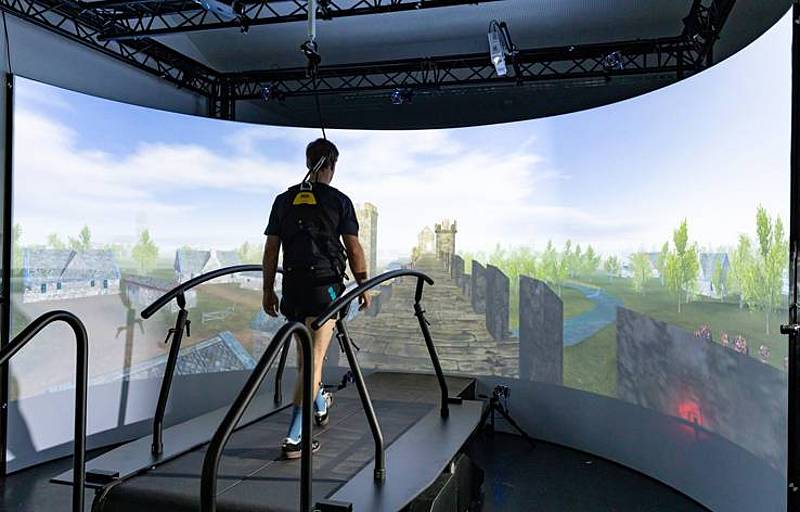
Digital innovations are reshaping every area of life and the economy—from industrial manufacturing and healthcare to secure information processing. Our research focuses on developments in electronics, high-tech manufacturing, clinical engineering, green mobility, computer science, and IT security. We combine engineering expertise with digital technologies—from artificial intelligence and automation to networked systems, secure data processing, and intelligent applications in healthcare. In our projects we develop sensors and software solutions for real-world applications, secure IT infrastructure, sustainable manufacturing technologies, and digital assistance systems in the medical field.
Our research is interdisciplinary, application-oriented, and closely connected to industry as well as national and international partners. It also includes basic research to underpin our applied research and development projects. This research area serves as a catalyst and mediator of technological innovation across the seven departments of Hochschule Campus Wien. Through our research activities, we strengthen the technical expertise of our researchers and students and actively contribute to Vienna’s further development as an innovation hub.
People’s living environments are shaped by their needs for safety and quality of life - and by the organizational and technological advances designed to meet them. Efficient and secure energy supply, distribution, and consumption are critical, as is the sustainable use of society’s scarce resources. Sustainable mobility as well as its safe, intelligent implementation across different modes and means of transport is essential to society and provides the framework for modern passenger and freight transport.
For future living environments to function reliably, the planning, construction, maintenance, and safe operation of essential infrastructure are of fundamental importance. This includes the required structures and buildings, as well as the technical systems and facilities that ensure safe, reliable service.
The research area Design, Mobility, and Infrastructure addresses these challenges and scientific questions holistically. This includes technological aspects as well as sustainability-oriented economic, ecological, and social perspectives. This approach increases resilience to the growing adverse impacts of climate change and security policy conditions.
Life sciences explore life —from molecular structures and cellular processes to complex biological systems at the level of entire organisms. Building on an understanding of life’s complex mechanisms, we develop innovative solutions for medicine, biotechnology, and environmental research. Health is a state of mental, physical, and social well-being, not merely the absence of disease or infirmity. Quality of life means that people can live as actively as possible, maintain adequate social connections, and shape their lives according to their needs.
Through our research in therapy, diagnostics, and digital health, we make demonstrable contributions to health and quality of life—from analytics and assessments to telehealth, user experience, and efficacy studies. The research area Life Sciences, Health, and Quality of Life offers numerous interdisciplinary connections, particularly within our university’s departments of Health Sciences, Applied Nursing Science, and Applied Life Sciences.
This research area addresses social justice, social inequality, and social security, administrative governance instruments, as well as public finance, accounting, and taxation. We focus on legal measures, including those in tax law, as well as economic, social policy, and educational measures, along with social interventions to safeguard human rights, social peace, and social cohesion—aiming for a good, socially just, inclusive, and secure life for all. This also encompasses research on how digital technologies and robotics relate to and interact with societal security.
The research area Sustainability and Environment addresses the responsible use of natural resources and promotes resilient ecological, social, and economic systems. We focus on sustainable strategies that integrate ecological, economic, and social aspects, for example, through circular materials, resource efficient processes, and holistic design principles.
Key priorities include preserving biodiversity, reducing greenhouse gas emissions, and fostering social sustainability through equitable participation, equal opportunity, and improved quality of life for current and future generations. Our research aims to make concrete contributions to solving current environmental and sustainability challenges.
Take a closer look at all our projects on the Projects and Activities page.
We look forward to hearing from you:
Research and Project Coordination Department
forschung@hcw.ac.at