Seven countries, one event
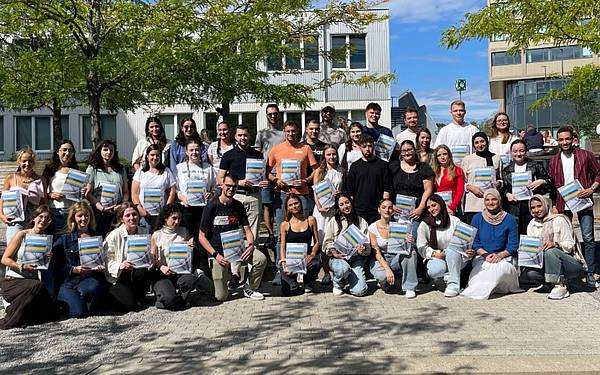
The Erasmus+ Blended Intensive Programme of the Radiological Technology bachelor's program brought international students and lecturers together in Vienna for the third time.
- Health Sciences
- Networking
- Mobility
Frequently searched

part-time
Demographic trends, digitalization, and rising quality standards demand highly qualified experts in the healthcare sector. The master’s program (continuing education) in Health Studies responds to these trends with a clearly structured, modular curriculum: As part of the master’s program (CE), you will choose a 60-ECTS specialization in accordance with the MTD Act (§43)—in sonography, functional diagnostics, histopathology, or cytology. Building on your specialized knowledge, you will expand your scientific, strategic, and interprofessional competencies up to the completion of your Master’s degree. The focus is on evidence-based practice, digitalization in healthcare, public health, as well as management and leadership skills.
Master of Science (Continuing Education) MSc (CE)
€ 12.900,-1
+ ÖH contribution + costs for optional additional services 2
Application winter semester 2026/27
01. March 2026 - 12. July 2026
25
1 Alternative payment plan for semester fees available upon request. Full details on tuition fees can be found in the general tuition regulations.
2 The costs depend on the additional services selected from the University of Applied Sciences Campus Vienna, such as work clothing, licenses, tutorials, or excursions.
* Subject to approval by the relevant bodies or AQ Austria.
Do you work in clinical care, diagnostics, or health management? Would you like to specialize in functional diagnostics, histopathology, cytology, or sonography and build on that foundation to advance your career? Do you want to make effective use of digitalization and AI, lead projects, and collaborate across professional disciplines? The master’s program (continuing education) in Health Studies is ideal for anyone who wants to take on specialized roles, shape quality standards, and advance their career without starting over.
Collaborating with different professional groups opens up new perspectives and strengthens your interprofessional competence.
Through our international network, you’ll broaden your perspective beyond national borders and benefit from international contacts as well as “Internationalization at Home.”
Studying at Hochschule Campus Wien gives you access to a strong research environment.
The required language level according to the Common European Framework of Reference for Languages (CEFR) is at least
Applicants may require legalization of documents from countries other than Austria in order for them to have the evidential value of domestic public documents. Information on the required legalizations can be found here in PDF format.
For documents that are neither in German nor English, a translation by a sworn and court-certified interpreter is required. Your original documents should have all the necessary legalization stamps before translation so that the stamps are also translated. The translation must be firmly attached to the original document or a legalized copy.
As part of your online application, upload scans of your original documents including all required legalization stamps. For documents not issued in German or English, scans of the corresponding translations must also be uploaded. The head of the study program decides on the equivalence of international (higher) education qualifications. Therefore, your documents can only be checked as part of the ongoing application process.
Proof of identity
Proof of citizenship
Proof of citizenship is only required if you have uploaded an Austrian driving license or residence permit as proof of identity. For foreign documents, please upload them together in one file:
Change of name - proof
Proof of fulfillment of the relevant admission requirement
If you have not yet completed your studies, please upload proof of all courses completed to date as part of the relevant study program, including ECTS credits.
Your application is valid once you have completely uploaded the required documents. If you do not have all the documents at the time of your online application, please submit them immediately upon receipt by email to the administration of your study program (see section “Contact”).
After completing your online application, you will receive an email confirmation with information on the next steps.
The admission process consists of meeting the formal admission requirements as part of the online application and a personal admission interview in which we would like to learn more about your motivations, skills, and knowledge.
Online application
Aptitude assessment
Find out about the course content and structure of the program; we’ll also answer any questions you may have about entry requirements and the application process.
Join one of the appointments above using the Zoom-Link. The same link is valid for all of the above appointments. (Link: https://hcw-ac-at.zoom.us/j/99069263976)
In case of any questions regarding your participation in the online infosessions, please refer to healthstudies@hcw.ac.at.
Do you still have questions about the program? Make an appointment with the office at healthstudies@hcw.ac.at and you will receive a personal consultation with the head of program.
At the start of the master’s program (continuing education) in Health Studies, you will deepen your expertise in functional diagnostics, histopathology, cytology, or sonography. Building on this foundation, you will expand your competencies beyond your specialization and develop a profile that combines practice, management, digitalization, and application-oriented research. This will qualify you for positions of responsibility in the healthcare sector.
The blended learning concept, featuring scheduled on-campus blocks and flexible online phases, allows you to balance your career, studies, and personal life while seamlessly integrating the master’s program into your daily routine. The high proportion of digital teaching formats makes the program accessible to interested individuals across the entire German-speaking world while fostering professional exchange across regional and institutional boundaries. A modern infrastructure, along with digital and practice-oriented teaching, ensures sustainable learning and immediate application in your professional practice. Through active involvement in research and development projects, you can address current issues from a scientific perspective and establish valuable contacts for your future career.
Hochschule Campus Wien offers a particularly strong environment for this: With a broad network in healthcare, research, and practice—including close collaborations with the Vienna Healthcare Group and key professional associations—it is firmly anchored in the healthcare sector. As the only university of applied sciences in Austria that trains students in all seven legally regulated medical, therapeutic, and diagnostic health professions as well as training midwives, it brings together comprehensive interprofessional expertise in one location. This opens up valuable opportunities for research projects and diverse perspectives for your professional development.
Continuous assessment
Die Fachliteratur wird in Abstimmung mit der jeweiligen Lehrperson ergänzt.
Deutsch
Final exam
Deutsch
Final exam
Deutsch
Continuous assessment
Deutsch
: Portfolio (individual work) with preparation of a Critically Appraised Topic (CAT) including a well-founded research question, documented literature research, structured summary of evidence and reflective presentation of the methodological approach.
Module exam
Die Fachliteratur wird in Abstimmung mit der jeweiligen Lehrperson ergänzt.
Deutsch
Module exam
Die Fachliteratur wird in Abstimmung mit der jeweiligen Lehrperson ergänzt.
Deutsch
Data collection-documentation, anamnesis etc.,
Role plays, case studies
E-learning, blended learning/delivering and activating form, flipped classroom
Continuous assessment: Practical examination and reflection discussion
Die Fachliteratur wird in Abstimmung mit der jeweiligen Lehrperson ergänzt.
Deutsch
Repetition of the contents of the ILV Functional Diagnostics in the Bachelor's program, additionally BGA
Scripts, flipped classroom, presenter and activating form
Final exam
Die Fachliteratur wird in Abstimmung mit der jeweiligen Lehrperson ergänzt.
Deutsch
Patient positioning, ergonomic working
Blended learning, flipped classroom, delivering and activating form
Continuous assessment
Die Fachliteratur wird in Abstimmung mit der jeweiligen Lehrperson ergänzt.
Deutsch
Patient education and step-by-step diagnostics, sources of error
E-learning, scripts
Continuous assessment
Die Fachliteratur wird in Abstimmung mit der jeweiligen Lehrperson ergänzt.
Deutsch
PSG, PG derivation, interpretation, CPAP/APAP therapy, mask adjustments, BGA and possibly arterial blood sampling
Flipped classroom, blended learning, presenting and
activating form, simulation
Module exam
Die Fachliteratur wird in Abstimmung mit der jeweiligen Lehrperson ergänzt.
Deutsch
Physiology and pathologies of sleep
E-learning, scripts
Module exam
Die Fachliteratur wird in Abstimmung mit der jeweiligen Lehrperson ergänzt.
Deutsch
Continuous assessment
Die Fachliteratur wird in Abstimmung mit der jeweiligen Lehrperson ergänzt.
Deutsch
Final exam
Deutsch
Final exam
Deutsch
Final exam
Deutsch
: Portfolio (individual work) with preparation of a Critically Appraised Topic (CAT) including a well-founded research question, documented literature research, structured summary of evidence and reflective presentation of the methodological approach.
Module exam
Die Fachliteratur wird in Abstimmung mit der jeweiligen Lehrperson ergänzt.
Deutsch
Module exam
Die Fachliteratur wird in Abstimmung mit der jeweiligen Lehrperson ergänzt.
Deutsch
Physiological specimens from selected organ systems are to be treated theoretically
Physiological specimens from selected organ systems are to be microscoped practically
Distance learning
Moodle course with learning videos
Self-assessment with MC quizzes
Flashcards
Continuous assessment
Die Fachliteratur wird in Abstimmung mit der jeweiligen Lehrperson ergänzt.
Deutsch
Selected pathological specimens should be treated theoretically
Selected pathological specimens must relate to physiological specimens treated in the course "Histological Morphology Physiology" (e.g. colon -> colon adenoma)
Selected pathological specimens should be microscoped practically
Distance learning
Moodle course with learning videos
Self-assessment with MC quizzes
Flashcards
Continuous assessment
Die Fachliteratur wird in Abstimmung mit der jeweiligen Lehrperson ergänzt.
Deutsch
: The module is completed with an integrated module grade, which results from the aggregated assessment of all examination-relevant performance of the courses assigned to the module.
Each course contributes a defined proportion of points to the module grade; the sum of all points is 100%.
All examination-relevant partial performances must be completed positively in order to successfully complete the module.
The conversion of the total points achieved into the module grade is carried out according to the following scheme:
Very good: 90-100 %
Good: 80-89 %
Satisfactory: 70-79 %
Sufficient: 60-69 %
Not sufficient: < 60 %
Module exam
Die Fachliteratur wird in Abstimmung mit der jeweiligen Lehrperson ergänzt.
Deutsch
Systematic sectioning in general and organ-specific processing in thematic blocks (including gynecological and urological preparations)
Photo documentation
Application of standardized macroscopy texts Error source analysis and quality assurance
Module exam
Die Fachliteratur wird in Abstimmung mit der jeweiligen Lehrperson ergänzt.
Deutsch
: The module is completed with an integrated module grade, which results from the aggregated assessment of all examination-relevant performances of the courses assigned to the module.
Each course contributes a defined proportion of points to the module grade; the sum of all points is 100%.
All examination-relevant partial performances must be completed positively in order to successfully complete the module.
The conversion of the total points achieved into the module grade is carried out according to the following scheme:
Very good: 90-100 %
Good: 80-89 %
Satisfactory: 70-79 %
Sufficient: 60-69 %
Not sufficient: < 60 %
No grades are awarded in the courses themselves.
Preanalytics, fixation, sample handling, incl. tissue preservation
Artifacts and their diagnostic relevance
Manual vs. automated histology workflows
Overview of special stains & histochemical reactions
Basic knowledge of multiplex, IHC and ISH methods
H&E, PAS, Giemsa, trichrome, silver, elastica staining
- Staining automation: procedure & validation
- Troubleshooting: artifacts, incorrect staining
- First multiplex IHC demonstrations
- Preparation evaluation according to quality criteria
Lecture with image and video examples
Case-based discussions
Online self-study modules (image material, artifact quiz)
Laboratory practical (carry out individual staining)
- Microscopic analysis exercises
- Digital preparations via virtual microscope
- Peer review of staining results
Module exam
Die Fachliteratur wird in Abstimmung mit der jeweiligen Lehrperson ergänzt.
Deutsch
Antigen-antibody principle
Chromogenic and fluorescent systems
ISH basics: CISH, SISH, FISH
Multiplex approaches and titration
Elementary evaluation (score systems)
ISO 15189: Requirements for histopathology
- Validation & verification
- Documentation standards
- Influence of quality on diagnostics
- Critical case analysis
Demonstration laboratory
Online annotation of staining
Short group analyses
Seminar with case studies
- Online reflection
- Group work for troubleshooting
Module exam
Die Fachliteratur wird in Abstimmung mit der jeweiligen Lehrperson ergänzt.
Deutsch
: The module is completed with an integrated module grade, which results from the aggregated assessment of all examination-relevant performance of the courses assigned to the module.
Each course contributes a defined proportion of points to the module grade; the sum of all points is 100%.
All examination-relevant partial performances must be completed positively in order to successfully complete the module.
The conversion of the total points achieved into the module grade is carried out according to the following scheme:
Very good: 90-100 %
Good: 80-89 %
Satisfactory: 70-79 %
Sufficient: 60-69 %
Not sufficient: < 60 %
What is digital pathology/cytology?
Whole slide imaging
File formats & data management
Technical requirements for digitization
Process measures in the histological/cytological workflow prior to digitization
- Self-study modules & e-learning courses
- Digital learning platform with materials
- Asynchronous online lectures
- Discussion forums Online tutorials
- Case-based exercises (structure-function relationships)
Module exam
Die Fachliteratur wird in Abstimmung mit der jeweiligen Lehrperson ergänzt.
Deutsch
IT basics in digital pathology/cytology
Introduction to AI and machine learning in pathology/cytology
Technical requirements for using AI
Practical work with QuPath
Opportunities, risks & limitations of AI in digital pathology/cytology
Learning videos, script, self-tests
Live demonstrations of digital pipelines Practical exercises with real slides
Hands-on in QuPath; scanner testing - Scanning different slides - Testing parameters (resolution, focus, Z-stack, scan mode) - Comparison of different scan qualities - Discussion: What influences image quality? Group work
Case studies
Module exam
Die Fachliteratur wird in Abstimmung mit der jeweiligen Lehrperson ergänzt.
Deutsch
: The final module examination consists of theoretical and practical elements.
Continuous assessment
Die Fachliteratur wird in Abstimmung mit der jeweiligen Lehrperson ergänzt.
Deutsch
Final exam
Deutsch
Blended learning (digital content, self-study)
Interactive learning platform
peer learning/group work
Module exam
Deutsch
Blended learning (digital content, self-study)
Interactive learning platform
Peer learning/group work
Module exam
Deutsch
Module exam
Deutsch-Englisch
: The final module examination consists of theoretical and practical elements.
Presenting and activating form (VO 40%, UE 60%)
Presenter: Lecture, demonstration, video, simulation
Activating: methods of development, guided exercises, problem-based learning, guided self-study (peer-to-peer), group work
Blended learning: integration of face-to-face and online learning
Module exam
Deutsch
State-of-the-art examination techniques and equipment
Innovative examination techniques and equipment/features of ultrasound devices
Differences are identified
Apply innovative techniques, reflect critically
Apply AI techniques, reflect critically
Use of new technical developments in the skills lab/excursion hands-on
Excursion
State-of-the-art and innovations in sonography at the General Electrics Healthcare plant - Zipf ultrasound site
In addition to an ultrasound museum, students gain an insight into the development and production of an ultrasound device and can assess the latest developments of devices on the market in a hands-on setting using tasks set by the lecturer responsible for the module. This includes, in particular, the use of AI techniques and automated functions in the respective systems.
Module exam
- Bloch, B.: Der Sono-Trainer; Thieme, i.d.akt.Auflage
- Hofer, M. (Hrsg.): Sono Grundkurs, , Thieme, i.d.akt.Auflage
- Hofer, M. (Hrsg.): FKDS-Trainer, DIDAMED Verlag GmbH, i.d.akt.Auflage
- Gross, M. (Hrsg.): Sonographie, Schritt für Schritt zur Diagnose, Elsevier GmbH, Urban & Fischer Verlag, i.d.akt.Auflage
- Schmid, G. et al.: Kursbuch Ultraschall: Nach den Richtlinien der DEGUM und der KBV; Thieme, Stuttgart, i.d.akt.Auflage - Dietrich, C.F.: Ultraschall-Kurs: Organbezogene Darstellung von Grund-, Aufbau- und Abschlusskurs. Nach den Richtlinien von KBV, DEGUM, ÖGUM und SGUM; Deutscher Arzte- Verlag: i.d.akt.Auflage
- Amann-Vesti, B.; Thalhammer, C.; Huck, K. (Hrsg): Kursbuch Doppler – und Duplexsonographie, Thieme, Stuttgart, i.d.akt.Auflage
- Flachskampf A.F.: Kursbuch Echokardiografie, Thieme Stuttgart, i.d.akt.Auflage
- Wilkenshoff U., Kruck I.: Handbuch der Echokardiografie, Thieme, Stuttgart, i.d.akt.Auflage
- Hoskins P., Martin K., Thrush A.; Diagnostic Ultrasound – Physics and Equipment, Cambridge University Press, i.d.akt.Auflage
Deutsch
: The module examination in the modules on the organ areas consists of
a) 30 performed sonographic examinations (case studies) from the respective organ areas
b) On the basis of a case study: processing of a sonographic question with subsequent technical discussion and analysis
Presenting and activating form (VO 40%, UE 60%)
Presenter: Lecture, demonstration, video, simulation
Activating: methods of development, guided exercises, problem-based learning, guided self-study (peer-to-peer), group work
Blended learning: integration of face-to-face and online learning
Module exam
Deutsch
Presenting and activating form (VO 40%, UE 60%)
Presenter: Lecture, demonstration, video, simulation
Activating: methods of development, guided exercises, problem-based learning, guided self-study (peer-to-peer), group work
Blended learning: integration of face-to-face and online learning
Module exam
Deutsch
: The module examination in the modules on the organ areas consists of
a) 30 performed sonographic examinations (case studies) from the respective organ areas
b) On the basis of a case study: processing of a sonographic question with subsequent technical discussion and analysis
Module exam
Deutsch
: The final module examination consists of theoretical and practical elements.
Module exam
EFRS Guidelines and Statements
Beardmore C., et at.: Patient Advisory Group (PAG) of the European Society of Radiologie (ESR) & European Federation of Radiographers Societies (EFRS): How can effective communication help radiographers meet the expectations of patients-COMMUNICATION-a joint statement by the ESR & EFRS;
ÖGUM, DEGUM, SGUM
Deutsch
Continuous assessment
Die Fachliteratur wird in Abstimmung mit der jeweiligen Lehrperson ergänzt.
Deutsch
Final exam
Deutsch
Final exam
Deutsch
Final exam
Deutsch
: Portfolio (individual work) with preparation of a Critically Appraised Topic (CAT) including a well-founded research question, documented literature research, structured summary of evidence and reflective presentation of the methodological approach.
Module exam
Die Fachliteratur wird in Abstimmung mit der jeweiligen Lehrperson ergänzt.
Deutsch
Module exam
Die Fachliteratur wird in Abstimmung mit der jeweiligen Lehrperson ergänzt.
Deutsch
: The module is completed with an integrated module grade, which results from the aggregated assessment of all examination-relevant performances of the courses assigned to the module.
Each course contributes a defined proportion of points to the module grade; the sum of all points is 100%.
All examination-relevant partial performances must be completed positively in order to successfully complete the module.
The conversion of the total points achieved into the module grade is carried out according to the following scheme:
Very good: 90-100 %
Good: 80-89 %
Satisfactory: 70-79 %
Sufficient: 60-69 %
Not sufficient: < 60 %
No grades are awarded in the courses themselves.
Anatomy & Histology
Normal cell images
Age-related changes
Artifacts & sources of error
Preanalytics & basic troubleshooting
Cell types & cytologic morphology
Infections (Candida, Gardnerella, Trichomonas, HPV etc.)
Reactive changes
Differentiation of reactive vs. dysplastic
Online lectures/distance learning videos
Interactive self-study modules
Online microscopy/presence microscopy
Forum discussions
Module exam
Die Fachliteratur wird in Abstimmung mit der jeweiligen Lehrperson ergänzt.
Deutsch
Bethesda system
PAP classification
HPV & co-testing
Correlation of clinical findings
Sources of error (pre/analytical)
Quality standards
Difficult specimens
Online lectures/distance learning videos
Group case work and live case discussions
Presence microscopy workshop
Online quality cases
Module exam
Die Fachliteratur wird in Abstimmung mit der jeweiligen Lehrperson ergänzt.
Deutsch
- Basics of extragenital cytology:
malignancy criteria, degeneration, artifacts, screening/diagnosis mode
- Lung cytology: material types, benign/malignant patterns, infections, differentiation reactive vs. malignant - Urinary cytology: preparation types, urothelium, high-grade urothelial lesions, inflammation, radiation damage, therapy effects, basics of the Paris system
Online lectures/distance learning videos
Interactive self-study modules
Online microscopy/presence microscopy
Forum discussions Group case processing and live case discussions
Continuous assessment
Die Fachliteratur wird in Abstimmung mit der jeweiligen Lehrperson ergänzt.
Deutsch
- Cytology of the pleura, peritoneum, pericardium:
Mesothelial morphology, malignant effusions, metastatic malignancies, pattern analysis - Cysts:
Serous, mucous, inflammatory cyst contents, macrophage forms, necrosis, debris, background pattern, rare malignant findings
- Joints:
Synovial & cartilage cells, inflammatory pattern, crystal diseases,
Infectious joint changes
Online lectures/distance learning videos
Interactive self-study modules
Online microscopy/presence microscopy
Forum discussions Group case processing and live case discussions
Continuous assessment
Die Fachliteratur wird in Abstimmung mit der jeweiligen Lehrperson ergänzt.
Deutsch
: The module is completed with an integrated module grade, which results from the aggregated assessment of all examination-relevant performances of the courses assigned to the module.
Each course contributes a defined proportion of points to the module grade; the sum of all points is 100%.
All examination-relevant partial performances must be completed positively in order to successfully complete the module.
The conversion of the total points achieved into the module grade is carried out according to the following scheme:
Very good: 90-100 %
Good: 80-89 %
Satisfactory: 70-79 %
Sufficient: 60-69 %
Not sufficient: < 60 %
No grades are awarded in the courses themselves.
Sample collection (genital, extragenital, anal) and material types
Fixation methods: Alcohol, spray, air drying, LBC fixates
Transport and storage conditions of different sample types
Factors influencing cell quality /pre-analytical artifacts and technical
Troubleshooting
Learning videos, script, self-tests
Module exam
Die Fachliteratur wird in Abstimmung mit der jeweiligen Lehrperson ergänzt.
Deutsch
Strikeouts: Technique, pressure, angle, speed
LBC method
Practical exercises on smears and LBC
Cell block basics (without diagnostics): Plasma thrombin, agar, gel methods
Cytospin
Technical sources of error and methodical troubleshooting
Preparation in the OR
Obtaining material for further analyses (e.g. molecular biology; bacteriology)
Routine staining: Papanicolaou, MGG/Giemsa, H&E
Special stains: PAS, mucin, iron, silver stains, Ziehl-Neelsen reagent science and chemical principles
Staining artifacts: Overstaining, precipitation, unclear cell components
Practical exercises on routine and special stains Comparison of staining variants and methodical troubleshooting
Immunocytology
Theory: learning videos, script, self-tests
Practical part: demonstration, laboratory exercises, peer learning
Module exam
Die Fachliteratur wird in Abstimmung mit der jeweiligen Lehrperson ergänzt.
Deutsch
: The module is completed with an integrated module grade, which results from the aggregated assessment of all examination-relevant performance of the courses assigned to the module.
Each course contributes a defined proportion of points to the module grade; the sum of all points is 100%.
All examination-relevant partial performances must be completed positively in order to successfully complete the module.
The conversion of the total points achieved into the module grade is carried out according to the following scheme:
Very good: 90-100 %
Good: 80-89 %
Satisfactory: 70-79 %
Sufficient: 60-69 %
Not sufficient: < 60 %
What is digital pathology/cytology?
Whole slide imaging
File formats & data management
Technical requirements for digitization
Process measures in the histological/cytological workflow prior to digitization
- Self-study modules & e-learning courses
- Digital learning platform with materials
- Asynchronous online lectures
- Discussion forums Online tutorials
- Case-based exercises (structure-function relationships)
Module exam
Die Fachliteratur wird in Abstimmung mit der jeweiligen Lehrperson ergänzt.
Deutsch
IT basics in digital pathology/cytology
Introduction to AI and machine learning in pathology/cytology
Technical requirements for using AI
Practical work with QuPath
Opportunities, risks & limitations of AI in digital pathology/cytology
Learning videos, script, self-tests
Live demonstrations of digital pipelines Practical exercises with real slides
Hands-on in QuPath; scanner testing - Scanning different slides - Testing parameters (resolution, focus, Z-stack, scan mode) - Comparison of different scan qualities - Discussion: What influences image quality? Group work
Case studies
Module exam
Die Fachliteratur wird in Abstimmung mit der jeweiligen Lehrperson ergänzt.
Deutsch
Continuous assessment
Die Fachliteratur wird in Abstimmung mit der jeweiligen Lehrperson ergänzt.
Deutsch
Legal framework/assessment, interpetation,
QM, legal situation, professionalization/portfolio
E-learning, blended learning, scripts, case studies
Continuous assessment
Die Fachliteratur wird in Abstimmung mit der jeweiligen Lehrperson ergänzt.
Deutsch
Continuous assessment
Die Fachliteratur wird in Abstimmung mit der jeweiligen Lehrperson ergänzt.
Deutsch
Continuous assessment
Die Fachliteratur wird in Abstimmung mit der jeweiligen Lehrperson ergänzt.
Deutsch
First aid measures, resuscitation
Blended learning, flipped classroom, delivering and activating form
Continuous assessment
Die Fachliteratur wird in Abstimmung mit der jeweiligen Lehrperson ergänzt.
Deutsch
Drug administration (lysis, sleeping pills), O2 titration
Blended learning, scripting
Final exam
Die Fachliteratur wird in Abstimmung mit der jeweiligen Lehrperson ergänzt.
Deutsch
Project work, portfolio
Continuous assessment
Die Fachliteratur wird in Abstimmung mit der jeweiligen Lehrperson ergänzt.
Deutsch
Exercise ECG, 24-hour ECG, HRV, lactate sport, PAD
Blended learning, flipped classroom, presenting and activating form
Continuous assessment
Die Fachliteratur wird in Abstimmung mit der jeweiligen Lehrperson ergänzt.
Deutsch
Project work, portfolio
Continuous assessment
Die Fachliteratur wird in Abstimmung mit der jeweiligen Lehrperson ergänzt.
Deutsch
NLG, evoked potentials, epilepsy, long-term monitoring, EMG, pediatric EEG
Blended learning, flipped classroom, presenting and activating form
Continuous assessment
Die Fachliteratur wird in Abstimmung mit der jeweiligen Lehrperson ergänzt.
Deutsch
Project work, portfolio
Continuous assessment
Die Fachliteratur wird in Abstimmung mit der jeweiligen Lehrperson ergänzt.
Deutsch
Spiroergometry, bronchospasmolysis, diffusion measurement, provocation, respiratory muscle strength measurement, pulse oscillometry, arterial blood sampling
Blended learning, flipped classroom, presenting and activating form
Continuous assessment
Die Fachliteratur wird in Abstimmung mit der jeweiligen Lehrperson ergänzt.
Deutsch
Project work, portfolio
Continuous assessment
Die Fachliteratur wird in Abstimmung mit der jeweiligen Lehrperson ergänzt.
Deutsch
Scoring, BIPAP, ASV, O2 titration, arterial blood sampling
Blended learning, flipped classroom, presenter and activating form, simulation
Continuous assessment
Die Fachliteratur wird in Abstimmung mit der jeweiligen Lehrperson ergänzt.
Deutsch
Overview of the current job profile in histopathology and cytology
Rights and duties according to the MTD Act, Health Professionals Register, Medical Practitioners Act
Developments in the healthcare sector with an impact on the job profile (e.g. digitalization, laboratory automation)
Collaboration in an interdisciplinary team
Opportunities for professional development and specialization
Short presentations with discussion (e.g. on developments in professional policy)
Work with legal texts and professional documents (e.g. job descriptions, register extracts),
Group exercises on case studies
Exchange on professional perspectives
Reflection tasks (written or oral) on own role in the histological-cytological environment
Continuous assessment
Die Fachliteratur wird in Abstimmung mit der jeweiligen Lehrperson ergänzt.
Deutsch
Framework conditions for freelance work as a biomedical analyst in Austria - legal, organizational and professional foundations in accordance with the MTD Act, Trade Regulations, Social Security Act, etc.
Comparison of international standards in cytodiagnostics and histopathology - country comparison (e.g. Germany, UK, Scandinavia): Professional roles, qualifications, regulation, quality requirements
Role and importance of professional associations: Cytology: e.g. ÖGZ (Austrian Society for Cytology), QUATE (The Quality Assurance Training an Examiinations in Cervical Cytopathology)
Histopathology: e.g. ÖGPath/ IAP Austria (Austrian Society for Pathology), Federal Association of German Pathologists, ESP (European Society of Pathology)
BMA representations: e.g. biomed Austria (Professional Association of Biomedical Analysts), international networks
Similarities and differences in tasks, methods and processes, Relevant quality requirements and points of contact in everyday laboratory work, Communication and information flows between the disciplines, Interdisciplinary findings: Contributions to overall diagnostic assessment, examples from practice: gynecological cytology, fine needle aspiration, intraoperative frozen sections, importance of cooperation for quality assurance and patient safety
Specialist input on legal principles, professional practice and association structures, group work and comparison of international job profiles in cytology and histopathology, analysis of case studies on freelancing and professional responsibility, discussion of current developments (e.g. quality testing, digitization, EU mobility), optional guest lecture (e.g. BMA with international or freelance experience), interactive case discussions, short specialist inputs with delimitation and comparison tasks, discussion of real laboratory processes
Continuous assessment
Die Fachliteratur wird in Abstimmung mit der jeweiligen Lehrperson ergänzt.
Deutsch
National and international accreditation guidelines (ISO 15189, ISO 17025, ÖAK)
Phases of an accreditation procedure: preparation, implementation, follow-up
Development of a QM documentation system
Understanding roles and responsibilities in the accreditation process
Development of an internal control system
Fundamentals and implementation of quality management systems (QMS)
Digital tools in quality management
Digital pathology & image processing for quality assurance
Error management & risk assessment
Theory input and standards analysis
Exercises on the creation of QM documents (e.g. procedural instructions)
Group work (e.g. accreditation simulation)
Discussion of good practice examples
Online research tasks on standards and legal principles
Case-oriented group work
Peer feedback on process analyses
Literature-based reflection tasks
Discussion of real laboratory examples
Continuous assessment
Die Fachliteratur wird in Abstimmung mit der jeweiligen Lehrperson ergänzt.
Deutsch
: The module is completed with an integrated module grade, which results from the aggregated assessment of all examination-relevant performance of the courses assigned to the module.
Each course contributes a defined proportion of points to the module grade; the sum of all points is 100%.
All examination-relevant partial performances must be completed positively in order to successfully complete the module.
The conversion of the total points achieved into the module grade is carried out according to the following scheme:
Very good: 90-100 %
Good: 80-89 %
Satisfactory: 70-79 %
Sufficient: 60-69 %
Not sufficient: < 60 %
No grades are awarded in the courses themselves.
Oncogenic signaling pathways
Mutation types
Biomarker basics
Functional principles
- Technical comparison
- Sensitivity, specificity
PCR / qPCR
- NGS demodata
- Microarray basis
- Liquid biopsy (ctDNA)
Online lecture
Online self-study units
Laboratory units
- Data analysis exercises
- Case studies
Module exam
Die Fachliteratur wird in Abstimmung mit der jeweiligen Lehrperson ergänzt.
Deutsch
Variant Classifier
VUS
Molecular interpretation of findings
PCR fail, primer-dimer, contamination
- NGS: poor clonal coverage, low library complexity
- FFPE artifacts
- Index hopping, sample swaps
- Bioinformatics errors (QC plots, FASTQC, MultiQC)
Seminar
Online case work
Online instructional videos
- Elaborations
Module exam
Die Fachliteratur wird in Abstimmung mit der jeweiligen Lehrperson ergänzt.
Deutsch
Basics of deep learning & AI in pathology (theory & mini-coding)
Preprocessing of histopathology images (hands-on)
Patch generation in Python (central practical module)
Training of your own AI model (deep learning)
Statistical evaluation of performance
Project work: creation of a complete mini-AI pathology project
Theory inputs
Guided tutorials
Learning stations
Group discussions & peer review
Mini project work with coaching
Troubleshooting & debugging sessions
Reflection
Continuous assessment
Die Fachliteratur wird in Abstimmung mit der jeweiligen Lehrperson ergänzt.
Deutsch
: The module is completed with an integrated module grade, which results from the aggregated assessment of all examination-relevant performance of the courses assigned to the module.
Each course contributes a defined proportion of points to the module grade; the sum of all points is 100%.
All examination-relevant partial performances must be completed positively in order to successfully complete the module.
The conversion of the total points achieved into the module grade is carried out according to the following scheme:
Very good: 90-100 %
Good: 80-89 %
Satisfactory: 70-79 %
Sufficient: 60-69 %
Not sufficient: < 60 %
Basic statistics for histological/cytological diagnostic studies
Objective quantification (cell counting, ROI, scores --> use QuPath)
Use of R / Python for pathology data
ROC, sensitivity, specificity, concordance
Bias & Limitations
Module exam
Die Fachliteratur wird in Abstimmung mit der jeweiligen Lehrperson ergänzt.
Deutsch
Development of a research project in a team
Planning -> Implementation (simulated) -> Evaluation
Presentation in the "Mini-Tumorboard Research"
Reflection on the entire research process
Module exam
Die Fachliteratur wird in Abstimmung mit der jeweiligen Lehrperson ergänzt.
Deutsch
Presentation of scientific publications in the field of pathology/cytology
Discussion of these papers
Module exam
Die Fachliteratur wird in Abstimmung mit der jeweiligen Lehrperson ergänzt.
Deutsch
Macroscopy practice
Systematic orientation and cutting planning of more complex and larger specimens (cone specimens, prostatectomy specimens, mammary tumor resections, skin specimens)
Partial processing and collaboration in complex cases, (knowledge of processing and collaboration with pathologists)
Standardized photo documentation and integration into digital reporting systems
Creation of macroscopy descriptions according to templates
Error source analysis and quality assurance
Discussion of macroscopic findings and further histological steps
Correlation of macroscopic findings with the resulting microscopic images and the final pathology report
Limits of macroscopy
Interdisciplinary collaboration
- Legal framework conditions
Practical exercises using demonstration material
Working with standard templates & protocols
Online-VO
Case work
Continuous assessment
Die Fachliteratur wird in Abstimmung mit der jeweiligen Lehrperson ergänzt.
Deutsch
: The module is completed with an integrated module grade, which results from the aggregated assessment of all examination-relevant performances of the courses assigned to the module.
Each course contributes a defined proportion of points to the module grade; the sum of all points is 100%.
All examination-relevant partial performances must be completed positively in order to successfully complete the module.
The conversion of the total points achieved into the module grade is carried out according to the following scheme:
Very good: 90-100 %
Good: 80-89 %
Satisfactory: 70-79 %
Sufficient: 60-69 %
Not sufficient: < 60 %
Definition & objectives of case management
Intradisciplinary vs. interdisciplinary case coordination
Step-by-step diagnostics (HE ? special stains ? IHC ? IHS)
Different models of case management
Different process phases of case management
Legal basis: data protection, accreditation, responsibility
Documentation & laboratory information system-supported case management
Introduction to interprofessional decision-making processes
Lecture
Case seminars (intra- & interprofessional)
Group work & peer review
Simulations (e.g. tumor board)
Use of digital pathology platforms
Module exam
Die Fachliteratur wird in Abstimmung mit der jeweiligen Lehrperson ergänzt.
Deutsch
Analysis of histological preparations
Diagnostic decision paths & additional examinations
Quality and error source analysis
Documentation
Development of intradisciplinary recommendations for action
Collaboration with radiology, gynecology, oncology, urology, etc.
- Simulation & analysis of tumor boards
- Presentation of pathological findings for clinical decisions
- Integration of interdisciplinary findings
- Dealing with contradictory findings
- Ethical & patient-oriented decision-making logic
Lecture
Case seminars (intra- & interprofessional)
Group work & peer review
Simulations (e.g. tumor board)
Use of digital pathology platforms
Module exam
Die Fachliteratur wird in Abstimmung mit der jeweiligen Lehrperson ergänzt.
Deutsch
: The module is completed with an integrated module grade, which results from the aggregated assessment of all examination-relevant performance of the courses assigned to the module.
Each course contributes a defined proportion of points to the module grade; the sum of all points is 100%.
All examination-relevant partial performances must be completed positively in order to successfully complete the module.
The conversion of the total points achieved into the module grade is carried out according to the following scheme:
Very good: 90-100 %
Good: 80-89 %
Satisfactory: 70-79 %
Sufficient: 60-69 %
Not sufficient: < 60 %
No grades are awarded in the courses themselves.
Vibratome cutting technique
Resin embedding: principles & processing
Bone histology: decalcified / undecalcified
Thin-section preparation (electron microscopy)
Artifact analysis
Biobank management guidelines
- Tissue clearing (CLARITY, iDISCO)
- Cell isolation (LMD, FACS)
- Imaging Mass Cytometry (basics)
Laboratory practical course
Demonstration microtomy
Analysis of real error cases
Seminars
- Demonstrations
- Online analysis of IMC examples
Module exam
Die Fachliteratur wird in Abstimmung mit der jeweiligen Lehrperson ergänzt.
Deutsch
Titration & clone comparison
Interlaboratory tests
Documentation according to CAP/ISO
Method transfer & comparative studies
Panel design (e.g. CK7/20, TTF1/PAX8 etc.)
- Organ- and tumor-typical marker strategies
- Evaluation of marker intensity & patterns
Seminar
Small group validation project
Case-based training
- Digital IHC annotations
Module exam
Die Fachliteratur wird in Abstimmung mit der jeweiligen Lehrperson ergänzt.
Deutsch
Variant calling (SNVs/Indels), CNVs, gene fusions; TMB, MSI, HRD
Liquid biopsy (ctDNA/CTCs): Detection limits, sensitivity/specificity; comparison with tissue biopsy
FFPE-based methods: Spatial transcriptomics, multiplex IHC (6-9-plex), scRNA-seq (classification, basic workflows)
Data set exercises (IGV/pipelines), case-based interpretation
Short labs/simulations (multiplex/spatial), R/Python mini-workflows
Continuous assessment
Die Fachliteratur wird in Abstimmung mit der jeweiligen Lehrperson ergänzt.
Deutsch
Structured findings (CAP/ESMO/NCCN minimum data), dealing with VUS/unclear results
Appropriate communication; justification of decisions in the tumor board
Analysis of real findings/guidelines, writing workshop with peer review
Role play "mini tumor board" with case consensus
Continuous assessment
Die Fachliteratur wird in Abstimmung mit der jeweiligen Lehrperson ergänzt.
Deutsch
: in-class assessment based on a learning journal
- Derivation and justification of scientific questions
- Structuring research questions (e.g. PICO)
- Systematic literature research in subject-specific databases
- Critical selection and documentation of relevant literature
- Reflection on the opportunities and limitations of Kl-supported research
- Problem-based learning
- Research-based and self-directed learning
- Guided literature research exercises
- Moderated peer learning
- Reflection tasks / learning journal
Module exam
ALLEA – All European Academies. (2023). Europäischer Verhaltenskodex für wissenschaftliche Integrität: Überarbeitete Fassung 2023 (Dt. Übers. Mai 2024). ALLEA. doi.org/10.26356/ECOC-German
European Commission (2025) Living guidelines on the responsible use of generative AI in research (second edition). research-and-innovation.ec.europa.eu/document/2b6cf7e5-36ac-41cb-aab5-0d32050143dc_en
BENESCH Michael/RAAB-STEINER Elisabeth (2013): Klinische Studien lesen und verstehen. Facultas WUV-UTB
ÖAWI GWP-Richtlinien der OeAWI.- online: www.oeawi.at (Zugriff: 02.05.2026)
RITSCHL V, WEIGL R, STAMM T, (Hrsg) (2023): Wissenschaftliches Arbeiten und Schreiben, Verstehen, Anwenden, Nutzen für die Praxis. 2nd ed. Berlin: Springer Berlin; Springer; 2023(Studium Pflege, Therapie, Gesundheit). ISBN: 978-3-662-66501-5
KORNMEIER Martin (2012): Wissenschaftlich schreiben leicht gemacht, 5. Aufl. Haupt UTB
WEIß Christel (Hg.): Basiswissen Medizinische Statistik. Springer; i.d.akt.Auflage
Die Fachliteratur wird in Abstimmung mit der jeweiligen Lehrperson ergänzt.
Deutsch
: Collection of case studies
50 peer-reviewed sonographic case studies in each of four different organ regions
Structured collection of sonographic cases
Analysis, documentation and reflection of case histories based on national and international guidelines (ÖGUM, DEGUM, SGUM, SoR)
Module exam
SoR and BMUS Guidelines for Professional Ultrasound Practice (2025): The Society of Radiographers (SoR) have worked with the British Medical Ultrasound Society (BMUS) to update our joint Guidelines for Professional Ultrasound Practice (2025)
EFRS Guidelines and Statements
ÖGUM, DEGUM, SGUM
Deutsch
Legal framework conditions of the radiological findings
Words/technical terms and their use
Organization and structure of a radiology report
Training: checklist, oral/dictated findings, sentence modules, etc.
Problem based learning
Research-based and self-directed learning
Guided research of recent literature (national/international)
Peer-to-peer learning under moderation
Briefing-Debriefing
Module exam
SoR and BMUS Guidelines for Professional Ultrasound Practice (2025): The Society of Radiographers (SoR) have worked with the British Medical Ultrasound Society (BMUS) to update our joint Guidelines for Professional Ultrasound Practice (2025)
EFRS Guidelines and Statements
ÖGUM, DEGUM, SGUM
Deutsch
: The module examination in the modules on the organ areas consists of
a) 30 performed sonographic examinations (case studies) from the respective organ areas
b) On the basis of a case study: processing of a sonographic question with subsequent technical discussion and analysis
Module exam
Deutsch
: The module examination in the modules on the organ areas consists of
a) 30 performed sonographic examinations (case studies) from the respective organ areas, including the corresponding validated checklists per sonographic examination. The "Fetal Medicine Education": The theoretical course for the certificate "The 11-13 weeks scan" must be presented. Depending on availability, 20 or a combination of both can be performed on volunteers or on a simulator. The assessment is carried out by the lecturer/tutor.
b) On the basis of a case study: processing of a sonographic question with subsequent technical discussion and analysis
Presenting and activating form (VO 40%, UE 60%)
Presenter: Lecture, demonstration, video, simulation
Activating: methods of development, guided exercises, problem-based learning, guided self-study (peer-to-peer), group work
Blended learning: integration of face-to-face and online learning
Module exam
Deutsch-Englisch
: The module examination in the modules on the organ areas consists of
a) 30 performed sonographic examinations (case studies) from the respective organ areas
b) On the basis of a case study: processing of a sonographic question with subsequent technical discussion and analysis
Module exam
Deutsch
: The module examination in the modules on the organ areas consists of
a) 30 performed sonographic examinations (case studies) from the respective organ areas
b) On the basis of a case study: processing of a sonographic question with subsequent technical discussion and analysis
* Skills lab training in performing musculoskeletal and nerves ultrasound examinations according to national and international guidelines and benchmarks
* Influence/Usage of imaging artefacts
* Usage/Interpretation of dopplertechniques
* The relevance of various laboratory test results in connection with ultrasound examinations of the musculoskeletal system and the nerves
* Patient-care and reflection of patient interaction
* Case review and discussion
Presenting and activating form (VO 40%, UE 60%)
Presenter: Lecture, demonstration, video, simulation
Activating: methods of development, guided exercises, problem-based learning, guided self-study (peer-to-peer), group work
Blended learning: integration of face-to-face and online learning
Module exam
- Waschke J. Hrsg.; Jensen P. Hrsg.: Sobotta - Atlas der Anatomie - alle Bände; Urban & Fischer-Verlag i.d.akt.Aufl.
- Griffith JF.; Diagnostic Ultrasound: Musculoskeletal, Elsevier LTD, Oxford, i.d.akt.Auflage
- Gaulrapp H, Binder C.; Grundkurs Sonografie der Bewegungsorgane, Aktualisierte Standardschnitte und Richtlinien entsprechend der DEGUM, Elsevier Urban und Fischer, München, i.d.akt.Auflage
- European Society of Musculosekeletal Radiolgogy, Musculoskeletal Ultrasound Technical Guidelines Ankle, online Recourse www.essr.org/subcommittees/ultrasound/
- European Society of Musculosekeletal Radiolgogy, Musculoskeletal Ultrasound Technical Guidelines Elbow, online Recourse www.essr.org/subcommittees/ultrasound/
- European Society of Musculosekeletal Radiolgogy, Musculoskeletal Ultrasound Technical Guidelines Hip, online Recourse www.essr.org/subcommittees/ultrasound/
- European Society of Musculosekeletal Radiolgogy, Musculoskeletal Ultrasound Technical Guidelines Knee, online Recourse www.essr.org/subcommittees/ultrasound/
- European Society of Musculosekeletal Radiolgogy, Musculoskeletal Ultrasound Technical Guidelines Shoulder, online Recourse www.essr.org/subcommittees/ultrasound/
- European Society of Musculosekeletal Radiolgogy, Musculoskeletal Ultrasound Technical Guidelines Wrist, online Recourse www.essr.org/subcommittees/ultrasound/
- MSK Room; Iriarte I.: Ultrasound of the Musculoskeletal System:Anatomical exploration and pathology; ISBN: 978-84-09-29944-7 i.d.akt.Aufl.
Deutsch-Englisch
Analysis of high-grade squamous intraepithelial lesions (HSIL)
Dysplastic patterns in LBC/thin film preparations
Co-factors & complex reaction patterns
HPV high-risk morphologies
AIN types
HPV-associated progression
Recognition of metastatic patterns in cervical and anal smears
Digital preparations (incl. LBC)
Presence microscopy/online microscopy of high-grade cases
Case discussions: CIN2/3 vs. AIN2/3
Online lecture/distance learning videos
Comparative morphology training
Continuous assessment
Die Fachliteratur wird in Abstimmung mit der jeweiligen Lehrperson ergänzt.
Deutsch
AGC/AIS in conventional & LBC preparations
Endometrial vs. endocervical differentiation
Special cell images: radiation-induced, hormonal, immunomodulated, neovagina,
Tamoxifen
Rare tumors (e.g. clear cell, neuroendocrine)
Online lecture/distance learning videos
Interactive self-study modules
Online microscopy
Digital slides
Presence microscopy/online microscopy
Case discussions
Continuous assessment
Die Fachliteratur wird in Abstimmung mit der jeweiligen Lehrperson ergänzt.
Deutsch
Correlation of complex cytology with histology & HPV genotyping
Colposcopic mapping approach
Evidence-based follow-up strategies
Algorithmic approach in an interdisciplinary context
Decision workflows
Interdisciplinary case boards (Gyn/Path/Zyto online)
Group decisions with role allocation
Continuous assessment
Die Fachliteratur wird in Abstimmung mit der jeweiligen Lehrperson ergänzt.
Deutsch
Overview of the current job profile in histopathology and cytology
Rights and duties according to the MTD Act, Health Professionals Register, Medical Practitioners Act
Developments in the healthcare sector with an impact on the job profile (e.g. digitalization, laboratory automation)
Collaboration in an interdisciplinary team
Opportunities for professional development and specialization
Short presentations with discussion (e.g. on developments in professional policy)
Work with legal texts and professional documents (e.g. job descriptions, register extracts),
Group exercises on case studies
Exchange on professional perspectives
Reflection tasks (written or oral) on own role in the histological-cytological environment
Continuous assessment
Die Fachliteratur wird in Abstimmung mit der jeweiligen Lehrperson ergänzt.
Deutsch
Framework conditions for freelance work as a biomedical analyst in Austria - legal, organizational and professional foundations in accordance with the MTD Act, Trade Regulations, Social Security Act, etc.
Comparison of international standards in cytodiagnostics and histopathology - country comparison (e.g. Germany, UK, Scandinavia): Professional roles, qualifications, regulation, quality requirements
Role and importance of professional associations: Cytology: e.g. ÖGZ (Austrian Society for Cytology), QUATE (The Quality Assurance Training an Examiinations in Cervical Cytopathology)
Histopathology: e.g. ÖGPath/ IAP Austria (Austrian Society for Pathology), Federal Association of German Pathologists, ESP (European Society of Pathology)
BMA representations: e.g. biomed Austria (Professional Association of Biomedical Analysts), international networks
Similarities and differences in tasks, methods and processes, Relevant quality requirements and points of contact in everyday laboratory work, Communication and information flows between the disciplines, Interdisciplinary findings: Contributions to overall diagnostic assessment, examples from practice: gynecological cytology, fine needle aspiration, intraoperative frozen sections, importance of cooperation for quality assurance and patient safety
Specialist input on legal principles, professional practice and association structures, group work and comparison of international job profiles in cytology and histopathology, analysis of case studies on freelancing and professional responsibility, discussion of current developments (e.g. quality testing, digitization, EU mobility), optional guest lecture (e.g. BMA with international or freelance experience), interactive case discussions, short specialist inputs with delimitation and comparison tasks, discussion of real laboratory processes
Continuous assessment
Die Fachliteratur wird in Abstimmung mit der jeweiligen Lehrperson ergänzt.
Deutsch
National and international accreditation guidelines (ISO 15189, ISO 17025, ÖAK)
Phases of an accreditation procedure: preparation, implementation, follow-up
Development of a QM documentation system
Understanding roles and responsibilities in the accreditation process
Development of an internal control system
Fundamentals and implementation of quality management systems (QMS)
Digital tools in quality management
Digital pathology & image processing for quality assurance
Error management & risk assessment
Theory input and standards analysis
Exercises on the creation of QM documents (e.g. procedural instructions)
Group work (e.g. accreditation simulation)
Discussion of good practice examples
Online research tasks on standards and legal principles
Case-oriented group work
Peer feedback on process analyses
Literature-based reflection tasks
Discussion of real laboratory examples
Continuous assessment
Die Fachliteratur wird in Abstimmung mit der jeweiligen Lehrperson ergänzt.
Deutsch
Microscopy training
Case work: "Papillary features vs. reactive atypical"
Continuous assessment
Die Fachliteratur wird in Abstimmung mit der jeweiligen Lehrperson ergänzt.
Deutsch
Microscopy training
Case training: GI malignancy vs. inflammation
Continuous assessment
Die Fachliteratur wird in Abstimmung mit der jeweiligen Lehrperson ergänzt.
Deutsch
Microscopy training
Case analyses: "reactive-inflammatory vs. malignant"
Continuous assessment
Die Fachliteratur wird in Abstimmung mit der jeweiligen Lehrperson ergänzt.
Deutsch
Microscopy training
Case analyses: "Recognizing blasts", "Assessing the degree of maturity"
Case training: "Suspected lymphoma - next steps
Case studies: "Melanocyte vs. pigment artifact"
Continuous assessment
Die Fachliteratur wird in Abstimmung mit der jeweiligen Lehrperson ergänzt.
Deutsch
: The module is completed with an integrated module grade, which results from the aggregated assessment of all examination-relevant performance of the courses assigned to the module.
Each course contributes a defined proportion of points to the module grade; the sum of all points is 100%.
All examination-relevant partial performances must be completed positively in order to successfully complete the module.
The conversion of the total points achieved into the module grade is carried out according to the following scheme:
Very good: 90-100 %
Good: 80-89 %
Satisfactory: 70-79 %
Sufficient: 60-69 %
Not sufficient: < 60 %
Basic statistics for histological/cytological diagnostic studies
Objective quantification (cell counting, ROI, scores --> use QuPath)
Use of R / Python for pathology data
ROC, sensitivity, specificity, concordance
Bias & Limitations
Module exam
Die Fachliteratur wird in Abstimmung mit der jeweiligen Lehrperson ergänzt.
Deutsch
Development of a research project in a team
Planning -> Implementation (simulated) -> Evaluation
Presentation in the "Mini-Tumorboard Research"
Reflection on the entire research process
Module exam
Die Fachliteratur wird in Abstimmung mit der jeweiligen Lehrperson ergänzt.
Deutsch
Presentation of scientific publications in the field of pathology/cytology
Discussion of these papers
Module exam
Die Fachliteratur wird in Abstimmung mit der jeweiligen Lehrperson ergänzt.
Deutsch
Definition, goals and process steps of case management
Communication in the interdisciplinary team
Importance of the medical history for the interpretation of findings
Documentation and quality assurance in case management
Special features in the diagnostic setting
Legal and organizational framework conditions
Integration of clinical information into cytological diagnostics
Differential diagnostic considerations for complex findings
Basics of forensic cytology
Cytological aspects in forensic issues Documentation and legal framework conditions
Sources of error in sample collection and processing
Quality assurance in preanalytics
Practical exercises for error analysis
Artifacts, technical errors
Reflection on your own diagnostic actions
Case discussions and interactive discussions
Problem-Based Learning (PBL)
Blended learning - peer learning / group work
Problem-Based Learning (PBL)
Digital analysis and documentation tools
Role plays / simulations for interdisciplinary communication
Continuous assessment
Die Fachliteratur wird in Abstimmung mit der jeweiligen Lehrperson ergänzt.
Deutsch
Critical correlation of cytological and histological findings
Inclusion of further analyses (HPV testing, biomarkers)
Analysis of complex constellations of findings
Derivation of suitable diagnostic measures
Guideline-based treatment options for abnormal findings
Creation of individual treatment and follow-up plans
Discrepancies in findings between cyto, histology and HPV
Interfaces between gynaecology - oncology - cytology
Use of diagnostic algorithms (ASC-H, ASC-US, AGC)
Case prioritization (routine vs. urgent vs. suspected oncology)
Work on realistic case studies, group work (tumor board)
Continuous assessment
Die Fachliteratur wird in Abstimmung mit der jeweiligen Lehrperson ergänzt.
Deutsch
Definition, goals and process steps of case management
Communication in the interdisciplinary team
Importance of the medical history for the interpretation of findings
Documentation and quality assurance in case management
Special features in the diagnostic setting
Legal and organizational framework conditions
Time-critical findings Dealing with infectious sample material Significance of cytology in special clinical pictures (e.g. tuberculosis) Role of cytology in tumor boards
Sources of error in sample collection and processing
Quality assurance in preanalytics
Practical exercises for error analysis
Artifacts, technical errors
Reflection on your own diagnostic actions
Lecture with interactive elements
Case discussions and case analyses
Interactive discussions
Problem-based learning (PBL)
Role plays / simulations
Blended learning - peer learning / group work
Continuous assessment
Die Fachliteratur wird in Abstimmung mit der jeweiligen Lehrperson ergänzt.
Deutsch
Critical correlation of cytological and histological findings
Application of ROSE (Rapid On-Site Evaluation) in decision-making and dealing with critical events
Correct communication of findings within the framework of ROSE
Case prioritization (routine vs. urgent vs. oncological suspicion)
Clinic - oncology - pathology interfaces
Inclusion of further analyses
Analysis of complex constellations of findings
Derivation of suitable diagnostic measures
Guideline-based treatment options for abnormal findings
Creation of individual treatment and follow-up plans
Ethical and legal aspects of decision-making
Simulation in the laboratory, work on realistic case studies, peer review, expert panels (tumor board)
Continuous assessment
Die Fachliteratur wird in Abstimmung mit der jeweiligen Lehrperson ergänzt.
Deutsch
: The module is completed with an integrated module grade, which results from the aggregated assessment of all examination-relevant performances of the courses assigned to the module.
Each course contributes a defined proportion of points to the module grade; the sum of all points is 100%.
All examination-relevant partial performances must be completed positively in order to successfully complete the module.
The conversion of the total points achieved into the module grade is carried out according to the following scheme:
Very good: 90-100 %
Good: 80-89 %
Satisfactory: 70-79 %
Sufficient: 60-69 %
Not sufficient: < 60 %
No grades are awarded in the courses themselves.
Use of immunocytochemical markers in difficult cases
Cytological material vs. FFPE
ICC vs. IHC: validation, risks, artifacts
Marker panel for "hard cases" (unclear tumors, CUP)
Significance for treatment decisions
Module exam
Die Fachliteratur wird in Abstimmung mit der jeweiligen Lehrperson ergänzt.
Deutsch
Special features of cytology (material, fixation, sensitivity)
ICC: TTF1, p40, Synapto, Ki67, ER/PR, P16
Limits and pitfalls
Cytology-to-molecular workflow (FNA ? NGS)
Module exam
Die Fachliteratur wird in Abstimmung mit der jeweiligen Lehrperson ergänzt.
Deutsch
Focus on integrated QM, RM and process management systems (incl. SOP development)
Project work with presentation (e.g. development of a management or QM concept)
Continuous assessment
Die Fachliteratur wird in Abstimmung mit der jeweiligen Lehrperson ergänzt.
Deutsch
Teaches analysis and design skills for complex organizational processes (analysis, strategy development, change processes, resilience)
- Case and project work (change or QM project)
- Simulation exercises on crisis and decision-making situations
- Group and peer reflection (leadership styles, communication)
- Portfolio work / learning diary for self-reflection
- Guest lectures from practice and management
Continuous assessment
Die Fachliteratur wird in Abstimmung mit der jeweiligen Lehrperson ergänzt.
Deutsch
Promotion of personal leadership, communication and reflection skills; (leadership, responsibility, reflection).
- Case and project work (change or QM project)
- Simulation exercises on crisis and decision-making situations
- Group and peer reflection (leadership styles, communication)
- Portfolio work / learning diary for self-reflection
- Guest lectures from practice and management
Continuous assessment
Die Fachliteratur wird in Abstimmung mit der jeweiligen Lehrperson ergänzt.
Deutsch
Interprofessional crisis coordination, emergency planning, risk analyses, decision-making under uncertainty
- Case and project work (change or QM project)
- Simulation exercises on crisis and decision-making situations
- Group and peer reflection (leadership styles, communication)
- Portfolio work / learning diary for self-reflection
- Guest lectures from practice and management
Continuous assessment: - Project work with presentation (e.g. development of a management or QM concept)
- Reflection report on leadership experiences or change processes
- Examination or portfolio assessment on management theories, standards and methods
Die Fachliteratur wird in Abstimmung mit der jeweiligen Lehrperson ergänzt.
Deutsch
Leadership styles, motivation, organizational learning, empowerment, dealing with diversity; practice-oriented reflection and case work.
Case-based learning with cultural diagnosis tools; stakeholder/context mapping
Simulations/role plays with structured debriefing
Empowerment and participation labs (shared leadership, working agreements)
Retrospectives/after-action reviews; peer coaching/collegial case consultation
Evidence-based leadership: mini-experiments with before/after survey
360° feedback and short leadership journal
Action learning/transfer task in own field of practice
Continuous assessment: - Project work with presentation (e.g. development of a management or QM concept)
- Reflection report on leadership experiences or change processes
- Examination or portfolio assessment on management theories, standards and methods
Die Fachliteratur wird in Abstimmung mit der jeweiligen Lehrperson ergänzt.
Deutsch
Practical implementation and evaluation of management systems, standards (ISO, EFQM, ESG); focus on implementation, monitoring, legal and economic aspects
Project work
Continuous assessment
Die Fachliteratur wird in Abstimmung mit der jeweiligen Lehrperson ergänzt.
Deutsch
Sustainability strategies, ESG management, business management in the healthcare sector, sustainable use of resources
- Case and project work (change or QM project)
- Simulation exercises on crisis and decision-making situations
- Group and peer reflection (leadership styles, communication)
- Portfolio work / learning diary for self-reflection
- Guest lectures from practice and management
Continuous assessment: - Project work with presentation (e.g. development of a management or QM concept)
- Reflection report on leadership experiences or change processes
- Examination or portfolio assessment on management theories, standards and methods
Die Fachliteratur wird in Abstimmung mit der jeweiligen Lehrperson ergänzt.
Deutsch
The course teaches students how to analyze digital supply processes in their own professional field, derive requirements and research, compare and select suitable digital applications based on professional reasons.
- Case analyses and project work on e-health projects
- Simulation of decision-making processes during the introduction of digital systems
- Discussion of ethical dilemmas (e.g. bias, responsibility for automated decisions)
- Expert discussions from practice and research
Continuous assessment
Die Fachliteratur wird in Abstimmung mit der jeweiligen Lehrperson ergänzt.
Deutsch
Overview of eHealth, telehealth, AI in healthcare, electronic health records, interoperable systems; identification of fields of application and quality aspects.
Group work on e-health solutions. Presentations to provide an overview of eHealth solutions. Individual / group exercises in the plenum
Continuous assessment
Die Fachliteratur wird in Abstimmung mit der jeweiligen Lehrperson ergänzt.
Deutsch
Dealing with the core fields of public health, in particular the concepts of health promotion and prevention, taking into account and integrating diversity perspectives in planning and implementation.
Final exam: ? Group project Concept development (interventions for health promotion or prevention, case & care management plan)
? Presentation and written reflection (e.g. Journal Club)
? Examination on systems and health economics (written or oral)
Die Fachliteratur wird in Abstimmung mit der jeweiligen Lehrperson ergänzt.
Deutsch
Comparison and analysis of national and international healthcare systems, financing models, control mechanisms, health policy, sustainable resource allocation
Final exam: Group project concept development (interventions for health promotion or prevention, case & care management plan)
Presentation and written reflection (e.g. journal club)Examination on systems and health economics (written or oral)
Die Fachliteratur wird in Abstimmung mit der jeweiligen Lehrperson ergänzt.
Deutsch
Examination of national and international concepts of health care with regard to the coordination of complex care processes, understanding of roles and interface management. Based on concrete case work, real care scenarios are developed and reflected upon in the light of legal, organizational, organizational and financial framework conditions.
Continuous assessment: Group project concept development (interventions for health promotion or prevention, case & care management plan)
Presentation and written reflection (e.g. Journal Club)
Examination on systems and health economics (written or oral)
Die Fachliteratur wird in Abstimmung mit der jeweiligen Lehrperson ergänzt.
Deutsch
In the practical laboratory, the interprofessionally developed concepts and/or strategies are set up and reflected on in terms of their applicability as a simulation or experiment for the professional field
Final exam: ? Group project Concept development (interventions for health promotion or prevention, case & care management plan)
? Presentation and written reflection (e.g. Journal Club)
? Examination on systems and health economics (written or oral)
Die Fachliteratur wird in Abstimmung mit der jeweiligen Lehrperson ergänzt.
Deutsch
Evidence-based health information
Shared decision making
Implementation strategies and supporting framework conditions
Lecture
Work assignment incl. writing down the results and documentation
feedback
Final exam
How to Implement Evidence-Based Healthcare by Trisha Greenhalgh. Oxford, John Wiley & Sons, 2017.
Knowledge to Action? Evidence-Based Health Care in Context Edited by Sue Dopson and Louise Fitzgerald ISBN: 978-0-19-920510-3
Deutsch
Qualitative research designs and mixed methods approaches
Qualitative survey methods and analysis procedures
Interpretation and reflection of qualitative analysis results
Lecture
Exercise on the PC
Work assignment incl. writing down the results and documentation
feedback
Final exam
Die Fachliteratur wird in Abstimmung mit der jeweiligen Lehrperson ergänzt.
Deutsch
Evaluation of screenings and diagnostic tests
Evaluation of the effectiveness of therapeutic interventions
Interpretation of complex statistical methods
Practical application of statistical software
Ethics and scientific integrity in health research
Lecture
Exercise on the PC
Work assignment
Feedback
Final exam
ALLEA – All European Academies. (2023). Europäischer Verhaltenskodex für wissenschaftliche Integrität: Überarbeitete Fassung 2023 (Dt. Übers. Mai 2024). ALLEA. doi.org/10.26356/ECOC-German
European Commission (2025) Living guidelines on the responsible use of generative AI in research (second edition). research-and-innovation.ec.europa.eu/document/2b6cf7e5-36ac-41cb-aab5-0d32050143dc_en
Greenland S, Senn SJ, Rothman KJ, Carlin JB, Poole C, Goodman, SN & Altman DG (2016). Statistical tests, P values, confidence intervals, and power: A guide to misinterpretations. European Journal of Epidemiology, 31(4), 337–350. doi.org/10.1007/s10654-016-0149
Hagl, S. (2008). Schnelleinstieg Statistik. Daten erheben, analysieren, präsentieren; Schritt-für-Schritt-Anleitungen; mit zahlreichen Fallbeispielen und Praxistipps (Haufe Schnelleinstieg, 1. Aufl.). Freiburg u. a.: Haufe Mediengruppe.
World Medical Association. (2013). World Medical Association Declaration of Helsinki: Ethical principles for medical research involving human subjects. JAMA, 310(20), 2191–2194. doi.org/10.1001/jama.2013.281053
Deutsch
Types of literature reviews and work steps
Formulation of research questions and clinical issues
Systematic literature search
Considered use of AI-supported research tools
Quality assessment of health science studies
Lecture
Exercise on the PC
Work assignment incl. writing down the results and documentation
feedback
Final exam
Arksey H, O’Malley L (2005) Scoping studies: towards a methodological framework. Int J Soc Res Methodol 8(1):19–32
Chandler J, Cumpston M, Thomas J, Higgins JPT, Deeks JJ, Clarke MJ (2022) Chapter I: Introduction. In: Higgins JPT, Thomas J, Chandler J, Cumpston M, Li T, Page MJ, Welch VA (Hrsg) Cochrane Handbook for Systematic Reviews of Interventions 2022
Chang Y, Phillips MR, Guymer RH, Thabane L, Bhandari M, Chaudhary V (2022) The 5 min meta-analysis: understanding how to read and interpret a forest plot. Eye (London, England) 36:673–675. doi.org/10.1038/s41433-021-01867-6
Guyatt GH, Oxman AD, Schünemann HJ, Tugwell P, Knottnerus A (2011) GRADE guidelines: A new series of articles in the Journal of Clinical Epidemiology, Journal of Clinical Epidemiology, 64(4): 380-382. doi.org/10.1016/j.jclinepi.2010.09.011.
Muka T, Glisic M, Milic J et al. (2020) A 24-step guide on how to design, conduct, and successfully publish a systematic review and meta-analysis in medical research. Eur J Epidemiol 35, 49–60. doi.org/10.1007/s10654-019-00576-5
Ritschl V, Sperl L, Stamm T, Putz P, Sturma A (2023). Übersicht über bestehende Literatur: (Literatur) Reviews. In: Ritschl V, Weigl R, Stamm T (eds) Wissenschaftliches Arbeiten und Schreiben. Studium Pflege, Therapie, Gesundheit. Springer, Berlin, Heidelberg. doi.org/10.1007/978-3-662-66501-5_8
Sterne JAC, Savović J, Page MJ, Elbers RG, Blencowe NS, Boutron I, Cates CJ, Cheng H-Y, Corbett MS, Eldridge SM, Emberson JR, Hernán MA, Hopewell S, Hróbjartsson A, Junqueira DR, Jüni P, Kirkham JJ, Lasserson T, Li T, McAleenan A, Reeves BC, Shepperd S, Shrier I, Stewart LA, Tilling K, White IR, Whiting PF, Higgins JPT (2019) RoB 2: a revised tool for assessing risk of bias in randomised trials. BMJ (Clinical research ed.) 366:l4898. doi.org/10.1136/bmj.l4898
von Elm E, Schreiber G, Haupt CC (2019) Methodische Anleitung für Scoping Reviews (JBI-Methodologie). Zeitschrift für Evidenz, Fortbildung und Qualität im Gesundheitswesen 143:1–7. doi.org/10.1016/j.zefq.2019.05.004
Deutsch
This course provides an overview of international qualification frameworks, professionalization models and professional policy developments. Students compare international standards (e.g. WHO, EQF/NQF) with national requirements and derive impulses for the further development of their own professional profile. The examination of professional identity and international perspectives helps students to shape their professional role in a conscious and future-oriented manner.
- International job profiles and WHO frameworks, EQF/NQF,
- professionalization concepts
- professional policy dimensions
- professional identity
Group presentation (international comparison - own job description with a focus on analysis and evaluation)
Final exam
Die Fachliteratur wird in Abstimmung mit der jeweiligen Lehrperson ergänzt.
Deutsch
This course focuses on collaboration in interprofessional teams. Students reflect on roles and responsibilities, analyze decision-making processes and learn methods of transparent, dialogue-oriented and evidence-based decision-making. Through simulations and case work, they develop skills for constructive conflict resolution and for promoting shared responsibility in complex care situations.
- Understanding roles, responsibility, communication
- Decision-making processes in the team
- Conflict resolution and cooperation culture
Continuous assessment
Die Fachliteratur wird in Abstimmung mit der jeweiligen Lehrperson ergänzt.
Deutsch
Reflection on one's own actions, awareness training, change agent and multiplier skills.
This course promotes reflection on one's own professional actions as well as the development of awareness and multiplier skills. Students analyze factors that support or impair ethical and responsible action and develop concepts to promote awareness and team learning. They strengthen their role as multipliers, reflect on the effectiveness of their actions and develop strategies to positively influence quality and professionalism in the working environment.
Continuous assessment
Die Fachliteratur wird in Abstimmung mit der jeweiligen Lehrperson ergänzt.
Deutsch
This course teaches the basic legal, ethical and professional framework conditions of the healthcare sector. Students deal with the central principles of legal areas such as professional law, data protection, medical device law and liability law and develop professional ethical decision-making strategies. Using case studies and debate formats, they learn to analyze ethical dilemmas and reflect on their responsibility as healthcare professionals.
- Professional law, data protection, medical device law, liability
- Ethical theories and decision-making models
- Professional policy framework
- Ethical dilemmas (American Debate)
Final exam
Die Fachliteratur wird in Abstimmung mit der jeweiligen Lehrperson ergänzt.
Deutsch
- Formulation of a research question (operationalization, formulation of objectives)
- Selection of a Master's thesis topic
- Analysis of research methodological approaches (instruments)
- Guidelines of the degree program on Master's topics and the procedure for submission, processing, supervision and assessment
- Preparation of an exposé
- Discussion of proposed topics for students' Master's theses
Lecture, group discussions and individual advice
Module exam
Evans, D., Gruba, P., & Zobel, J. (2011). How to write a better thesis. Melbourne Univ. Publishing.
Deutsch
Independent preparation for the Master's examination, consisting of the examination parts:
- Presentation of the Master's thesis
- Justification of the thesis
- Examination discussion on cross-connections between the topic of the Master's thesis and the relevant subjects of the curriculum
- Examination discussion on other study-relevant content
Independent development of the topic with individual feedback as part of the Master's thesis supervision. Commissioned Master's examination
Module exam
Siehe Literatur der für die Prüfung maßgeblichen Unterrichtsfächer
Deutsch
Writing the Master's thesis
Independent development of the topic with individual feedback as part of the Master's thesis supervision
Module exam
Evans, D., Gruba, P., & Zobel, J. (2011). How to write a better thesis. Melbourne Univ. Publishing.
Deutsch-Englisch
- Presentation of individual sections and the status of the Master's thesis
- Data collection and evaluation
- Advice on further work
- Critical discussion and reflection on your own and others' work and defense of your own research approach
- Approaches to scientific theory
Individual feedback, presentations, working on case studies, discussions in small groups and in plenary, reflection on own work
Module exam
Evans, D., Gruba, P., & Zobel, J. (2011). How to write a better thesis. Melbourne Univ. Publishing.
Deutsch
The master’s program (continuing education) in Health Studies opens up excellent prospects for specialist, project, and leadership roles in the healthcare sector. With this degree, you will enhance your employability in hospitals, industry, and public health and acquire directly applicable knowledge in evidence-based practice, digitalization, and management—ideal for taking on responsible roles and advancing your career in a targeted manner.
Graduates combine subject-specific expertise, evidence-based practice, and digital skills with strategic thinking and leadership abilities. The program qualifies students for interprofessional collaboration, project and change management, and opens professional paths in research, teaching, and practice-oriented development projects. Our graduates contribute to the sustainable development of innovative care models, prevention programs, and digital solutions, and actively help shape the future of the healthcare system.
The Erasmus+ Blended Intensive Programme of the Radiological Technology bachelor's program brought international students and lecturers together in Vienna for the third time.
17. October 2024
We collaborate with the Vienna Healthcare Group, private laboratories, the Medical University of Vienna, professional associations (e.g., biomed austria), and other healthcare institutions. These networks provide you with opportunities for practical projects, research initiatives, and professional development—even within the context of your current job. As a part-time continuing education program, the master’s program (continuing education) in Health Studies focuses on application-oriented teaching and research settings rather than extensive, rigidly structured practical training phases. You’ll find many partnerships within the campus network—it’s worth having a look for jobs, projects, and events from our partners.
Head of Degree Program
+43 1 606 68 77-4101
michaela.hassler@hcw.ac.at
Favoritenstraße 226, D.1.33 (building plan)
1100 Vienna
+43-1-6066877-4130
healthstudies@hcw.ac.at
Opening hours
Thursday and Friday
2.00pm - 5.00pm
Senior Lecturer
Senior Lecturer
Team Leader Polyvalent Diagnostics 1; Senior Lecturer
Head of Degree Program; Head of Research Center Digital Health and Care