Bachelor's Degree Program

Radiological Technology

Radiological Technology

full-time

Radiologic technologists make a key contribution to quality health care. They use state-of-the-art imaging techniques to depict the human body. Using different types of radiation, the shape and function of organs can be imaged. These images make an important contribution to diagnosis and treatment. Radiologic technologists ensure that patients feel safe and well cared for. They build a bridge between people, technology and medicine. Furthermore, they are responsible for the planning and implementation of radiation therapy measures. Therefore, examination and treatment methods in radiological diagnostics, radiation therapy and nuclear medicine form the focus of the degree program, with special attention to patient safety.

Department
Health Sciences
Topic
Quality of life

Highlights

  • studies with a focus on practical work experience

  • extensive practical learning phases in hospitals and diagnostic centers

  • state-of-the-art equipment for real-time examination and therapy simulations

  • promotion of experience abroad

  • acquisition of scientific skills through participation in research projects


    Facts

    Final degree

    Bachelor of Science in Health Studies (BSc) incl. professional qualifications

    Duration of course
    6 semesters
    Organisational form
    full-time

    Tuition fee per semester

    € 363,362

    + ÖH contribution + costs for optional additional services, if applicable3

    ECTS
    180 ECTS
    Language of instruction
    German

    Currently no application possible

    Study places

    1601

    1 of which 80 study places each in the winter and summer semester
    2 Tuition fees for students from third countries € 727 per semester. Details on tuition fees can be found in the general fee regulations.
    3 The costs depend on the additional services selected from the University of Applied Sciences Campus Vienna, such as work clothing, licenses, tutorials, or excursions.

    Before the studies

    You have

    • pleasure in interacting with people and social commitment
    • a basic understanding of the natural science
    • an interest in health sciences, technology and medicine
    • English language skills at high school level


    Why you should study with us

    Practical training on campus

    Thanks to the state-of-the-art infrastructure, you will gain valuable practical experience during your classes.

    Let's go international!

    A practical learning phase abroad offers the opportunity to broaden your horizons and gain new impressions.

    Active exchange

    Numerous disciplines at one location: participate in research projects and learn from others.

    Relevant admission requirement

    You need a general university entrance qualification, proven by

    • Austrian secondary school leaving certificate (AHS, BHS, vocational higher education entrance qualification) or
    • Austrian certificate of a limited higher education entrance qualification for the respective group of studies or
    • equivalent foreign certificate or
    • certificate of completion of at least three years of study with 180 ECTS credits at a recognized domestic or foreign post-secondary educational institution,

    or a relevant professional qualification with additional examinations.

    Further details on the limited higher education entrance qualification

    Further information on the limited higher education entrance qualification can be found on the website Erwachsenenbildung.at of the Federal Ministry of Education, Science and Research.

    Language requirements for admission

    The required language level according to the Common European Framework of Reference for Languages (CEFR) is at least

    • German - level B2 and
    • English - level B2.

    If no such certificate is sumitted, we reserve the right to test your language skills during the admission interview.

    Other admission requirements

    Additional proof of suitability is required once a place has been offered:

    • health suitability: medical certificate
    • participation in a first aid course (16 hours, not older than two years)
    • criminal record certificate
    Vaccination recommendations
    pdf, 78 KB
    Guideline health suitability (Content only in German)
    pdf, 114 KB

    Legalization of foreign documents

    Applicants may require legalization of documents from countries other than Austria in order for them to have the evidential value of domestic public documents. Information on the required legalizations can be found here in PDF format.

    Translation of your documents

    For documents that are neither in German nor English, a translation by a sworn and court-certified interpreter is required. Your original documents should have all the necessary legalization stamps before translation so that the stamps are also translated. The translation must be firmly attached to the original document or a legalized copy.

    Online application - uploading documents

    As part of your online application, upload scans of your original documents including all required legalization stamps. For documents not issued in German or English, scans of the corresponding translations must also be uploaded. The head of the study program decides on the equivalence of international (higher) education qualifications. Therefore, your documents can only be checked as part of the ongoing application process.

    Applicants with a German "Fachhochschulreife" (German advanced technical college entrance qualification)

    The German "Fachhochschulreife" (German advanced technical college entrance qualification) is not formally equivalent to the Austrian general university entrance qualification. Whether access to the Bachelor's degree program is possible via a relevant professional qualification and which additional examinations must be taken for this is decided by the head of the degree program or study program after reviewing the application documents in the course of the admission procedure. In your online application in the selection field "Relevant admission requirement", please select the item “Foreign limited higher education entrance qualification”.

    Your path to studying at Hochschule Campus Wien begins with your registration on our application platform. In your online account, you can start your application directly or activate a reminder if the application phase has not yet started.

    The bachelor's degree program in Radiological Technology offers 75 places in the winter semester and 75 places in the summer semester.

    Documents for your online application

    Proof of identity

    • passport or
    • identity card or
    • Austrian driving license (proof of citizenship required) or
    • residence permit (proof of citizenship required)

    Change of name - proof

    • e.g. marriage certificate - only required if your current name does not match the name on your proof of identity or on the documents required to prove the admission requirements

    Relevant admission requirement for the bachelor's degree program

    The relevant admission requirement is a general university entrance qualification or a relevant professional qualification.

    • Austrian secondary school leaving certificate (AHS, BHS, vocational higher education entrance qualification) or
    • Austrian certificate of a limited higher education entrance qualification for the respective group of studies or
    • equivalent foreign certificate or
    • certificate of completion of at least three years of study with 180 ECTS credits at a recognized domestic or foreign post-secondary educational institution or
    • proof of relevant professional qualification

    If you do not currently have a certificate, please upload your complete certificate (all pages) from the last completed school level.


    Proof of language skills German B2

    For admission, German language skills of at least level B2 of the Common European Framework of Reference for Languages (CEFR) must be provided.

    The following applies as proof:

    • secondary school leaving certificate from a German-language school
    • completion of at least three years of studies in German
    • supplementary examination pre-study course - German B2
    • German certificate (not older than 3 years), for example:
      • Austrian German Language Diploma: ÖSD Certificate B2
      • Goethe Institute: Goethe Certificate B2
      • telc: German B2
      • German language test for university admission for foreign applicants: DSH-2
      • German Language Diploma of the Standing Conference of the Ministers of Education and Cultural Affairs of the Länder in the Federal Republic of Germany: DSD II
      • Test of German as a foreign language (Test DaF): Level TDN 4 in all parts
      • Language Center of the University of Vienna: Course and successfully passed exam at level B2

    Proof of a higher language level is also valid.


    Englisch level B2 - proof of language skills

    For admission, English language skills of at least level B2 of the Common European Framework of Reference for Languages (CEFR) must be provided.

    The following applies as proof:

    • secondary school leaving certificate with successfully passed secondary school leaving examination in English
    • secondary school leaving certificate from an English-speaking school
    • university entrance qualification certificate from an Austrian university with a successfully passed examination in the subject English
    • Transcript of Records/Diploma Supplement from a recognized post-secondary educational institution with proof of successfully completed English-language courses amounting to at least 6 ECTS credits or 150 hours
    • IB Diploma according to the regulations of the International Baccalaureate Organization with English as a school subject
    • supplementary examination pre-study course - English B2
    • English certificate (not older than 3 years), e.g. obtained from:
      • Hochschule Campus Wien: Oxford Test of English Level B2 (score range = 111-140)
      • TOEFL: 72-94 points
      • IELTS Academic: Overall Band Score = 5,5-6,5
      • Cambridge: Ergebnis Level B2 (minimum scale score = 160 bei B2 First (FCE) or C1 Advanced (Certificate in Advanced English CAE))
      • proof of language competence from a university language center at level B2

    Proof of a higher language level is also valid.


    Curriculum vitae in tabular form in German


    Letter of motivation in German


    Legalizations and translations, if applicable

    • see tab “Foreign documents and degrees” above

    Your application is valid once you have completely uploaded the required documents. If you do not have all the documents at the time of your online application, please submit them immediately upon receipt by email to the administration of your study program (see section “Contact”).

    After completing your online application, you will receive an email confirmation with information on the next steps.

    Documents for the start of your studies

    Once you have been accepted, you must also provide the following proof of suitability:

    1. health suitability: medical certificate
    2. participation in a first aid course (16 hours, not older than two years)
    3. criminal record certificate

    Any questions about application and admission? Here in the FAQ document you will find answers to frequently asked questions.

    The admissions process includes a computer-assisted admissions test and an online interview.

    • Goal
      The goal of the admission procedure is to offer a study place to those persons who complete the multi-stage admission procedure with the best results. The test procedures are based on the skills required for the intended profession.
    • Procedure
      The computer-assisted admissions test and online application interview include a series of test requirements and check to see if you meet basic intellectual and social-emotional performance requirements. It is about figural and computational intelligence, memory and concentration skills as well as social skills. Subject-specific knowledge is not part of the testing.
      For the computer-based entrance test, which takes place at Hochschule Campus Wien, you will receive the link to the appointment selection by e-mail. Please select a date for the computer-assisted entrance test and arrive at Hochschule Campus Wien at least 15 minutes before the appointment. It is not possible to enter the test room after the start time.
      After the test evaluation, those applicants who have reached the required skill level will receive an invitation to the interview at the Hochschule Campus Wien via e-mail.
      The interview takes place in a group of 6-8 applicants and gives a first impression of the personal suitability for the profession. This includes professional motivation, professional understanding, performance and relective capacity.
      Each part of the test is evaluated with points and is included in the overall ranking.
    • Criteria
      The criteria leading to admission are solely performance-based. Geographic assignments of applicants have no influence on admission. The admission requirements must be met. The admission committee, which also includes the head of the study program and the faculty representatives, allocates the study places on the basis of the ranking.

    During the studies

    As the largest university of applied sciences in Austria, Hochschule Campus Wien trains 160 radiologic technologists per year.
    During your studies, you will use a high-end infrastructure to learn about all the medical devices required for imaging and therapy, how to operate them, and how to use them for the various examination and treatment procedures. You will receive a comprehensive knowledge base in medicine, physics and technology. First, you will train at the university in realistic simulations under the professional guidance of our experts. Then, you will consolidate what you have learned in clinical practice learning phases in hospitals and diagnostic centers.
    You will be equipped to keep pace with the speed of scientific and technical developments. In elective subjects, you can further deepen your specialist knowledge. Through projects and participation in professional events, you can already build a professional network during your studies. We are always in close contact with our national and international network and with the Vienna Health Association we have an important cooperation partner in the areas of training, research and development.
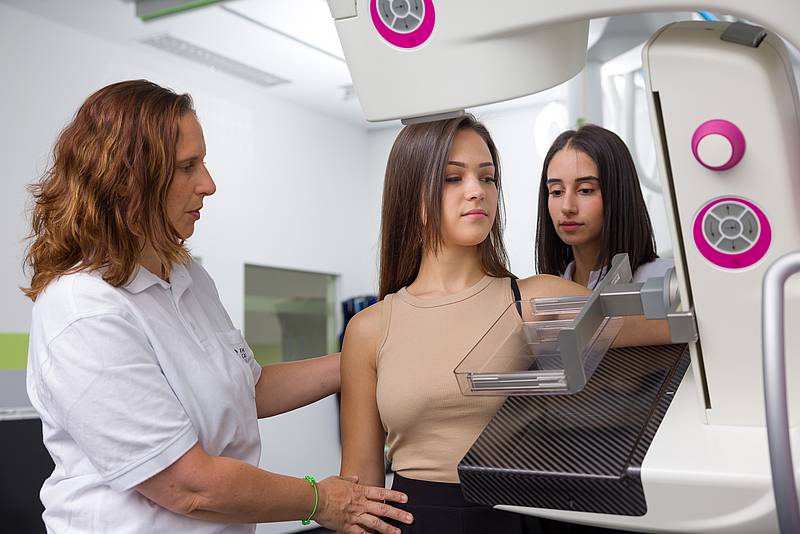
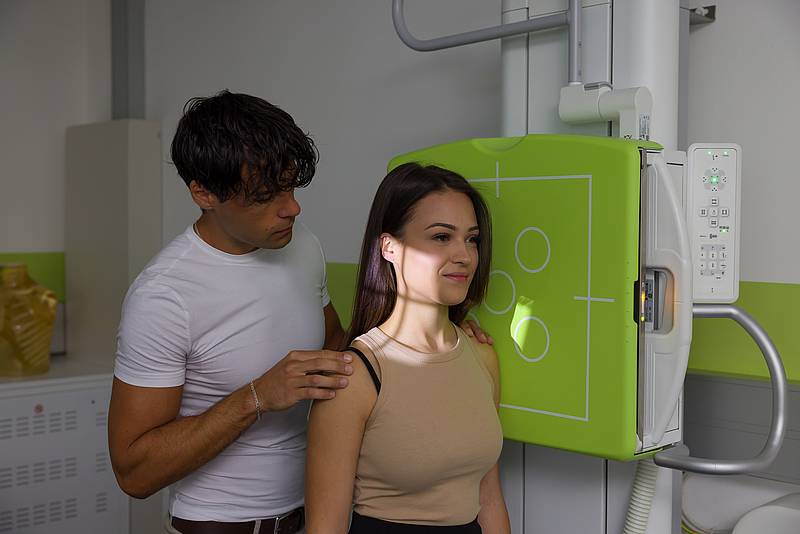
    • X-ray-based examination methods, such as digital X-rays, mammography (imaging of the breast) or angiography (imaging of blood vessels), depict various structures of the body one-dimensionally.  
    • Computed tomography (CT) is also based on X-rays. It generates cross-sectional images of the human body.
    • Other cross-sectional imaging methods include both magnetic resonance imaging (MRI) and sonography (ultrasound). Both imaging methods work with types of radiation that are not harmful to living organisms.
    • In nuclear medicine methods (scintigraphy, positron emission tomography), radioactive substances are introduced into the body. In this case, body functions are displayed preferentially.
    • Radiation therapy involves the therapeutic treatment of patients with various types of radiation, either externally through radiation-generating devices (teletherapy) or internally through radioactive substances introduced into the body (brachytherapy).  
    • In medical basic subjects such as anatomy, physiology and pathology, you will acquire comprehensive knowledge about the structure, function and diseases of the human body.
    • The physical-technical and chemical subjects are the basis for the handling of medical imaging equipment, the use of imaging agents and the handling of radioactive substances.
    • Training in medical radiation protection and as a radiation protection officer.
    • Subjects covering 3D imaging and visualization as well as digitization and image processing complete the technical training.
    • The training is complemented by personal development, knowledge of health law, health economics and project management.


    Insights into the studies

    <
    >

    During our studies, we learn how to properly position the patients and set up equipment under the guidance of our instructors. As shown here with the mammography.

    or here during X-ray diagnostics. Special attention is paid to the safety of the patients

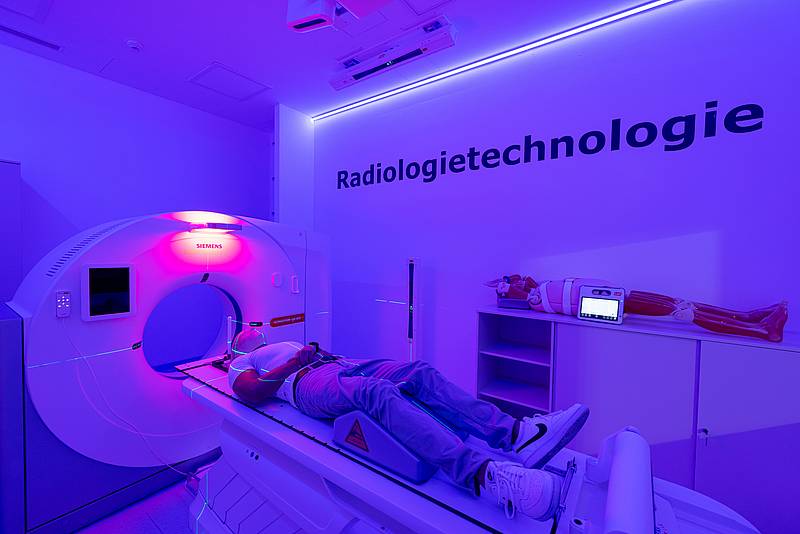
    This is our own computed tomography scanner (CT). During exercises, we learn how to set up the linear accelerator in radiation therapy using a laser system and a so-called mask. 

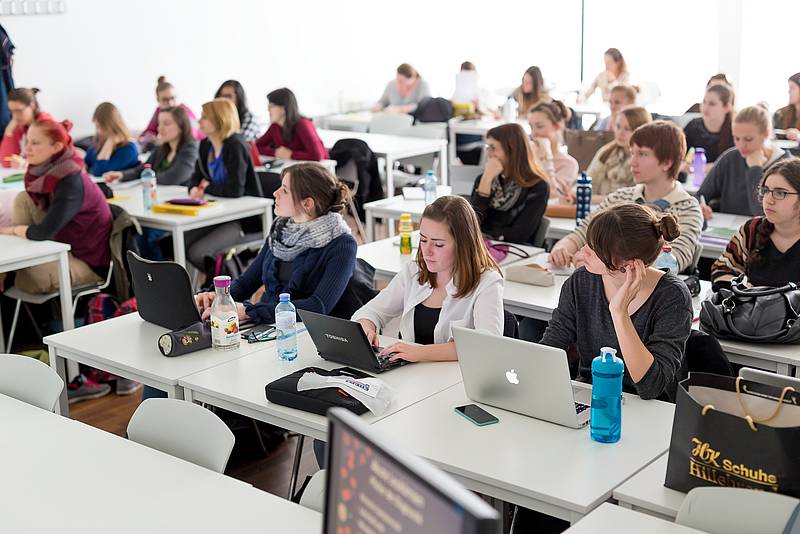
    In lectures, experts teach the theoretical content of the program. However, it is not boring - we can immediately put into practice what we have learned.

    During our studies, we place great emphasis on mutual support and teamwork. In this way, we master our studies together and strengthen important social skills needed for later professional practice.

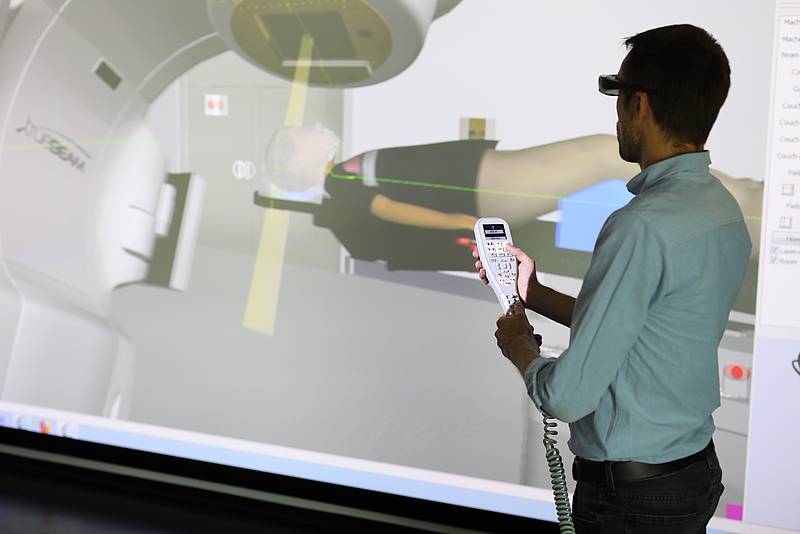
    Our Virtual Environment of Radiotherapy Training (VERT) provides life-like 3D visualizations of patient radiation treatments. Using life-size 3D visualizations of different treatment rooms, we learn how to position patients correctly.

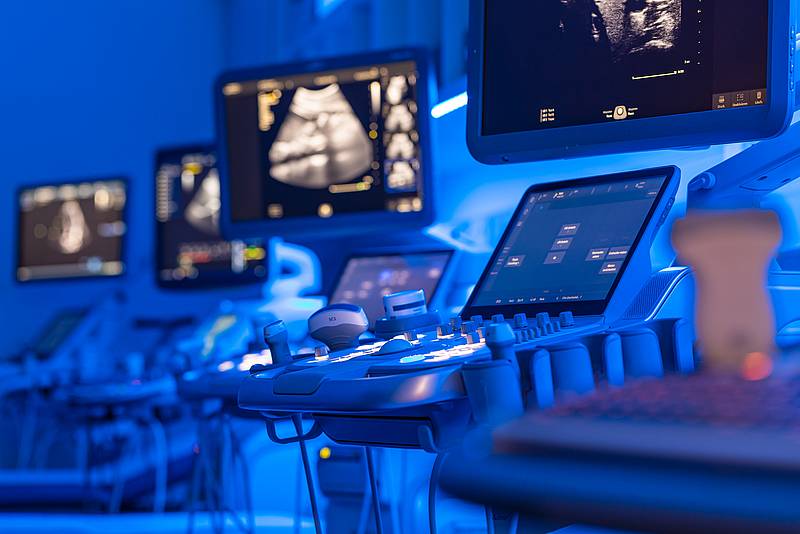
    In our Skills Lab Sonography we are allowed to practice on the latest equipment. We train with virtual and real patient cases on the sonography simulator.

    Curriculum

    Module Medicine 1

    Medicine 1

    6.5 SWS   10 ECTS

    Learning results

    • The student has basic knowledge of pathological changes and hygiene measures relevant to the profession.

    • The student is able to understand the radiological appropriateness of the examination or treatment ordered on the basis of his/her knowledge of indications and contraindications and, if necessary, to consult with the responsible physician about missing medically relevant information.

    • The student can explain the properties of contrast media and in particular their side effects.

    • The student is familiar with professionally relevant laboratory values and can describe their effects on radiological examinations.

    • The student is aware of the requirements for medical and medical-physical quality assurance as well as the legal regulations on environmental protection and hygiene.

    • The student has knowledge of anatomical terminology as well as the basics of anatomy, directional and positional designations and general definitions.

    • The student has knowledge of the structure, morphology and function of cells and tissues.

    • The student has acquired knowledge about embryonic and fetal development.

    • The student is familiar with the structure, organs, topography and blood supply of the following systems: skeletal system including muscles, ligaments and joints; cardiovascular system; respiratory system; digestive system; urogenital system; endocrine system; nervous system; sensory organs; blood and hematopoietic system; lymphatic system.

    • The student has acquired basic knowledge of the structure of the human organism, physiological processes, pathological changes and hygiene measures relevant to the profession. This knowledge forms the basis for learning the individual specialist areas of radiology technology.

    • The student has basic skills to control physiological parameters and can apply professionally relevant laboratory values in relation to their effects on radiological examinations.

    • The student has basic knowledge of the structure of the human organism, physiological processes, pathological changes and hygiene measures relevant to the profession. This knowledge forms the basis for the acquisition of advanced radiology technology skills.

    6.5 SWS
    10 ECTS
    Pathology and Hygiene | VO

    Pathology and Hygiene | VO

    1.5 SWS   2 ECTS

    Content

    Definitions, aetiology, pathogenesis; pathologies and their clinical manifestations of: Skeletal system incl. muscles, ligaments, joints, cardiovascular system, respiratory system, digestive system, urogenital system (incl. reproductive organs); endocrine system; nervous system; hospital hygiene, environmental hygiene, disinfection/sterilization, basic concepts and areas of responsibility of infection hygiene

    Learning results

    • The student has basic knowledge of pathological changes in the human organism and of hygiene measures relevant to the profession.

    • The student can take into account the requirements of medical and medical-physical quality assurance as well as the legal regulations on environmental protection and hygiene.

    • This knowledge forms the basis for acquiring further specialist skills in radiology technology.

    Teaching method

    Presenting form (lecture)

    Examination

    Final exam

    Teaching language

    Deutsch

    1.5 SWS
    2 ECTS
    Anatomy | VO

    Anatomy | VO

    2 SWS   3 ECTS

    Content

    Basic terms, direction and position designations, general definitions, structure, morphology and function of cells and tissue, structure, organs, topography, blood supply of the following systems: skeletal system incl. muscles, ligaments and joints; cardiovascular system; respiratory system; digestive system; urogenital system; endocrine system; nervous system; sensory organs; blood and hematopoietic system; lymphatic system; embryonic and fetal development

    Learning results

    • The student can recognize and name the respective anatomical structures on specimens, images and sectional images and relate them to each other spatially

    • The student can correctly name and apply anatomical terms, directional and positional designations and general definitions

    • The student can name and relate the structure, morphology and function of cells and different tissue types from embryonic development to the adult with regard to their organ systems, topography and the associated blood supply

    Teaching method

    Presenting form (lecture)

    Examination

    Final exam: Final written examination with partial performance (online supported examination)

    Teaching language

    Deutsch

    2 SWS
    3 ECTS
    Basics of Clinical Chemistry and Pharmacology | VO

    Basics of Clinical Chemistry and Pharmacology | VO

    2 SWS   3 ECTS

    Content

    Pharmacokinetics and pharmacodynamics, effects and side effects, dosage, application, shelf life, storage and disposal of occupationally relevant groups of drugs: Analgesics, hypnotics, narcotics, cardiovascular drugs, anticoagulants, drugs with an effect on the endocrine system Contrast media: areas of application and classification, contrast media side effects and measures, significance of flow, quantity, concentration of applied contrast media, indications, contraindications

    Learning results

    • The student acquires the ability to name all drugs, including contrast media, with their application and safe waste disposal, which are used in the professional field and in emergency medicine (resuscitation).

    • The student acquires the competence to name professionally relevant laboratory values and to describe their effects on radiological examinations.

    • The student develops an understanding of the properties of contrast media and in particular their side effects.

    • The student learns to control physiological parameters.

    Teaching method

    Presenting form (lecture)

    Examination

    Final exam: Final examination (written, online supported examination)

    Teaching language

    Deutsch

    2 SWS
    3 ECTS
    Physiology | VO

    Physiology | VO

    1 SWS   2 ECTS

    Content

    Basic terms, direction and position designations, general definitions, structure, morphology and function of cells and tissue, function of organs, blood supply of the following systems: skeletal system incl. muscles, ligaments and joints; cardiovascular system; respiratory system; digestive system; urogenital system; endocrine system; nervous system; sensory organs; blood and hematopoietic system; lymphatic system; embryonic and fetal development

    Learning results

    • The student can correctly name and use anatomical terminology, directional and positional terms and general definitions

    • The student can name and relate the function of cells and different tissue types from embryonic development to the adult with regard to their organ systems, topography and the associated blood supply.

    Teaching method

    Presenting form (lecture)

    Examination

    Final exam: Final course examination: written (online supported examination)

    Teaching language

    Deutsch

    1 SWS
    2 ECTS
    Module Daten- und Bilddatenmanagement in der Medizin

    Daten- und Bilddatenmanagement in der Medizin

    3 SWS   5 ECTS

    Learning results

    • Students can describe basic methods of image data generation and image data processing

    • Students can recognize factors influencing image quality in the data generation process

    • Students will be able to explain the structure and organization of the Digital Imaging and Communication in Medicine (DICOM) standard.

    • The student can analyze structures in images using image processing methods.

    • Students can describe the principles of basic digital image data generation and name innovative methods of data generation

    • Students know the components involved in the process of creating image data from ionizing radiation and can describe their function

    3 SWS
    5 ECTS
    Image Data Generation | VO

    Image Data Generation | VO

    1 SWS   2 ECTS

    Content

    Process of image formation; modes of action of X-rays in radiological imaging; technology of radiological imaging systems; exposure techniques; criteria of image quality and image quality criteria, resolution, contrast; causes of reduced image quality; minimization of radiation exposure as well as scattered radiation and blurring.

    Learning results

    • Students will be able to explain the influence of digital detectors on image quality and dose

    • Students know how to understand a detector data sheet and evaluate the individual key figures

    • Students can describe the process of image data creation

    • Students know the relationship between image quality and physical influencing factors

    • Students know the criteria (key figures and parameters) for assessing image quality

    • Students are familiar with the causes of reduced image quality and the corresponding influencing variables for improving image quality, modifying them and implementing quality assurance measures

    • Students can describe the principles of basic digital image data generation and name innovative methods of data generation

    • Students can establish a connection between the clinical field of application and the properties of digital detectors

    • Students can describe the technical and physical structure of detectors and explain how the most important components work

    • Students can understand the basics of the interaction between X-rays and matter and apply them to the use of digital detectors

    Teaching method

    Presenting form (lecture)

    Examination

    Final exam

    Teaching language

    Deutsch

    1 SWS
    2 ECTS
    Basics of image data processing and reconstruction and data management | ILV

    Basics of image data processing and reconstruction and data management | ILV

    2 SWS   3 ECTS

    Content

    Concepts and technical terms (image formats, image compression); gray value histogram, gray value profile; linear and non-linear gray value corrections; types of filters; arithmetic image operations, morphological operations; frequency space;

    Learning results

    • The student can carry out and describe the frequency distributions of gray values using the gray value histogram

    • The student can describe and apply linear and non-linear gray value corrections Explain types of filters and their applications

    • The student can describe arithmetic image operations and explain their application

    • The student can explain the concept of frequency space

    • The student can explain the structure of the DICOM standard

    • The student can explain data transfer of DICOM objects on the basis of service classes

    • The student knows the basic concepts of digital radiology systems such as Picture Archiving and Communication System and connected information systems.

    Teaching method

    Integrative course

    Examination

    Final exam

    Teaching language

    Deutsch

    2 SWS
    3 ECTS
    Module Medical Physics and technical quality Assurance

    Medical Physics and technical quality Assurance

    4 SWS   5 ECTS

    Learning results

    • The student can explain professionally relevant physical principles of radiation physics and radioactivity

    • The student can understand, transform and apply physical and mathematical formulas relevant to his/her profession.

    • The student can describe radiation detection methods for imaging and dosimetry.

    • The student can explain applications of radiation in medicine.

    • The student can explain various dose quantities and basic quantities of radiation measurement and dosimetry.

    • Students are able to identify technical quality defects in imaging procedures, systematically analyze their causes and carry out suitable test procedures in accordance with technical standards.

    • Students will be able to plan, carry out and document technical quality controls for diagnostic devices, taking into account current guidelines and standards.

    4 SWS
    5 ECTS
    Medical Physics | ILV

    Medical Physics | ILV

    3 SWS   4 ECTS

    Content

    Fundamentals of atomic and nuclear physics, radioactivity, properties and formation of radiation, interaction processes of ionizing radiation with matter (incl. attenuation and scattering), dose, terms, definitions, units, radiation detection (dosimetry), application of radiation in diagnostics and therapy

    Learning results

    • Students can describe the formation and properties of radiation.

    • Students can describe the difference between different types of radiation and explain decay schemes and types of decay.

    • Students can explain the use of ionizing radiation in medicine.

    • Students can explain the different interaction processes of ionizing radiation with matter and the dose concepts.

    • Students will be able to apply radiation physics formulas relevant to their profession.

    • Students can describe the principle of radiation detection methods (dosimetry).

    Teaching method

    Presenting form (lecture)

    Examination

    Final exam: Final examination: written (online supported examination) with interim examinations.

    Teaching language

    Deutsch

    3 SWS
    4 ECTS
    Technical Quality Control | ILV

    Technical Quality Control | ILV

    1 SWS   1 ECTS

    Content

    Legal provisions (legal basis - MedStrSchV, Federal Law Gazette II No. 375/2017), standards and standard structure, acceptance test, constancy test and practical implementation (exercises in groups) on apparatus and devices;

    Creation of "faulty" X-ray images for fault detection and fault allocation.

    Recognition of incorrect parameters in the imaging and findings situation.

    Learning results

    • Students will be able to recognize typical technical deficiencies in imaging procedures and systematically analyze their causes.

    • Students are able to apply test procedures for quality assurance in accordance with technical standards and evaluate their results.

    • Students can plan and carry out technical quality controls taking into account current standards (e.g. ÖNORM, ISO).

    • Students can document the results of technical quality controls according to defined standards.

    • Students can document technical faults and their rectification in a comprehensible manner.

    Teaching method

    Activating form (practical exercises with guided exercises, group work, case studies/case analyses)

    Examination

    Continuous assessment

    Teaching language

    Deutsch

    1 SWS
    1 ECTS
    Module Projection radiography

    Projection radiography

    6.5 SWS   10 ECTS

    Learning results

    • Students know the structure and principle of all components of X-ray systems involved in the creation of an X-ray image and can operate them correctly. Students also know the relationship between radiation energy, radiation dose and their effects and can apply this knowledge.

    • Within the scope of diagnostic and interventional processes, the student can use the acquired knowledge to carry out radiological anamnesis and analysis and inform patients about the course of the planned diagnostic examination or intervention and make all necessary preparations for it.

    • Students can independently and professionally perform the standardized X-ray adjustment technique, taking into account patient-specific requirements such as positioning/positioning, selection of suitable medical equipment, protocols, geometric laws and materials.

    • Students can independently and professionally perform the special adjustment technique, taking into account patient-specific requirements such as positioning/positioning, selection of suitable medical-technical equipment, protocol parameters, geometric regularities and materials.

    • The student can carry out radiological documentation, evaluation and analysis.

    • The student is proficient in medical-radiological terminology and can use it in an understandable and target group-oriented manner. He/she can apply transcultural, empathic patient communication in relation to diagnostic examinations and interventions.

    • The student ensures employee and patient safety through professional and empathetic communication and implementation of radiology technology processes.

    • The student understands the principles for safe and ergonomic work in the radiation field and can implement these in practice. He/she knows the hygiene standards in projection radiography and can apply them in practice.

    • Students are proficient in the processes of information, implementation and evaluation of screening procedures and assessments. In this way, they contribute to the promotion and maintenance of the health of those involved as part of primary and secondary prevention.

    • The students understand the use of necessary medication, including contrast media for contrast medium examinations in projection radiography.

    6.5 SWS
    10 ECTS
    Applied examinations and interventions in radiography | UE

    Applied examinations and interventions in radiography | UE

    2 SWS   3 ECTS

    Content

    Components of an X-ray system, their functional principle and correct technical operation.

    Exposure-related parameters, in particular energy and dose of X-rays, reduction of scattered radiation, and their effects on the radiological image.

    Technical terminology, explanations of terms, projections and spatial directions, geometric laws of X-ray image generation.
    Patient information on the technical procedure and execution of the examination.
    Correct application of practical and technical radiation protection measures of all kinds. Technical language in the context of target group-oriented comprehensibility.

    Analysis of images, evaluation with regard to qualitative guidelines, recognition of errors in imaging and adjustment techniques and their correction.

    Special setting techniques in the fields of orthopaedics, traumatology, pediatrics, geriatrics, intensive care medicine and mammography

    Safe and ergonomic work with reference to self-protection and the protection of others.

    Learning results

    • The student can assess the appropriateness and plausibility of the examination ordered on the basis of the acquired knowledge of indications and contraindications.

    • The student can inform the patient about the course of the planned examination and make all necessary preparations for it.

    • The student can perform the standardized adjustment technique independently and professionally, taking into account patient-specific requirements, such as positioning, selection of suitable parameters, geometric laws, etc., using suitable positioning aids.

    • The student can assess the images taken, recognize incorrect positioning, assess image quality and dose parameters and take corrective measures.

    • Students are able to carry out standardized X-ray adjustment techniques independently and correctly while complying with relevant safety and quality criteria.

    • The student knows the basics of practical radiation protection and can work in the radiation field without endangering him/herself or others.

    • Students will be able to select and correctly use the equipment and protocols required for specific radiographs.

    • Students are able to position patients correctly according to individual anatomical and clinical requirements.

    • The students know the requirements, special features in the preparation, execution and analysis of radiological images in orthopaedics and can carry them out.

    • The student knows the requirements, special features in the preparation, execution and analysis of radiological images in traumatology, in particular the necessity of alternative positioning and adjustment techniques and is able to apply these

    • Students are able to distinguish the anatomical and physiological differences between pediatric patients and adults and the resulting requirements, special features in the preparation and performance of radiological images in the field of pediatrics.

    • The student knows the requirements and special features of preparing, performing and analyzing radiological images in geriatrics.

    • Students are able to describe the requirements, special features in the preparation, implementation and special features of radiation protection of radiological images in the operating theater.

    • Students will be able to describe the requirements and special features of preparing, performing and analyzing radiological images in mammography.

    • The student understands the principles for safe and ergonomic work in the radiation field and can implement these in practice. The student knows the hygiene standards in projection radiography and can apply them in practice.

    Teaching method

    (Lecture, demonstrations, group work, portfolio; guided exercises, group work, role play, case studies/case analyses)

    Examination

    Continuous assessment: Immanent performance review with final practical examination

    Teaching language

    Deutsch

    2 SWS
    3 ECTS
    X-Ray Equipment Technology | ILV

    X-Ray Equipment Technology | ILV

    1 SWS   2 ECTS

    Content

    Principle of X-ray beam generation.

    Components of an X-ray system, their functional principle and correct technical operation.

    Exposure-related parameters, in particular energy and dose of X-rays, reduction of scattered radiation, and their effects on radiological imaging.

    Technical terminology, explanations of terms, projections and spatial directions, geometric laws of X-ray image generation.
    Patient information on the technical procedure and performance of the examination.
    Correct application of technical radiation protection measures of all kinds. Technical language in the context of target group-oriented comprehensibility.

    Analyzing images, evaluating them with regard to qualitative guidelines, recognizing errors in imaging technology and correcting them.

    Safe and ergonomic work with regard to self-protection and the protection of others.

    Learning results

    • The students are able to understand the principle of the generation of X-rays, the the structure and principle of all the components of X-ray systems involved in the components of X-ray systems and can operate them correctly.

    • Students understand the geometric principles of X-ray imaging and can apply these in a targeted manner when taking images.

    • The student knows the basics of practical radiation protection and can work in the radiation field without endangering him/herself or others.

    • The student knows the relationship between radiation quality, radiation quantity and their effects on radiation dose and can apply this knowledge in practical radiation protection.

    • The student knows the relationship between beam quality, beam quantity and their effects on image quality and can implement this knowledge in the optimization of the exposure parameters.

    • The student will be able to assess the images taken, recognize technical and image quality errors and take corrective action.

    • The student can use technical language in a way that is understandable for the target group.

    Teaching method

    VO (lecture, demonstration) Activating: practical exercises (guided exercises, group work, role play, case studies/case analyses)

    Examination

    Continuous assessment

    Teaching language

    Deutsch

    1 SWS
    2 ECTS
    Examinations and interventions in radiography | VO

    Examinations and interventions in radiography | VO

    3.5 SWS   5 ECTS

    Content

    Principle of X-ray beam generation.

    Components of an X-ray system, their functional principle and correct technical operation.

    Exposure-related parameters, in particular energy and dose of X-rays, reduction of scattered radiation, and their effects on radiological imaging.

    Technical terminology, explanations of terms, projections and spatial directions, geometric laws of X-ray image generation.
    Patient information on the technical procedure and performance of the examination.
    Correct application of technical radiation protection measures of all kinds. Technical language in the context of target group-oriented comprehensibility.

    Analyzing images, evaluating them with regard to qualitative guidelines, recognizing errors in imaging technology and correcting them.

    Safe and ergonomic work with regard to self-protection and the protection of others.

    Learning results

    • The student can assess the appropriateness and plausibility of the examination ordered on the basis of the acquired knowledge of indications and contraindications.

    • The student can inform the patient about the course of the planned examination and make all necessary preparations for it.

    • The student can perform the standardized adjustment technique independently and professionally, taking into account patient-specific requirements such as positioning, selection of suitable parameters, geometric laws, etc., using suitable positioning aids.

    • The student can assess the images taken, recognize incorrect positioning, assess image quality and dose parameters and take corrective measures.

    • Students are able to carry out standardized X-ray adjustment techniques independently and correctly while complying with relevant safety and quality criteria.

    • The student knows the basics of practical radiation protection and can work in the radiation field without endangering him/herself or others.

    • The student knows the principles of X-ray contrast medium examinations and can prepare and follow them up.

    • Students will be able to select and correctly use the equipment and protocols required for specific radiographs.

    • Students are able to position patients correctly according to individual anatomical and clinical requirements.

    • Students know the requirements and special features of preparing, performing and analyzing radiological images in orthopaedics and are able to do so

    • The student knows the requirements, special features in the preparation, execution and analysis of radiological images in traumatology, in particular the necessity of alternative positioning and adjustment techniques and is able to use these.

    • Students are able to distinguish the anatomical and physiological differences between pediatric patients and adults and the resulting requirements, special features in the preparation and performance of radiological images in the field of pediatrics.

    • Students will be able to name the requirements and special features of preparing, performing and analyzing radiological images in geriatrics.

    • The student knows the requirements, special features in the preparation, execution and special features of radiation protection of radiological images in the operating theater.

    • The student understands the principles for safe and ergonomic work in the radiation field and can implement these in practice. He/she knows the hygiene standards in projection radiography and can apply them in practice.

    • The student can independently and professionally perform the standardized adjustment technique in mammography, taking into account patient-specific requirements.

    • The students can justify the special images including interventions in the field of mammography and alternative as well as newer or supplementary examination methods.

    • The students are able to reproduce the basics of the breast cancer screening program in Austria.

    • Students will be able to describe the quality assurance measures relevant to radiation protection in the field of mammography.

    • The student knows the principles of X-ray contrast medium examinations in mammography and can prepare and follow up these examinations.

    Teaching method

    VO (lecture, demonstrations, group work, portfolio); UE Activating form (guided exercises, group work, role play, case studies/case analyses)

    Examination

    Final exam

    Teaching language

    Deutsch

    3.5 SWS
    5 ECTS

    Module Computed tomography

    Computed tomography

    6 SWS   10 ECTS

    Learning results

    • Students can understand the radiological appropriateness of the CT examination or CT targeted treatment ordered on the basis of their knowledge of indications and contraindications, check its plausibility and justify/represent it in the interdisciplinary team.

    • Students will be able to explain the technical components and the functional principle, operate the devices in a technically flawless manner based on their knowledge of their design and function, select, justify and justify suitable parameters, take safety measures and adjust the quality assurance measures.

    • Following professional information and education sessions, students can position and position patients using precise instructions, taking into account the indication and special personal needs and from the point of view of radiation protection, and develop alternative patient-friendly positioning options if necessary.

    • Students can explain, justify, carry out and evaluate examination and treatment methods with the least possible radiation exposure to the patient in a professional and appropriate manner and, if necessary, select alternative methods.

    • Students are able to utilize scientific findings and phenomena for professional and scientific development.

    • Based on their knowledge of contrast media and application options, students will be able to name the appropriate contrast media strategy for the respective CT examination and, if necessary, point out any necessary patient-specific adaptations.

    Examination

    : Module examination practical (case studies) and written (computer-based)

    6 SWS
    10 ECTS
    Computed tomography | ILV

    Computed tomography | ILV

    6 SWS   10 ECTS

    Content

    Physical-technical basics, functional principle, technical components, radiation protection CT, image calculation, image display, image quality and optimization options, artifacts, quality assurance;
    Important indications and contraindications, radiological anamnesis; preparation, implementation, evaluation and documentation, aftercare, protocols incl. Contrast agent application in computed tomography examinations and interventions of selected organ areas, selected special procedures and areas of application, in accordance with the current state of the art and international standards;
    Image processing and image evaluation, 2D, 3D;
    Case discussions and case demonstrations from a medical perspective using selected routine examinations

    Learning results

    • Students can analyze the CT assignment, select, justify and apply the materials, devices and protocols/parameters, medications (KM) for the CT examination or CT-guided treatment according to the subject, indication and patient, document the examination and treatment data and evaluate, analyze and evaluate the results.

    • Students will be able to take/create a radiological anamnesis, position and position patients using precise instructions, taking into account the indication and special personal needs and from the point of view of radiation protection and, if necessary, develop alternative patient-friendly positioning options.

    • In CT, students are able to act in a patient and situation-appropriate manner, understand the equipment required for the radiology process, can weigh these up for the application and use them appropriately for the situation.

    Teaching method

    VO (lecture), UE Activating form (group work, guided exercises)

    Examination

    Module exam

    Teaching language

    Deutsch

    6 SWS
    10 ECTS
    Module Magnetresonancetomography

    Magnetresonancetomography

    6 SWS   10 ECTS

    Learning results

    • The student can understand the radiological appropriateness of the examination or treatment ordered on the basis of knowledge of indications and contraindications and, if necessary, consult with the responsible physician about missing medically relevant information.

    • The student can move and position patients using clear and precise instructions and assistance, taking into account the indication and special personal needs and, if necessary, develop alternative positioning options that are gentle on the patient.

    • The student can explain the technical components and the functional principle, as well as describe the quality assurance measures.

    • The student can perform examination and treatment methods professionally and select, justify and justify the equipment on the basis of knowledge of its design and suitable parameters and act in a patient- and situation-oriented manner in order to achieve the best possible examination and treatment results.

    • The student can carry out image and sequence post-processing independently and optimize it if necessary

    • The student can analyze examination results and evaluate them with regard to qualitative guidelines, recognize and correct errors and their causes, argue the product quality and, if necessary, suggest possibilities for further radiological-technical measures.

    Examination

    : Module grade with 3 partial performances

    6 SWS
    10 ECTS
    Magnetresonancetomography | ILV

    Magnetresonancetomography | ILV

    6 SWS   10 ECTS

    Content

    Physical basics of image formation and technical image processing, functional principle, technical components (construction scheme, coil technology, additive technical accessories, ...), image data, sequence techniques; hazard and safety aspects, image processing, image analysis and image evaluation, post-processing methods (MPR, MIP, evaluations, etc.), parameter changes and their effects on image quality, image analysis (contrasts, parameters, artifacts, case studies, ...), image quality, image analysis (contrasts, parameters, artifacts, case studies, ...).), parameter changes and their effects on image quality, image analysis (contrasts, parameters, artifacts, case studies,...), classification of anatomical and pathological structures on the sectional image, indications and contraindications; safety aspects; patient-friendly care; positioning, planning of examination protocols, execution, evaluation, post-processing and documentation according to the current state of the art and science; indication-related sequence and parameter selection and their optimization possibilities; contrast agent application; hygiene; quality assurance; clinical case discussions and case demonstrations from a medical point of view using selected routine and special examinations

    Learning results

    • The student has knowledge of the technical-physical basics, the functional principle, the technical components of MRI imaging equipment, as well as standard examinations and interventions.

    • The student is familiar with the processes of image creation, image processing, post-processing methods, sequencing techniques and image quality criteria.

    • The student is familiar with the safety aspects, standard examinations, indications, contraindications and the tasks of radiology technologists in the MRI context.

    • The student can assess image quality, recognize and correct artifacts and apply examination protocols according to the indication.

    • The student is able to position patients correctly, plan, carry out and follow up basic examinations.

    • The student can analyze anatomical and pathological structures and adjust the examination parameters accordingly.

    • The student is able to implement safety measures, assess clinical indications and evaluate diagnostic results.

    • The student can work in interdisciplinary teams and organize MRI procedures in a patient-oriented manner.

    Teaching method

    Presenting form (lecture)

    Examination

    Module exam

    Teaching language

    Deutsch

    6 SWS
    10 ECTS
    Module Practical learning phase: Projection radiography

    Practical learning phase: Projection radiography

    0 SWS   5 ECTS

    Learning results

    • The student can assess the appropriateness and plausibility of the examination ordered with regard to indications and contraindications.

    • The student can inform the patient about the course of the planned examination and make all necessary preparations for it.

    • The student can operate the X-ray equipment professionally

    • The student can perform the standardized adjustment technique independently and professionally, taking into account patient-specific requirements such as positioning/positioning, selection of suitable parameters, geometric laws, etc., using suitable aids such as wedge filters, positioning aids, etc.

    • The student is able to assess the photographs taken, recognize errors, both in terms of setting technique and image quality in general, and can take corrective action.

    • The student can apply radiation protection in practice

    • The student must independently perform at least 100 examinations from the organ areas thorax, skeleton, breast, urogenital tract and gastrointestinal tract, taking into account the above-mentioned points (according to FH-MTD-AV, Annex 12)

    • The student can interact/communicate appropriately with patients, professional colleagues and other professional groups within the scope of his/her work while observing ethical principles and taking into account different cultural orientations

    5 ECTS
    Clinical Internship Plain Radiography | PL

    Clinical Internship Plain Radiography | PL

    0 SWS   5 ECTS

    Content

    Preparation and performance of examinations Evaluation of results with regard to qualitative guidelines in conventional radiology.

    Reflection on practical work in the implementation of theoretical teaching/learning content, dealing with stressful situations,clarification discussions.

    Learning results

    • The student can assess the appropriateness and plausibility of the examination ordered with regard to indications and contraindications

    • The student can inform the patient about the course of the planned examination and make all necessary preparations for it

    • The student can operate the X-ray equipment professionally

    • The student can perform the standardized adjustment technique independently and professionally, taking into account patient-specific requirements, such as positioning/positioning, selection of suitable parameters, geometric laws, etc., using suitable aids such as wedge filters, positioning aids, etc.

    • The student is able to assess the photographs taken, recognize errors, both in terms of setting technique and image quality in general, and can take corrective action.

    • The student can apply radiation protection in practice

    • The student must be able to independently perform at least 100 examinations from the organ areas thorax, skeleton, breast, urogenital tract and gastrointestinal tract, taking into account the above-mentioned points (FH-MTD-AV, Annex 12)

    • Students can reflect on relevant situations in the practical learning phase.

    Teaching method

    Practical learning phase: patient-oriented, practical implementation of theoretical teaching content

    Examination

    Continuous assessment

    Teaching language

    Deutsch

    5 ECTS
    Module Radiation Protection Training 1

    Radiation Protection Training 1

    4 SWS   5 ECTS

    Learning results

    • After completing the radiation protection module, the student will be able to recognize the limits of independent professional practice and make reference to the relevant legal regulations.

    • After completing the radiation protection training, the student knows the function of the radiation protection officer.

    • The student can implement and carry out the measures standardized in the legal principles of radiation protection.

    • The student can take into account the legal regulations concerning radiation protection.

    • The student is able to analyze and classify radiobiological, biological and physical principles as well as their clinical applications in the context of radiation sensitivity and radiation sickness and to apply them in a profession-specific manner.

    4 SWS
    5 ECTS
    Special Training and Diagnostic Application | ILV

    Special Training and Diagnostic Application | ILV

    1 SWS   1 ECTS

    Content

    Radiation protection-relevant aspects of X-ray equipment for diagnostics; enclosed radioactive substances in diagnostics; radiation exposure of staff and other persons, especially patients, during the various examination procedures; determining the radiation exposure of staff and patients; protective measures in diagnostic applications; protection of the patient Quality assurance measures; exercises in small groups: protective measures when operating X-ray equipment in X-ray diagnostics and interventional radiology; determining the dose in X-ray diagnostics; correct application of dose concepts; reference values

    Learning results

    • After completing the course, the student is able to name, explain and apply the radiation protection relevant aspects of X-ray equipment for diagnostics.

    • After completion of the course, the student is able to correctly apply the protective measures in diagnostic applications to protect him/herself, occupationally exposed persons and the patient.

    • After completing the course, the student is able to interpret the laws, regulations, standards and guidelines of radiation protection and transfer them into daily practice.

    • After completing the course, the student will be able to correctly apply guideline and limit values and will be able to use measuring instruments and perform calculations.

    • After completion of the course, the student can implement the corresponding radiation protection quality assurance measures

    Teaching method

    VO (lecture), UE Activating method (practical exercises)


    Examination

    Final exam: Partial performance 3: Final course examination: written (online supported examination) practical (exercise) (module examination)

    Teaching language

    Deutsch

    1 SWS
    1 ECTS
    Radiobiology | VO

    Radiobiology | VO

    1.5 SWS   2 ECTS

    Content

    Radiobiological chain of effects, influence of ionizing radiation on cells, radiation sensitivity, cell cycle, repair mechanism, dose-response relationships, linear-quadratic model, LET and RBE, hadrons, acute and late effects after radiation exposure, combination and interaction of ionizing radiation with systemic therapies such as chemotherapy, immunotherapy and targeted therapies

    Learning results

    • After completing the course, the student can name and explain all radiobiological terms.

    • After completing the course, students are able to explain biological and physical principles relevant to their profession, are familiar with tumor biology and its interrelationships and can provide information on physiological processes.

    • After completing the course, the student is familiar with the clinical requirements and applications in radiation sensitivity and radiation sickness.

    Teaching method

    Presenting form (lecture)

    Examination

    Final exam: Partial performance 1: Final course examination: written (online supported examination) (module examination)

    Teaching language

    Deutsch

    1.5 SWS
    2 ECTS
    Radiation protection Basic Education and Legal Bases | ILV

    Radiation protection Basic Education and Legal Bases | ILV

    1.5 SWS   2 ECTS

    Content

    Radiation sources; radiation protection-relevant and application-specific dosimetry and dose quantities; guide values, limit values; radiation protection basics and basic principles; measuring devices; control of personal dose;
    Laws, regulations, standards and guidelines in radiation protection;
    Exercises in small groups: Handling devices for determining personal and local dose, calculating patient doses, use of test sources;

    Learning results

    • After completion of the course, the student can name, explain and apply all basic principles of radiation protection.

    • After completion of the course, the student is able to handle measuring devices for the determination of personal and local dose and to interpret the measurement results.

    • After completing the course, the student is able to interpret the laws, regulations, standards and guidelines of radiation protection and transfer them into daily practice.

    • After completing the course, the student can evaluate the correct application of guideline and limit values and can use measuring instruments and perform calculations.

    Teaching method

    VO (lecture), UE Activating method (practical exercises)


    Examination

    Final exam: Partial performance 2: Course concluding examination: written (online supported examination) practical (exercise) (module examination)

    Teaching language

    Deutsch

    1.5 SWS
    2 ECTS

    Module Fundamentals of nuclear medicine

    Fundamentals of nuclear medicine

    3.5 SWS   5 ECTS

    Learning results

    • Students will be able to explain general physical principles from a radiology technology perspective and name the measuring devices used in nuclear medicine and describe their design and area of application. They will be able to explain, evaluate and discuss the technical specifications of the measuring devices and analyze and assess the suitability of radionuclides and measuring devices for diagnostic and therapeutic applications from a physical and technical perspective. They are also able to analyze measurement results with regard to their causality, know the correct application of guideline and limit values, use measuring devices and carry out the necessary calculations.

    • The students are able to recognize and describe the independent area of responsibility of radiology technologists in nuclear medicine. They can safely carry out and determine radiation protection measures and, in the event of contamination, provide evidence and carry out suitable decontamination measures independently.

    • Students will be able to describe the radionuclides and tracers used in nuclear medicine and define their radiochemical and pharmacological properties. They will be able to name various tracer production methods and critically describe and discuss future developments in the field of radiopharmaceuticals.

    • The students are able to handle the radionuclides used in nuclear medicine, taking into account radiation protection and the legally prescribed disposal, and to take quality-enhancing measures to ensure patient safety.

    • Students are able to describe the organization and structure of a nuclear medicine institute. They will be able to name the licensing procedures, legally prescribed standards, laws and organizational framework conditions that are necessary for the maintenance and operation of a nuclear medicine department.

    • The students are able to name logistical processes that are necessary for the application and procurement of radiopharmaceuticals or radionuclides and, if necessary, take measures to be practically active in a resource-saving and sustainable manner in order to contribute to a better economic efficiency of the department in a resource-oriented and sustainable manner.

    • Students are able to apply practical skills that are necessary for carrying out the examination and therapy process in nuclear medicine. These include Handling radionuclides and radiopharmaceuticals, taking into account self-protection (basics of preparation and quality control), operating measuring devices, applying protective and decontamination measures, performing and analyzing an ECG, inserting a venous access, performing a blood draw, handling butterfly needles for the application of radiopharmaceuticals, measuring blood pressure and blood sugar, as well as conducting anamnesis and educational discussions.

    3.5 SWS
    5 ECTS
    Radiopharmaceutical Basics | ILV

    Radiopharmaceutical Basics | ILV

    2 SWS   3 ECTS

    Content

    Nuclear medicine terminology; responsibilities of radiology technologists in nuclear medicine; the organization, structure and organization of a nuclear medicine institute; nuclear physics fundamentals; properties of radiopharmaceuticals; production of radionuclides and biotracers; chemical fundamentals of labelling and preparation; simple laboratory techniques; handling of open radioactive substances (rules of conduct, protective and decontamination measures) incl. storage and disposal; radiopharmaceutical quality control; the approval process; exercises in simple laboratory techniques and preparation of radionuclides in groups. Storage and disposal Radiopharmaceutical quality control; approval procedure Exercises on simple laboratory techniques, labeling and preparation of radionuclides in groups.

    Learning results

    • The student can explain general physical principles from a radiology technology perspective.

    • The student can name and operate the measuring devices used in nuclear medicine.

    • The student is able to describe radionuclides and tracers used in nuclear medicine and to define their specific properties with regard to their radiochemical and pharmacological properties.

    • The student is able to describe and discuss future developments in radiopharmaceuticals.

    • The student is able to evaluate the quality control of radiopharmaceuticals and to take measures for optimization.

    • The student is familiar with the organization and structure of nuclear medicine and the necessary regulatory and legal requirements for the operation and management of a nuclear medicine department. operation and management of a nuclear medicine department.

    • The student knows the logistical processes that are necessary for the production and procurement of radionuclides and radiopharmaceuticals and can take measures to optimize these processes.

    Teaching method

    Presenting VO (lecture) and activating form (guided exercises)

    Examination

    Final exam: Final examination: Written (computer-based examination)

    Teaching language

    Deutsch

    2 SWS
    3 ECTS
    Technical and Physical Basics | ILV

    Technical and Physical Basics | ILV

    1.5 SWS   2 ECTS

    Content

    Structure, function and properties of the measuring equipment; quality control of the measuring equipment; image data management in nuclear medicine. General principles of nuclear physics for radiology technologists in nuclear medicine.

    Learning results

    • The student can carry out and determine radiation protection measures.

    • The student can describe the structure and application range of the measuring devices.

    • The student can analyze and assess the causality of the measurement results.

    • The student can name the types of tracer production.

    • The student can explain, evaluate and discuss the design and technical specifications of measuring devices in nuclear medicine.

    • The student can analyze and evaluate the suitability of a radionuclide as well as a measuring device for the examination or therapy treatment from a physical and technical point of view.

    • The student is able to carry out decontamination measures in the event of contamination.

    • The student knows the correct application of guide and limit values and can use measuring instruments and carry out calculations.

    • The student is able to evaluate the quality control of radiopharmaceuticals and to take measures for optimization.

    Teaching method

    Activating form ILV, VO (lecture), UE (guided exercises)

    Examination

    Final exam: Final written examination

    Teaching language

    Deutsch

    1.5 SWS
    2 ECTS
    Module Integrative nuclear medicine

    Integrative nuclear medicine

    3 SWS   5 ECTS

    Learning results

    • Students will be able to evaluate selected examination and therapy methods in nuclear medicine, taking into account their indications and contraindications, and assess their appropriateness in terms of radiology technology. They will be able to explain the relationship between the indications and examination results, critically analyze the images and results obtained and compare and evaluate them with applicable standards. They are also able to adapt the examination parameters to the situation in order to ensure optimal diagnostics and patient care.

    • Students are able to apply theoretical knowledge of image processing in practice, convert raw data into high-quality resulting images and assess these critically. They can precisely document examination and treatment data, identify image quality and possible artefacts and initiate measures for optimization. They also recognize errors in the examination and treatment process and implement targeted strategies to prevent errors in order to improve the quality of image diagnostics and patient safety.

    • Students are able to operate the measuring devices and imaging modalities taking into account the latest scientific findings, explain the design and technical specifications of measuring devices and imaging modalities in nuclear medicine and critically evaluate their functionality. They will be able to analyze and assess the suitability of radionuclides, imaging modalities and measuring devices for diagnostic and therapeutic applications from a physical and technical perspective.

    • Students are able to name essential examination parameters for diagnosis from a medical perspective and, if necessary, consult with the responsible doctor about missing medically relevant information. They can also communicate with physicists, radiopharmacists and technicians on an interdisciplinary basis about the quality of the examination and discuss it constructively in order to ensure optimum diagnostic quality.

    • Students are able to analyze the relationship between examination and therapy parameters, patient care, compliance and results in nuclear medicine examinations and therapies. They can recognize deviations, discuss them on an interdisciplinary basis and adjust the parameters if necessary. They also use targeted communication techniques to ensure that the examination procedure runs smoothly and to ensure patient compliance.

    • Students are able to carry out routine activities in nuclear medicine practice independently. This includes preparing and portioning radiopharmaceuticals, preparing and interpreting an ECG, placing a venflon, taking blood samples and measuring blood pressure and blood sugar.

    • Students are able to select and use materials and radiopharmaceuticals for nuclear medicine examinations and therapies professionally and in accordance with the indication and patient, taking sustainability into account. They also have sound knowledge of the safe handling and disposal of radioactive waste.

    3 SWS
    5 ECTS
    Integrative Nuclearmedicine | ILV

    Integrative Nuclearmedicine | ILV

    3 SWS   5 ECTS

    Content

    Nuclear medicine terminology; indications as well as contraindications, physiology and pathophysiology; theoretical and practical patient care; examination and therapy procedures; examination parameters; evaluation and interpretation of examination results; guidelines and standards (in particular of the ÖGN and DGN, EANM and IAEO); image examples from clinical routine from a radiological-technological perspective.

    Presentation and discussion of selected case studies and evaluations from clinical practice from a medical and radiology perspective. Plausibility check of the acquired examination data (incl. pitfalls); evaluation options for the image data sets. Evaluation and optimization of the examination process.

    Furthermore, as part of the ILV, students are introduced to "handling" in the routine by means of practice-oriented exercises, such as preparing and portioning radiopharmaceuticals, applying and interpreting the ECG, placing the Venflon, taking blood samples, measuring blood pressure and blood sugar.
    Students are also taught the correct communication for a smooth examination procedure to ensure patient compliance.

    Learning results

    • The student can name the indications and contraindications of selected examination examples and therapies and determine the radiological-technological appropriateness of the examination or treatment ordered on the basis of the knowledge of and carry out.

    • The student can explain the relationship between the indication and the examination result.

    • The student can analyze, compare and evaluate the recording and examination results with standards and adjust the examination parameters.

    • The student can apply and implement theoretical knowledge of image processing.

    • The student can generate and evaluate result image data sets from the acquired raw data.

    • The student can document examination and treatment data and analyze and evaluate the results.

    • The student can name the criteria for image quality and possible image artifacts and take measures to improve them.

    • The student can name and recognize errors in the examination and therapy process and take measures to avoid them.

    • The student can explain, evaluate and discuss the design and technical specifications of measuring devices in nuclear medicine.

    • The student can analyze and evaluate the suitability of a radionuclide as well as a measuring device for the examination or therapy treatment from a physical and technical point of view.

    • The student is able to operate the imaging modalities taking into account the latest scientific findings, to name their structure and technical specifications and to explain their function and principles.

    • The student can name important examination parameters for the evaluation of examination data from a medical point of view.

    • If necessary, the student can consult the responsible doctor about missing medically relevant information.

    • The student can discuss the quality of the examination in an interdisciplinary manner with physicists, radiopharmacists and technicians.

    • The student can determine the relationship between examination parameters, patient care, patient compliance and the examination results in the context of nuclear medicine examinations or treatments, describe deviations and, if necessary, discuss the corresponding parameters in an interdisciplinary manner and correct them if necessary.

    • The student uses the right communication to ensure that the examination runs smoothly and that patient compliance is ensured.

    • In the context of nuclear medicine therapies, the student can name the interdisciplinary relationship between therapy parameters, patient care, patient compliance and therapy results, describe deviations and, if necessary, discuss the corresponding parameters in an interdisciplinary manner.

    • The student can carry out the following activities that are required in the routine: - Preparation and portioning of radiopharmaceuticals, - Preparing and interpreting the ECG - Apply venflon - Draw blood - measure blood pressure and blood sugar.

    • The student can select and use materials for the examination and/or therapy according to the subject, indication and patient.

    • The student is able to select and use radiopharmaceuticals for examination and/or therapy in a professional, indication- and patient-oriented manner and has knowledge of the handling and disposal of radioactive waste.

    Teaching method

    Presenting VO (lecture) and activating form (guided exercises)

    Examination

    Module exam

    Teaching language

    Deutsch

    3 SWS
    5 ECTS
    Module Medicine 2: Special pathology

    Medicine 2: Special pathology

    3.5 SWS   5 ECTS

    Learning results

    • Students can use their specialist knowledge in radiology technology to make interprofessional decisions together with other healthcare professions in order to find and develop patient-oriented solutions.

    • Students are able to use imaging techniques in a targeted manner to identify pathological patterns such as tumors, inflammations and degenerative diseases.

    • Students can reflect on their role in the interprofessional team by understanding the relevance of their work results for clinical decisions and proposing strategies to improve diagnostic and therapeutic processes.

    • Through critical reflection and interprofessional exchange, students contribute to the further development of specialist radiology practice and promote sustainable solutions in a dynamic healthcare environment.

    3.5 SWS
    5 ECTS
    Interprofessional clinical case discussions | VO

    Interprofessional clinical case discussions | VO

    2 SWS   3 ECTS

    Content

    Special clinical case discussions including pathologies from various areas of radiology technology. Applications of various diagnostic and therapeutic measures with imaging procedures.

    Learning results

    • Analyzing and evaluating radiological diagnostic and therapeutic imaging results: Students will be able to document, evaluate and analyze radiologic diagnostic and therapeutic imaging data from various procedures. They will be able to identify pathologies, including radiological findings, and present and argue the results obtained in interprofessional case discussions.

    • Evidence-based interpretation of pathologies and clinical cases: Students will be able to document, analyze and interpret radiology findings and pathologies based on current scientific knowledge. They are able to develop well-founded proposals for diagnostic and therapeutic approaches and integrate these into assessments and screening procedures.

    • Promoting patient safety and care in an interprofessional context: Students ensure patient safety through their contribution. They communicate in a patient-oriented and culturally sensitive manner, taking health law aspects into account. They also contribute their specialist skills to interprofessional teams in order to improve the quality of care.

    • Further development of radiology technology practice through interprofessional exchange: Students reflect on the radiology technology perspective in interprofessional case discussions and contribute to the optimization of cooperation and the further development of sustainable clinical practices by documenting, evaluating and analyzing results and by participating in assessments and screening procedures.

    Teaching method

    Interactive lectures, group work, case studies, simulations, workshops.

    Examination

    Continuous assessment: Case studies

    Teaching language

    Deutsch-Englisch

    2 SWS
    3 ECTS
    Tumor Pathology and Radiotherapeutic Concepts | VO

    Tumor Pathology and Radiotherapeutic Concepts | VO

    1.5 SWS   2 ECTS

    Content

    General oncology, tumor epidemiology, cancer prevention, screening, early detection. Pathology of malignant tumors and other neoplasms, the clinical appearance of neoplastic diseases, diagnostic procedures, classification, staging and prognostic factors of malignant diseases. Principles of cancer treatment, taking into account surgical, radio-oncological and radiopharmaceutical treatment, chemotherapy, endocrine therapy and other forms of treatment. Treatment goal and choice of treatment modality(ies) and accompanying treatment measures, taking into account quality of life and terminalcare as well as aftercare of patients.

    Learning results

    • Students are able to explain descriptions of general tumor theory.

    • Students can explain the basics of prevention, tumor development, pathologies and prognostic factors and understand relevant diagnostic procedures for classification and staging.

    • Students understand the principles of the various treatment options and their application concepts individually tailored to the patient's situation, in particular the importance of radiotherapeutic concepts and aftercare.

    • Students are able to understand the optimal radiotherapeutic treatment in relation to disease type and localization, recognize the consequences of possible deviations, and discuss and consider them on an interdisciplinary basis.

    Teaching method

    Presenting form (lecture)

    Examination

    Final exam: Final examination (written)

    Teaching language

    Deutsch-Englisch

    1.5 SWS
    2 ECTS
    Module Practical learning phase: computed tomography

    Practical learning phase: computed tomography

    0 SWS   5 ECTS

    Learning results

    • The student can prepare, perform and evaluate at least 40 computed tomography examinations in at least 3 organ areas in the field of computed tomography, taking into account radiation hygiene measures, as well as analyze the results and evaluate them with regard to qualitative guidelines. (according to FH-MTD-AV, Annex 12)

    • The student is able to operate the CT equipment in a technically correct manner based on knowledge of its design and function.

    • The student can interact/communicate appropriately with patients, professional colleagues and other professional groups within the framework of the practical learning phase while observing ethical principles and taking into account different cultural orientations

    5 ECTS
    Clinical Internship Computed Tomography | PL

    Clinical Internship Computed Tomography | PL

    0 SWS   5 ECTS

    Content

    Preparation and execution of examinations, evaluation and analysis of the results with regard to qualitative guidelines in computer tomography.

    Reflection on practical work in the implementation of theoretical teaching/learning content, dealing with stressful situations,clarification discussions.

    Learning results

    • The student can prepare, perform and evaluate at least 40 computed tomography examinations in the department of computed tomography, in at least 3 organ areas under consideration of radiation-hygienic measures, as well as analyse and evaluate the results with regard to qualitative guidelines.

    • The student is able to operate the devices technically flawlessly on the basis of knowledge of their structure and functionality.

    • Students can reflect on relevant situations in the practical learning phase.

    Teaching method

    placement: patient-oriented, practical implementation of theoretical teaching content
     

    Examination

    Continuous assessment

    Teaching language

    Deutsch

    5 ECTS
    Module Practical learning phase Magentresonancetomography

    Practical learning phase Magentresonancetomography

    0 SWS   5 ECTS

    Learning results

    • The student can prepare, perform and evaluate at least 30 magnetic resonance imaging examinations in at least 3 organ areas in the field of magnetic resonance imaging, taking into account safety-relevant measures, as well as analyze the results and evaluate them with regard to qualitative guidelines. (according to FH-MTD-AV, Annex 12)

    • The student is able to operate the MR equipment in a technically correct manner based on knowledge of its design and function.

    • The student is able to interact/communicate appropriately with patients, colleagues and other professional groups during the practical learning phase while observing ethical principles and taking into account different cultural orientations

    5 ECTS
    Clinical Internship Magnetic Resonance Imaging | PL

    Clinical Internship Magnetic Resonance Imaging | PL

    0 SWS   5 ECTS

    Content

    Preparation and execution of examinations, evaluation and analysis of the results with regard to qualitative guidelines in magnetic resonance imaging.

    Reflection on practical work in the implementation of theoretical teaching/learning content, dealing with stressful situations,clarification discussions.

    Learning results

    • The student can prepare, perform and evaluate at least 30 magnetic resonance imaging examinations in at least 3 organ areas in the department of magnetic resonance imaging, taking into account safety-relevant measures, as well as analyse the results and evaluate them with regard to qualitative guidelines.

    • The student/student is able to operate the devices technically flawlessly on the basis of the knowledge of their structure and functionality

    • Students can reflect on relevant situations in the practical learning phase.

    Teaching method

    Practical learning phase: patient-oriented, practical implementation of theoretical teaching content

    Examination

    Continuous assessment

    Teaching language

    Deutsch

    5 ECTS
    Module Radiation protection training 2 and medical emergency procedures

    Radiation protection training 2 and medical emergency procedures

    3.5 SWS   5 ECTS

    Learning results

    • After completing the radiation protection module, the student will be able to recognize the limits of independent professional practice and make reference to the relevant legal regulations.

    • After completing the training, the student knows the function of the radiation protection officer and can take on this role.

    • The student can implement and carry out the measures standardized in the legal principles of radiation protection.

    • The student can take into account the legal regulations concerning radiation protection.

    • The student is able to identify life-threatening conditions, prepare and carry out emergency measures appropriate to the situation, systematically observe the physical and mental condition of the patient and evaluate and monitor relevant physiological parameters.

    3.5 SWS
    5 ECTS
    Patient Safety, Risk Management and Emergency Procedures | ILV

    Patient Safety, Risk Management and Emergency Procedures | ILV

    1.5 SWS   2 ECTS

    Content

    Legal principles of first aid, danger zones, rescue chain, emergency management in hospitals, crew response management, disaster control, crisis intervention, ethics in resuscitation, life-threatening situations, immediate measures, emergency medication

    Simulation training, basic life support (BLS)

    Learning results

    • The student can observe the physical and mental condition of the patient before treatment and monitor physiological parameters.

    • The student knows life-threatening conditions and can recognize them and, if necessary, prepare and carry out emergency measures.

    Teaching method

    VO (lecture) UE Activating form (guided exercises)

    Examination

    Continuous assessment

    Teaching language

    Deutsch

    1.5 SWS
    2 ECTS
    Radiation Protection- Specific Training for Practical Application | ILV

    Radiation Protection- Specific Training for Practical Application | ILV

    1 SWS   1.5 ECTS

    Content

    X-ray equipment for therapy; other radiation equipment for therapy; sealed radioactive substances; calibration of radiation sources; radiation exposure of exposed workers, patients and other persons; determination of radiation exposure; protective measures for exposed workers, patients and other persons; quality assurance measures;

    Exercises in small groups for a minimum of 4 hours: Protective measures when operating X-ray equipment and other radiation equipment for therapy and when handling sealed radioactive substances, testing sealed radioactive substances for leaks, quality checks

    Learning results

    • After completing the course, the student can take into account the legal regulations regarding radiation protection. (Note: already included in the basic training)

    • After completing the course, the student recognizes the limits of independent professional practice and is able to make reference to the relevant legal regulations.

    • The student can name and implement the radiation protection measures required for the various therapy procedures, which must be taken for his/her own actions and the protection of his/her own person as well as the protection of other persons involved.

    • After completing the course, the student will be able to name the protective measures for patients during the various irradiation procedures.

    • After completing the course, the student will be able to assess the correct application procedure for radiation exposure in various irradiation procedures and take appropriate measures.

    • After completing the course, the student will be able to take or initiate the necessary measures in the event of accidental or unintentional exposure (radiation incidents) in therapy facilities.

    • The student knows the possibilities for quality assurance of the radiation units and treatment procedures used.

    • After completing the course, the student knows the necessity of documenting and processing errors or "near misses" in the course of radiation treatment.

    • The student was informed about the documentation and processing of errors or "near misses".

    Teaching method

    VO (lecture) Activating method (guided exercises)

    Examination

    Final exam: Final examination (written)

    Teaching language

    Deutsch

    1 SWS
    1.5 ECTS
    Specific Education on Handling Unsealed Radioactive Materials and Clinical Applications | ILV

    Specific Education on Handling Unsealed Radioactive Materials and Clinical Applications | ILV

    1 SWS   1.5 ECTS

    Content

    Facilities for handling open radioactive substances; radiation exposure of radiology technicians and other persons, in particular patients, during the various examination or treatment procedures; determination of radiation exposure; protective measures when working with open radioactive substances; contamination and decontamination measures; collection and temporary storage and disposal of radioactive waste; radiation accidents caused by external contamination or by incorporation.Radiation exposure; protective measures when working with open radioactive substances; contamination and decontamination measures; collection, temporary storage and disposal of radioactive waste; radiation accidents due to external contamination or incorporation; first aid; whole-body measurements and excretion analyses; patient protection; quality assurance measures; exercises in small groups lasting at least 4 hours: Protective measures when handling open radioactive substances, detection of contamination, decontamination, quality control, calculation of attenuation coefficients of different shielding materials, determination of the energy spectrum of unknown radionuclides, checking radiation measuring devices for functionality and suitable areas of use

    Learning results

    • After completion of the course, the student knows all basic principles of radiation protection for open radioactive materials and is familiar with the quality assurance measures.

    • The student can carry out the protective measures when working with radioactive materials. In case of contamination he/she can carry out the verification.

    • The student is able to carry out decontamination measures. After completion of the course, students are able to take or initiate the necessary measures in case of incidents with open radioactive substances with external contamination or incorporation.

    Teaching method

    VO (lecture) , UE Activating method (guided exercises)

    Examination

    Final exam: Written exam (online supported exam)

    Teaching language

    Deutsch

    1 SWS
    1.5 ECTS

    Module Angiography, interventional radiology and cardiologic angiography

    Angiography, interventional radiology and cardiologic angiography

    3.5 SWS   5 ECTS

    Learning results

    • The student is able to plan and carry out examinations and treatments independently and in accordance with the indication and is able to carry out post-processing, documentation and quality control independently.

    • The student can comply with and check the safety measures and legal safety regulations.

    • The student is able to contribute to an efficient healthcare service system in compliance with essential health law and ethical principles.

    • The student can apply acquired knowledge from research and science in an evidence-oriented and problem-solving manner in interprofessional, interdisciplinary and international teams.

    • The student can formulate research-relevant questions from the profession-specific field, select and apply relevant scientific research methods and research current scientific findings in the national and international field.

    Examination

    : Final examination with practical part

    3.5 SWS
    5 ECTS
    Angiographie, interventionelle Radiologie und kardiologische Angiographie  | ILV

    Angiographie, interventionelle Radiologie und kardiologische Angiographie  | ILV

    3.5 SWS   5 ECTS

    Content

    Indications and contraindications; patient information and care, preparation, positioning, contrast medium application, implementation, complications, documentation, image analysis, image post-processing and image evaluation in 2D and 3D; applied radiation protection, aftercare, hygiene, sterile work, angiographic material and its handling, interventions in angiography and interventional radiology according to the current state of the art and international standards; case discussions and case demonstrations from a medical point of view using selected examinations and interventions.

    Learning results

    • The student can position and position patients by means of clear and precise instructions and assistance, taking into account the indication and special personal needs and, if necessary, develop alternative positioning options that are gentle on the patient.

    • The student can understand the radiological appropriateness of the examination or treatment ordered on the basis of knowledge of indications and contraindications and, if necessary, consult with the responsible physician about missing medically relevant information.

    • The student can perform examination and treatment methods professionally and select, justify and justify suitable parameters as well as act in a patient- and situation-oriented manner in order to achieve the best possible examination or treatment results.

    • The student is able to analyze and evaluate imaging or examination results with regard to qualitative guidelines, recognize and correct errors and their causes, argue the product quality and, if necessary, suggest possibilities for further radiological-technical measures.

    • The student can select, apply and use materials for the examination or treatment in a professional, indication- and patient-oriented manner.

    • The student can work together in interprofessional, interdisciplinary and international teams and document examination and treatment data as well as analyze and evaluate the results.

    • The student knows ethical and health law aspects and can formulate research-relevant questions based on current teaching content in accordance with international standards.

    Teaching method

    VO (lecture), activating (guided exercises, group work)

    Examination

    Module exam

    Teaching language

    Deutsch

    3.5 SWS
    5 ECTS
    Module Organizations and institutions in the healthcare

    Organizations and institutions in the healthcare

    3 SWS   5 ECTS

    Learning results

    • The student learns the basic concepts, objectives and principles of process-oriented quality management, including environmental management and sustainability management.

    • The student knows forms of organization in the healthcare sector.

    • The student learns about the application of continuous improvement management and can derive new options for action for everyday working life.

    • The student possesses knowledge that is ultimately aimed at protecting and improving the health of the population in the context of climate change.

    • The student recognizes his/her own relevant role as a health profession in the field of public health with regard to climate change, especially from the perspective of primary, secondary and tertiary prevention.

    • The student knows the basics of project management and can apply specific project management methods in practice.

    • The student knows the competencies in the project environment.

    • The student knows the basic terms, objectives and principles of clinical risk and safety management and can derive possible courses of action for everyday professional life

    3 SWS
    5 ECTS
    Projectmanagement | ILV

    Projectmanagement | ILV

    1 SWS   2 ECTS

    Content

    Basic concepts of project management, project definition, project types, projects in the healthcare sector, project management processes, competencies and competence development, tasks, measures, methods in project management, project environment analysis, project assignment, delimitation and context analysis, results planning and PSP, milestone and bar chart, personnel management and teamwork, interculturality, resource plan and cost plan, project roles and responsibility matrix, final project report, agile organizations in the healthcare sector.

    Learning results

    • The student can apply the basic methods of project management (see content) in practice.

    • The student knows the basic terms, objectives and principles of "state of the art" project management.

    • The student knows the special aspects of project-oriented work in the healthcare sector.

    • The student can realistically assess his/her own abilities with regard to technical, organizational, coordinating and administrative requirements in a project.

    • The student has the communicative and organizational skills required to cope with complex interdisciplinary tasks.

    • The student can identify project-related inhibiting and supportive mechanisms in organizations and intervene to control them.

    • The student is prepared for the IPMA Level D certification.

    • The student can meet the requirements of intercultural work in projects.

    Teaching method

    VO (lecture) UE Activating form (guided exercises)

    Examination

    Continuous assessment: Immanent and final examination (case study with multiple choice test)

    Teaching language

    Deutsch

    1 SWS
    2 ECTS
    Qualitymanagement | ILV

    Qualitymanagement | ILV

    2 SWS   3 ECTS

    Content

    Historical development, legal foundations, basic principles and dimensions of quality, quality characteristic, indicator, standard, clinical risk and safety management, certification and assessment procedures, environmental management and sustainability management, principles and basic principles of health promotion and prevention, climate change and health protection, environmentally friendly practices, public health, primary, secondary and tertiary prevention.

    Learning results

    • Students will be able to explain the basic terms, objectives and principles of process-oriented quality management. They can describe the integration of environmental and sustainability management into quality management and, in particular, recognize the indirect connections between climate and health.

    • Students can make informed and responsible decisions for themselves and others that promote and maintain health on the one hand and protect the climate on the other. They can make informed and responsible decisions for themselves and others to deal with the health effects of climate change.

    • Students can explain primary, secondary and tertiary prevention measures.

    • Students are familiar with the various organizational forms in the healthcare sector and analyze their advantages and disadvantages.

    • Students can apply the principles of continuous improvement management. They are able to derive new courses of action for everyday working life.

    • Students know the basic terms, objectives and principles of clinical risk and safety management.

    • Students can derive possible courses of action for everyday working life in the context of radiology technology.

    Teaching method

    VO (lecture) UE Activating form (group work, guided exercises)

    Examination

    Final exam

    Teaching language

    Deutsch

    2 SWS
    3 ECTS
    Module Practical learning phase Elective Placement 1

    Practical learning phase Elective Placement 1

    0 SWS   5 ECTS

    Learning results

    • The student can (FH-MTD-AV, Annex 12) prepare, carry out and document in the chosen subject area (the practical learning phase according to FH-MTD-AV Annex 12 lit a-c: special clinical area, information and communication technology in medicine, multiprofessional area), taking into account radiation hygiene measures, as well as analyze planning parameters and/or image results and evaluate them with regard to qualitative guidelines.

    • The student can (FH-MTD-AV, Annex 12) operate the equipment in a technically correct manner based on knowledge of its design and function.

    • The student can (FH-MTD-AV, Annex 12) position and position patients by means of clear and precise instructions and assistance, taking into account the indication and special personal needs, and develop alternative patient-friendly positioning options if necessary.

    • The student can (FH-MTD-AV, Annex 12) interact/communicate appropriately with patients, professional colleagues and other professional groups in the context of his/her work while observing ethical principles and taking into account different cultural orientations.

    5 ECTS
    Elective Internship 1 | PL

    Elective Internship 1 | PL

    0 SWS   5 ECTS

    Content

    Preparation and implementation of examinations or a project, evaluation and analysis of the results in an elective area of the practical learning phase. Reflection on practical activities in the implementation of theoretical teaching/learning content, dealing with stressful situations, feedback, cooperation in teams, appropriate interaction with patients, as well as professional colleagues and other professional groups while observing ethical principles and different cultural orientations.

    Reflection on practical work in the implementation of theoretical teaching/learning content, dealing with stressful situations,educational discussions.

    Learning results

    • The student has acquired practical knowledge and skills from the following elective areas, depending on their individual focus: a. Special clinical areas; b. Information and communication technology; c. Multi-professional area in research, science and industry.

    • The student can reflect on the experience gained during the practical learning phase.

    • The student can analyze and point out differences in the examination/treatment method.

    • The student is able to interact/communicate appropriately with patients, professional colleagues and other professional groups during the practical learning phase while observing ethical principles and taking into account different cultural orientations.

    • Students can reflect on relevant situations in the practical learning phase.

    Teaching method

    Practical learning phase: practical implementation of theoretical teaching content

    Examination

    Continuous assessment

    Teaching language

    Deutsch-Englisch

    5 ECTS
    Module Teletherapeutic processes in radiation oncology

    Teletherapeutic processes in radiation oncology

    3 SWS   5 ECTS

    Learning results

    • Students can assess the appropriateness of radio-oncological examinations and treatments based on indications and contraindications and check their plausibility by applying scientific findings and clinical guidelines.

    • Students will be able to operate the devices in a technically flawless manner based on sound knowledge of their design and function, select, justify and justify suitable parameters and take quality assurance measures.

    • Students are able to position patients professionally, taking into account indications, radiation protection and individual needs, develop alternative positioning methods and apply them as required.

    • Students are able to create radiation treatment plans and critically assess and adapt them on the basis of scientific standards.

    • Students are able to plan and carry out the necessary preparations for teletherapeutic irradiation in a patient-oriented manner, taking into account the indication and special personal needs, and implement the irradiation according to the situation. They are able to comprehensively document, analyze and evaluate examination and treatment data of the individual process steps.

    • Students will be able to perform and evaluate imaging strategies in teletherapy in a situation-specific, patient-oriented manner and with a focus on radiation protection, and derive specific measures for optimizing radiation treatment plans.

    • Students can document, analyze and evaluate examination and treatment data and draw conclusions for radiation planning from these findings.

    • The students know the course of a teletherapeutic treatment, are aware of their tasks in the respective areas and can recognize the responsibility of other health professions and other professions in order to work together effectively in a multi-professional team.

    • Students understand psychosocial issues and problems in radiation oncology, particularly in connection with patient care and psycho-oncology, and are able to provide patient-oriented care that addresses both medical and psychological needs.

    3 SWS
    5 ECTS
    Teletherapeutic Processes | ILV

    Teletherapeutic Processes | ILV

    3 SWS   5 ECTS

    Content

    - Requirements and techniques for individual patient positioning and radiation protection measures

    - Creation, analysis and processing of planning-relevant image data

    - Definition and contouring of organs at risk and target volumes
    - Psychosocial aspects, patient care and interdisciplinary collaboration

    - Acquisition, processing and analysis of planning-relevant image data

    - Creation with corresponding evaluation, optimization and documentation of radiation plans in accordance with international standards

    - Optimization and evaluation of radiation plans with regard to dose distribution

    - Structure and functioning of radiotherapy facilities and the tasks of radiology technologists

    - Procedures and documentation of teletherapeutic treatment processes

    Use and handling of positioning and fixation aids

    Learning results

    • Students will be able to explain the basic concepts, terminology and technical components of radiotherapy and evaluate their application in patient-oriented radiotherapy.

    • Students are able to apply scientific standards and clinical guidelines to create, critically analyze and check the plausibility of radiation treatment plans.

    • Students will be able to carry out all necessary preparations for teletherapeutic irradiation and implement these in a patient-oriented and situation-appropriate manner, including consideration of special personal needs and correct positioning techniques.

    • Students can safely operate teletherapy devices and technologies, select technical parameters based on evidence and carry out quality assurance measures in accordance with current standards.

    • Students are able to position patients individually and reproducibly, develop alternative positioning techniques and apply them appropriately in order to ensure quality of treatment and comfort.

    • Students can document, analyze and evaluate examination and treatment data and draw conclusions from these results for the optimization of radiation treatment.

    • Students can differentiate between the responsibilities of other healthcare professions, work together effectively in multi-professional teams and critically reflect on their tasks in teletherapeutic radiotherapy and carry them out in a targeted manner.

    • Students understand the psychosocial and emotional needs of patients and can respond to them empathetically, especially in the context of patient care and psycho-oncology.

    Teaching method

    Activating teaching/learning methods; (impulse lecture, guided exercises using 3D simulation, group work)

    Examination

    Module exam

    Teaching language

    Deutsch

    3 SWS
    5 ECTS
    Module Procedures in radiooncology

    Procedures in radiooncology

    3.5 SWS   5 ECTS

    Learning results

    • Students can assess the appropriateness of radio-oncological examinations and treatments based on indications, contraindications and radiobiological principles and check their plausibility by applying scientific findings and clinical guidelines.

    • Students can correctly apply radiotherapy terminology and explain technical components and the functional principle of radiotherapy devices. They are able to explain the physical and radiobiological interactions of radiation. On the basis of this knowledge, they will be able to independently develop patient-adapted radiation treatment plans and justify their decisions with reference to current scientific standards.

    • Students can prepare and carry out special radiotherapy procedures professionally, taking into account the indications and individual needs of patients. They can conduct information and explanatory discussions in a situation-appropriate and professional manner, taking ethical aspects into account.

    • Students can select, justify and justify suitable parameters for the devices based on their knowledge of their structure. They can implement quality assurance measures in accordance with recognized standards in a practice-oriented manner.

    • Students can position and position patients correctly, taking into account indications, personal needs and radiation protection requirements. They can develop alternative positioning options and assess their suitability for specific treatment situations.

    • Students can explain, justify and evaluate examination and treatment methods in a professional and situation-appropriate manner with the least possible radiation exposure to the patient and, if necessary, select alternative methods.

    • Students are able to select imaging strategies according to the situation, patient-oriented and with a focus on radiation protection. They can recognize and evaluate errors in image analyses and take corrective measures.

    3.5 SWS
    5 ECTS
    Introduction to Radiooncology and Equipment Technology | ILV

    Introduction to Radiooncology and Equipment Technology | ILV

    2 SWS   3 ECTS

    Content

    - Radiotherapeutically relevant dose terms and units

    - Spatial radiation dose distributions

    - Physical and technical principles of radiotherapeutic devices, aids and software systems

    - Physical and technical sources of error in the treatment process of therapeutic radiation units and all ancillary systems, including quality assurance

    - Fundamentals of radiobiology

    Instrumentology and basics of equipment technology

    Learning results

    • Students are able to explain radio-oncological terminology and analyze its application in a clinical context.

    • Students can explain radiation parameters as well as the physical and radiobiological interactions of radiation and can evaluate their effects on the temporal and spatial radiation dose distributions.

    • Students are able to explain the technical components and the functional principle, as well as the quality assurance of radiotherapy devices and use them appropriately.

    • Students will be able to describe the software architecture of radiation planning systems, point out their limitations and explain and apply the calculation of dose distribution.

    • Students are able to apply radiobiological principles to radiation protection, assess the risks of ionizing radiation and take appropriate protective measures.

    Teaching method

    Teaching/learning method (lecture)

    Examination

    Final exam: LV-concluding examination

    Teaching language

    Deutsch

    2 SWS
    3 ECTS
    Radiooncological special procedures | ILV

    Radiooncological special procedures | ILV

    1.5 SWS   2 ECTS

    Content

    - Process description and terminology of the individual special procedures

    - Acquisition, processing and analysis of planning-relevant image data

    - Creation with corresponding evaluation, optimization and documentation of radiation plans in accordance with current guidelines

    - Irradiation preparation in the operating and irradiation room

    - Information meetings

    Learning results

    • Students are able to reproduce and explain descriptions and processes of special radio-oncological procedures and to cite and differentiate terminology.

    • Students will be able to describe the most important instruments used in radiotherapy, select, prepare and check various positioning and fixation aids in a patient-oriented manner and make the necessary preparations with regard to the operating and radiation room.

    • Students can select, prepare and check positioning and fixation aids in a patient- and process-oriented manner and make the necessary preparations with regard to the operating and radiation room.

    • Students can conduct patient-oriented informational discussions on radiotherapeutic examination and radiotherapy procedures, as well as on the prevention and management of side effects. They are able to recognize side effects during radiotherapy and initiate appropriate measures.

    • Students will be able to select and perform appropriate imaging, also with regard to radiation protection, as well as analyze and evaluate it and correct possible errors.

    • Students are able to select patient- and device-adapted parameters for radiation planning, taking into account current guidelines. They analyze radiation treatment plans with regard to radiation-physical properties and optimize them on the basis of defined criteria.

    Teaching method

    Teaching/learning method (lecture)

    Examination

    Final exam

    Teaching language

    Deutsch

    1.5 SWS
    2 ECTS
    Module Scientific Work

    Scientific Work

    3 SWS   5 ECTS

    Learning results

    • The student can research current scientific findings in the national and international field.

    • The student can formulate research-relevant questions from the profession-specific field.

    • The student can select and apply relevant scientific research methods and process the data collected to answer the questions.

    3 SWS
    5 ECTS
    Introduction in Scientific Work  | ILV

    Introduction in Scientific Work  | ILV

    1 SWS   2 ECTS

    Content

    What is science? Criteria for scientific work; phases of the research process; ethics committee; good scientific practice (GWP guidelines of the OEAWI); research; text types in studies (in particular internship report, laboratory report, presentation, seminar paper); scientific language, avoidance of plagiarism.

    Types of specialist literature and clinical studies; assessment of clinical studies (in particular QUADAS guidelines); formulation of research questions (in particular PICOT format) and hypotheses; overview of research methods; EBM and EBR; Journal Club; reading techniques.

    Learning results

    • The student is familiar with scientific theoretical approaches in the health sciences.

    • The student knows the criteria for scientific work and the phases of the research process.

    • The student knows the guidelines for good scientific practice (GWP) and observes them in his/her own scientific projects.

    • The student knows important subject-specific literature databases and can conduct targeted research in them.

    • The student is familiar with the different types of texts in the degree program and can take these special features into account and implement them when writing.

    • The student knows the types of clinical studies and specialist articles.

    • The student knows criteria for the critical evaluation of clinical studies.

    • The student can formulate research questions and hypotheses derived from them.

    • The student knows the principles of evidence-based medicine and their adaptation in radiology technology (EBR).

    • The student has acquired efficient reading strategies for specialized literature.

    Teaching method

    Activating method (group work, presentations, guided exercises)

    Examination

    Continuous assessment

    Teaching language

    Deutsch

    1 SWS
    2 ECTS
    Scientific Methods | ILV

    Scientific Methods | ILV

    2 SWS   3 ECTS

    Content

    Clinical research; empirical research methods and their applications; empiricism in the health sciences: Hypothesis-testing methods; Hypothesis-generating methods; Concept/disposition creation; Ethics application.

    Learning results

    • The student can identify professionally relevant problems and formulate research questions and hypotheses.

    • The student knows empirical research methods and their applications.

    • The student knows the phases of clinical studies.

    • The student can independently create a concept (disposition) for a Bachelor project.

    • The student knows the criteria for an ethics application and the formal procedure up to the ethics vote.

    Teaching method

    Presenting and activating form VO(lecture), UE (guided exercises)

    Examination

    Continuous assessment: Immanent (UE) and final course examination

    Teaching language

    Deutsch

    2 SWS
    3 ECTS

    Module Datavisualization and Analyses

    Datavisualization and Analyses

    3 SWS   5 ECTS

    Learning results

    • After completing the module, students will be able to analyze and precisely formulate the functions of organizational and information systems in medicine as well as the requirements for image archiving and image communication systems.

    • Students will be able to implement radiology technology workflows, apply image processing concepts and use mobile applications for efficient process design in radiology.

    • Students can explain forms of visualization of 3D models, use optical scans and produce 3D models, in particular haptic models.

    • Students will be able to describe technical standardization and communication in medical networks, name hardware and software components of modern RIS-PACS environments and ensure their integration into existing systems.

    • After completing the module, students will be able to analyze telemedicine and teleradiology concepts and describe their areas of application in a clinical context.

    3 SWS
    5 ECTS
    Digital Technologies in Radiography | ILV

    Digital Technologies in Radiography | ILV

    1 SWS   2 ECTS

    Content

    The implementation of patient data and image transfer in local networks is learned. Particular emphasis is placed on the implementation of radiology technology workflows, applied image processing concepts and mobile applications. Another focus is on the identification and assessment of risks when handling digital data in a professional context.

    Students acquire the ability to explain the concept of segmentation and perform simple segmentations. Technical standardization and communication processes in medical networks are described and the hardware and software components of a modern RIS-PACS environment are listed. The use and administration of teleradiology and telemedicine applications and concepts are also learned.

    In addition, the theory of mixed reality visualization techniques in medicine is covered. It is shown how mixed reality can be used to display complex medical data and to support diagnostic and therapeutic processes. The basics of the technology, the various visualization methods and their possible applications in medical practice are understood.

    Learning results

    • Students can securely transfer patient data and images in local networks and identify and assess risks when handling digital data in a professional context.

    • Students will be able to implement radiology technology workflows and applied image processing concepts and use mobile applications, in particular telemedical applications, in a targeted manner.

    • Students will be able to analyze the possibilities, challenges and limitations of teleradiological applications and contribute to the optimization of radiological processes.

    • Students can explain the concept of segmentation, carry out simple segmentations and apply forms of visualization and the production of 3D models, in particular haptic models.

    • Students can describe technical standardization and communication in medical networks and name hardware and software components of a modern RIS-PACS environment and support their integration.

    • Students are familiar with new forms and methods of image and data processing and analysis.

    Teaching method

    Lectures and interactive exercises

    Examination

    Module exam

    Teaching language

    Deutsch-Englisch

    1 SWS
    2 ECTS
    Medical Data Visualization and Anaylsis | UE

    Medical Data Visualization and Anaylsis | UE

    2 SWS   3 ECTS

    Content

    Students learn how to implement visualization forms for 3D models, including the use of specialized software to create and display medical models.

    In the production of 3D models, in particular haptic models, they acquire knowledge of 3D printing processes and process steps from data processing to printing. The focus is on practical applications.

    In the area of new technologies, in particular optical scans, students learn to process various scanning technologies and scan data and to use the results for medical purposes.

    Learning results

    • Students can select suitable forms of visualization for 3D models and implement them technically.

    • Students can create 3D models, in particular haptic models, using suitable methods and analyze their areas of application.

    • Students can carry out new technologies, in particular optical scans, in a targeted manner and interpret their results for medical applications.

    Teaching method

    Exercises with selected medical image data.

    Examination

    Module exam

    Teaching language

    Deutsch-Englisch

    2 SWS
    3 ECTS
    Module Scientific data analysis and project planning

    Scientific data analysis and project planning

    2 SWS   5 ECTS

    Learning results

    • The student can research current scientific findings in the national and international field.

    • The student can formulate research-relevant questions from the profession-specific field.

    • The student can select and apply relevant scientific research methods and process the data collected to answer the questions.

    • The student recognizes the requirements and limitations of high-tech examination and treatment methods.

    • The student contributes to the further development of the profession.

    • The student can also apply the acquired knowledge in research, science or industry.

    • The student can process the collected data to answer the questions.

    • The student is able to utilize scientific findings and phenomena for professional and scientific development.

    2 SWS
    5 ECTS
    Scientific data analysis | UE

    Scientific data analysis | UE

    1 SWS   2 ECTS

    Content

    Applied research methods in radiology technology, in particular

    • Biostatistical basics: feature classification, location measures, scatter measures, shape measures, graphical representations, description of a correlation;
    • Fundamentals of probability theory;
    • Performance of a test,
    • Data evaluation and statistical analysis using software (e.g. SPSS)

    Learning results

    • The student can select and apply relevant scientific research methods

    • The student can process the collected data to answer the questions

    Teaching method

    Activating form (guided exercises with evaluation software)

    Examination

    Continuous assessment

    Teaching language

    Deutsch

    1 SWS
    2 ECTS
    Planning and Methodology | SE

    Planning and Methodology | SE

    1 SWS   3 ECTS

    Content

    Concept development for the Bachelor's thesis in connection with the chosen subject area (of the professional internship according to FH-MTD-AV Annex 9, 12; special clinical area, information and communication technology in medicine, multiprofessional area) Formulation of research questions and hypotheses; overview of research methods; research; literature research;

    Learning results

    • The student can research current scientific findings in the national and international field.

    • The student formulates research-relevant questions from the profession-specific field.

    • The student selects relevant scientific research methods.

    Teaching method

    Activating form (presentation, feedback)

    Examination

    Final exam

    Teaching language

    Deutsch

    1 SWS
    3 ECTS
    Module Practical learning phase Angiography and cardangiography

    Practical learning phase Angiography and cardangiography

    0 SWS   5 ECTS

    Learning results

    • The student (FH-MTD-AV, Annex 12) can prepare, perform and evaluate 40 examinations in the fields of angiography, interventional radiology and cardiological angiography, taking into account radiation hygiene measures, as well as analyze and evaluate the results with regard to qualitative guidelines.

    • The student (FH-MTD-AV, Annex 12) can interact/communicate appropriately with patients, professional colleagues and other professional groups within the framework of the practical learning phase while observing ethical principles and taking into account different cultural orientations

    5 ECTS
    Clinical Internship Angiography, Interventional Radiology and Cardiological Angiography | PL

    Clinical Internship Angiography, Interventional Radiology and Cardiological Angiography | PL

    0 SWS   5 ECTS

    Content

    Preparation and performance of examinations, evaluation and analysis of results with regard to qualitative guidelines in angiography, interventional radiology and cardiologic angiography.

    Reflection on practical work in the implementation of theoretical teaching/learning content, dealing with stressful situations,educational discussions.

    Learning results

    • The student (FH-MTD-AV, Annex 12) can prepare, perform and evaluate 40 examinations in the fields of angiography, interventional radiology and cardiological angiography, taking into account radiation hygiene measures, as well as analyze and evaluate the results with regard to qualitative guidelines.

    • The student (FH-MTD-AV, Annex 12) can interact/communicate appropriately with patients, professional colleagues and other professional groups within the framework of the practical learning phase while observing ethical principles and taking into account different cultural orientations

    • Students reflect on relevant situations from the practical learning phase.

    Teaching method

    Practical learning phase: patient-oriented, practical implementation of theoretical teaching content

    Examination

    Continuous assessment

    Teaching language

    Deutsch

    5 ECTS
    Module Practical learning phase Nuclearmedicine

    Practical learning phase Nuclearmedicine

    0 SWS   5 ECTS

    Learning results

    • The student can (FH-MTD-AV, Annex 12) prepare, carry out and evaluate at least 50 examinations in the field of nuclear medicine from at least 5 of the following organ areas: skeletal system, endocrine system, cardiovascular system, respiratory tract, urogenital tract, lymphatic system, gastrointestinal tract, hematopoietic system, central nervous system, taking into account radiation hygiene measures.

    • The student can (FH-MTD-AV, Annex 12) analyze results and evaluate them with regard to qualitative guidelines;

    • The student can (FH-MTD-AV, Annex 12) operate the devices in a technically flawless manner based on knowledge of their design and function.

    • The student can (FH-MTD-AV, Annex 12) interact/communicate appropriately with patients, professional colleagues and other professional groups within the framework of the practical learning phase while observing ethical principles and taking into account different cultural orientations

    5 ECTS
    Clinical internship Nuclear Medicine | PL

    Clinical internship Nuclear Medicine | PL

    0 SWS   5 ECTS

    Content

    Preparation and performance of examinations, evaluation and analysis of results with regard to qualitative guidelines in nuclear medicine.

    Reflection on practical work in the implementation of theoretical teaching/learning content, dealing with stressful situations,clarification discussions.

    Learning results

    • The student can (FH-MTD-AV, Annex 12) prepare, perform and evaluate at least 50 examinations in the field of nuclear medicine from at least 5 of the following organ areas: skeletal system, endocrine system, cardiovascular system, respiratory tract, urogenital tract, lymphatic system, gastrointestinal tract, hematopoietic system, central nervous system, taking into account radiation hygiene measures, as well as analyze and evaluate the results with regard to qualitative guidelines.

    • The student can (FH-MTD-AV, Annex 12) operate the devices in a technically flawless manner based on knowledge of their design and function.

    • Students can reflect on relevant situations in the practical learning phase.

    Teaching method

    Practical learning phase: Patient-oriented, practical implementation of theoretical teaching content.

    Examination

    Continuous assessment

    Teaching language

    Deutsch

    5 ECTS
    Module Practical learning phase Radiotherapy

    Practical learning phase Radiotherapy

    0 SWS   5 ECTS

    Learning results

    • The student (MTD-FH-AV, Annex 12) is able to prepare, carry out and document at least 15 plans in the areas of teletherapy and brachytherapy, including the simulation process, and at least 35 irradiations, taking into account radiation hygiene measures, as well as analyze planning parameters and image results and evaluate them with regard to qualitative guidelines.

    • The student (MTD-FH-AV, Annex 12) is able to operate the equipment in a technically correct manner based on knowledge of its design and function.

    • The student (MTD-FH-AV, Annex 12) can position and position patients using clear and precise instructions and assistance, taking into account the indication and special personal needs, and develop alternative patient-friendly positioning options if necessary

    • The student (MTD-FH-AV, Annex 12) can interact/communicate appropriately with patients, professional colleagues and other professional groups within the framework of the practical learning phase while observing ethical principles and taking into account different cultural orientations

    5 ECTS
    Clinical Internship Radiotherapy | PL

    Clinical Internship Radiotherapy | PL

    0 SWS   5 ECTS

    Content

    - Preparation, implementation and documentation of planning and radiation treatments

    - Evaluation and analysis of radiotherapy results with regard to qualitative guidelines in radiotherapy.

    Reflection on practical activities in the implementation of theoretical teaching/learning content, dealing with stressful situations,educational discussions.

    Learning results

    • The student (FH-MTD-AV, Annex 12) is able to prepare, carry out and document at least 15 plans in the areas of teletherapy and brachytherapy, including the simulation process, as well as at least 35 irradiations, taking into account radiation hygiene measures, as well as analyze planning parameters and image results and evaluate them with regard to qualitative guidelines.

    • The student (FH-MTD-AV, Annex 12) can operate the devices in a technically flawless manner based on knowledge of their design and function.

    • The student (FH-MTD-AV, Annex 12) can move and position patients using clear and precise instructions and assistance, taking into account the indication and special personal needs, and develop alternative positioning options that are gentle on the patient if necessary

    • Students can reflect on relevant situations in the practical learning phase.

    Teaching method

    Practical learning phase: patient-oriented, practical implementation of theoretical teaching content

    Examination

    Continuous assessment

    Teaching language

    Deutsch

    5 ECTS
    Module Sonography

    Sonography

    4 SWS   5 ECTS

    Learning results

    • The student can explain and demonstrate the physical principles and laws of sonography, name and explain the technical components of a sonography device and use them depending on the examination region/type of examination; explain and reflect on the use and application of AI in sonography.

    • The student can demonstrate, explain and carry out quality assurance measures with and without a measuring phantom, also using AI models.

    • The student can define, illustrate and use standard abdominal and cardiac sonography documentation, state-of-the-art vascular and small parts documentation, as well as recognize sonomorphology and sonopathology by means of clinical case discussions and image analyses of the different examination regions, interpret them in a manner suitable for findings and explain the possible use of contrast-enhanced ultrasound (CEUS); the professional use of simulator systems in examination mode.

    • The student can understand the radiological appropriateness of the examination/treatment ordered on the basis of knowledge of indications and contraindications and, if necessary, consult with medical staff/referring physicians about e.g. missing medically relevant information; performance in the inter- and multidisciplinary professional field.

    • The student can name, use and assess materials for the examination or treatment in a professional, indication- and patient-oriented manner.

    • The student can choose actions during the examination that are appropriate to the patient and situation (e.g. immobile patient, patient in pain) in an empathetic manner in order to achieve the best possible examination or treatment results.

    • The student can analyze and evaluate examination and imaging results (stored images and loops) with regard to qualitative guidelines, including radiological findings and diagnostic procedures, recognize and correct errors and their causes, clearly assess or avoid artifacts and thus arrive at a result suitable for diagnosis.

    4 SWS
    5 ECTS
    Sonography | ILV

    Sonography | ILV

    4 SWS   5 ECTS

    Content

    - Physical principles of sonography, technical components,

    - CEUS Use of contrast media in sonography - basics and areas of application

    - Indications/standard sections/image analysis

    - Casuistry according to current standards/state of the art in selected organ areas

    - Training in small groups under the guidance of the lecturer

    - In-depth training on simulator systems for targeted consolidation of interpretation and analysis skills.

    - Selected examinations/interventions of defined organ areas

    • Standard abdominal documentation according to ÖGUM
    • Doppler and duplex sonography

    Standard documentation echocardiography

    Learning results

    • The student can explain and demonstrate the physical principles and laws of sonography, name and explain the technical components of a sonography device and use them depending on the examination region/type of examination; explain and reflect on the use and application of AI in sonography.

    • The student can demonstrate, explain and carry out quality assurance measures with and without a measuring phantom, also using AI models.

    • The student can define, illustrate and use standard documentation for abdominal, vascular, small parts, gynaecological/fetal, cardiac and musculoskeletal sonography, as well as recognize sonomorphology and sonopathology by means of clinical case discussions and image analyses of the different examination regions and interpret them in a manner suitable for the findings and explain the possible use of contrast-enhanced ultrasound (CEUS).

    • The student can understand the radiological appropriateness of the examination/treatment ordered on the basis of knowledge of indications and contraindications and, if necessary, consult with medical staff/referring physicians about e.g. missing medically relevant information; performance in the inter- and multidisciplinary professional field.

    • The student can name, use and assess materials for the examination or treatment in a professional, indication- and patient-oriented manner.

    • The student can choose actions during the examination that are appropriate to the patient and situation (e.g. immobile patient, patient in pain) in an empathetic manner in order to achieve the best possible examination or treatment results.

    • The student can analyze and evaluate examination and imaging results (stored images and loops) with regard to qualitative guidelines, including radiological findings and diagnostic procedures, recognize and correct errors and their causes, clearly assess or avoid artifacts and thus arrive at a result suitable for diagnosis.

    Teaching method

    Performing and activating form (VO 50%, UE 50%)

    Presenter: Lecture, demonstration, video, simulation

    Activating: elaborative method guided exercises, problem-based learning, guided self-study, group work

    Blended learning: integration of face-to-face and online learning

    Examination

    Module exam

    Teaching language

    Deutsch

    4 SWS
    5 ECTS

    Module Bachelor Project

    Bachelor Project

    1 SWS   5 ECTS

    Learning results

    • The student recognizes the requirements and limitations of high-tech examination and treatment methods

    • The student contributes to the further development of the profession

    • The student can also apply the acquired knowledge in research, science, industry or veterinary medicine;

    • The student can research current scientific findings in the national and international field;

    • The student is able to formulate research-relevant questions from the profession-specific field;

    • The student is able to select and apply relevant scientific research methods

    • The student can process the collected data to answer the questions.

    • The student is able to utilize scientific findings and phenomena for professional and scientific development.

    1 SWS
    5 ECTS
    Bachelor Project: Bachelor Thesis | SE

    Bachelor Project: Bachelor Thesis | SE

    1 SWS   4 ECTS

    Content

    Radiology technology workflow (in particular optimization of examination methods), in the field of cross-sectional imaging; development of new contrast agents; current technical developments; special fields of application of radiology technologists in cross-sectional imaging (e.g. 3D navigation and virtual surgery), in technical applications as well as in research & development, in industry, archaeology and art.

    Learning results

    • The student applies relevant scientific research methods

    • The student can process the collected data to answer the questions

    • The student is able to utilize scientific findings and phenomena for professional and scientific development.

    Teaching method

    Activating form (presentation, discussion)

    Examination

    Final exam: Final examination (written - Bachelor thesis)

    Teaching language

    Deutsch

    1 SWS
    4 ECTS
    Bachelor Examination | AP

    Bachelor Examination | AP

    0 SWS   1 ECTS

    Content

    The final examination of a Bachelor's degree program is an overall examination and must be taken as a board examination before a relevant examination board. The comprehensive examination assesses the student's acquisition of competencies across all courses.

    Learning results

    • The student recognizes the requirements and limitations of high-tech examination and treatment methods

    • The student contributes to the further development of the profession

    • The student can also apply the acquired knowledge in research, science, industry or veterinary medicine;

    • The student is able to formulate research-relevant questions from the profession-specific field;

    • The student is able to select and apply relevant scientific research methods

    • The student can prepare the collected data to answer the questions;

    • The student is able to use scientific knowledge and phenomena for professional and scientific development.

    Examination

    Final exam: Bachelor examination

    Teaching language

    Deutsch

    1 ECTS
    Module Elective Course

    Elective Course

    3 SWS   5 ECTS

    Learning results

    • The student can deepen a selective topic area

    • The student is able to gain insight into current scientific findings and their application in radiology technology

    • The student can critically assess research results and publications

    • The student can apply research results in professional fields

    • The student can expand research skills

    • The student Exploration of borderline areas of professional activity

    • The student can deal discursively with RT topics of the future

    3 SWS
    5 ECTS
    Advanced Course: Advanced Professional Skills 1 | ILV

    Advanced Course: Advanced Professional Skills 1 | ILV

    1 SWS   2 ECTS

    Content

    Projection radiography, computed tomography, magnetic resonance imaging, sonography, angiography, radiation oncology, nuclear medicine, digital image processing, related disciplines

    Learning results

    • The student can apply research results in professional fields

    • The student can expand his/her research skills

    • The student can deepen or expand subject-specific basic knowledge and explain it accordingly, as well as discuss and apply it in an interdisciplinary manner

    Teaching method

    Activating form (presentation, discussion)

    Examination

    Continuous assessment: Immanent testing (creation of a product according to defined criteria)

    Teaching language

    Deutsch-Englisch

    1 SWS
    2 ECTS
    Advanced Course: Advanced Professional Skills 2 | ILV

    Advanced Course: Advanced Professional Skills 2 | ILV

    1 SWS   2 ECTS

    Content

    Projection radiography, computed tomography, magnetic resonance imaging, sonography, angiography, radiation oncology, nuclear medicine, digital image processing, related disciplines

    Learning results

    • The student can recognize current scientific findings and their application in radiology technology

    • The student can critically assess research results and publications

    • The student is able to deal with current, subject-specific problems and issues.

    • The student can discuss and develop appropriate situational solutions.

    • The student can assess these in an international context.

    • The student can identify current problems from related subject areas

    Teaching method

    Presenting form (lecture, keynote speech)

    Examination

    Final exam: Final examination (written)

    Teaching language

    Deutsch

    1 SWS
    2 ECTS
    Advanced Course: Advanced Professional Skills 3 | ILV

    Advanced Course: Advanced Professional Skills 3 | ILV

    1 SWS   1 ECTS

    Content

    Projection radiography, computed tomography, magnetic resonance imaging, sonography, angiography, radiation oncology, nuclear medicine, digital image processing, related disciplines

    Learning results

    • The student is able to explore borderline areas of professional activity

    • The student engages discursively with RT topics of the future

    • The student learns about further career-specific applications and methods, possibly in an international context, and is aware of their possible applications in related disciplines

    • The student learns about and applies practical radiology technology tasks in the respective specialist area

    Teaching method

    Activating form (presentation, discussion)

    Examination

    Continuous assessment: Immanent (creation of a product according to defined criteria)

    Teaching language

    Deutsch

    1 SWS
    1 ECTS
    Module Ethics, Law, Economy

    Ethics, Law, Economy

    3.5 SWS   5 ECTS

    Learning results

    • The student can realistically assess his/her own abilities with regard to technical, organizational, coordinating and administrative professional requirements.

    • The student can represent his/her own decisions responsibly to the outside world;

    • The student can recognize the limits of independent professional practice and make reference to the relevant legal regulations.

    • The student can take into account the legal regulations concerning employee protection.

    • Students analyze and evaluate the legal, economic and ecological framework conditions of the Austrian healthcare system. They critically reflect on the financial viability and behavior of actors in the healthcare system and develop entrepreneurial strategies for practicing as a freelance professional. In doing so, they apply business and organizational principles in order to make their professional activities sustainable.

    3.5 SWS
    5 ECTS
    Professional and Medical Ethics | UE

    Professional and Medical Ethics | UE

    1 SWS   2 ECTS

    Content

    Job description and professional profile of radiology technology, ethical issues and aspects specific to the profession; role models of the profession; the profession in international comparison; professional representations and associations (national and international); professional and health policy developments, further education and training obligations, freelance work; medical ethical issues; ethics committee; registration
     

    Learning results

    • The student can recognize professional and medical ethical issues and present (discuss) them in an argumentative manner.

    • The student can recognize the (ethical) limits of independent professional practice and make reference to the relevant legal regulations.

    • The student can take into account cultural and religious needs, lifestyles and values (in the exercise of his/her profession).

    • The student can represent his/her own decisions responsibly to the outside world.

    Teaching method

    Activating form: guided exercises: Individual and group work
     

    Examination

    Continuous assessment: Immanent (active participation: individual and group exercises )/ successful participation

    Teaching language

    Deutsch

    1 SWS
    2 ECTS
    Health Care Management: Health Economics | ILV

    Health Care Management: Health Economics | ILV

    1 SWS   1 ECTS

    Content

    Basic concepts, relationship between economy and health, financing models, planning of health care services; development of services and costs in the health care system; instruments of health economics; overview of health care systems, Austrian health care system, freelance work
     

    Learning results

    • The student can work according to professional, economic and ecological principles

    • The student deals in particular with the limits of financial viability and the behavior of people in the healthcare system.

    • The student understands how the health care system in Austria is structured

    • The student is able to develop, design and implement professional activities, particularly in the case of freelance work, using organisational and business management principles.

    Teaching method

    VO (lecture) UE Activating form (guided exercises)
     

    Examination

    Continuous assessment

    Teaching language

    Deutsch

    1 SWS
    1 ECTS
    Law for Health Professionals | VO

    Law for Health Professionals | VO

    1.5 SWS   2 ECTS

    Content

    Basic terms; overview of the Austrian and European legal system; laws relevant to the profession; civil law aspects for healthcare professions; criminal law aspects for healthcare professions; (healthcare) profession-relevant aspects of labor and social security law, documentation obligation, confidentiality obligation, patient safety, patient advocacy, data protection, healthcare professional register, adult protection law, primary care

    Learning results

    • The student can work according to the principles of professional law.

    • The student is able to develop, design and implement professional activities, especially in the case of freelance professional practice, using organizational and business management principles.

    • The student can recognize the limits of independent professional practice and make reference to the relevant legal regulations.

    • The student can take into account the legal regulations concerning employee protection.

    Teaching method

    Presenting form (lecture)

    Examination

    Continuous assessment: Final examination (written)

    Teaching language

    Deutsch

    1.5 SWS
    2 ECTS
    Module Patient Centered Healthcare

    Patient Centered Healthcare

    3 SWS   5 ECTS

    Learning results

    • Students are able to recognize and understand the roles and responsibilities of different professional groups in the healthcare sector. They develop strategies to promote effective interprofessional collaboration in national and international, multicultural and interdisciplinary teams.

    • Students are able to develop and apply effective and intercultural communication strategies to promote cooperation in diverse teams. They successfully manage difficult situations, especially when dealing with patients and relatives.

    • Students critically reflect on their professional values and influences as well as their impact on interprofessional collaboration and patient care. They analyze ethical issues and make well-founded decisions in complex healthcare contexts.

    • Students compare international healthcare systems, identify challenges and best practices. They evaluate innovative technologies and sustainable approaches to solving global health problems and apply these responsibly in an international context.

    3 SWS
    5 ECTS
    Intercultural aspects in the professional field | ILV

    Intercultural aspects in the professional field | ILV

    1 SWS   1 ECTS

    Content

    The course focuses on promoting international and intercultural skills in the healthcare sector. Students learn to recognize the roles and responsibilities of different healthcare professions in an international context and to develop strategies for effective collaboration in multicultural and interdisciplinary teams. They acquire the skills to take cultural differences into account and apply intercultural communication strategies to improve teamwork. Furthermore, they analyze and compare the structure and functioning of international health systems, evaluate global challenges and identify innovative technologies to solve health problems. Finally, they develop sustainable principles and social responsibility in different healthcare contexts.

    Learning results

    • Students will be able to recognize the roles and responsibilities of different healthcare professions in an international context and develop strategies for effective collaboration in multicultural and interdisciplinary teams.

    • Students can recognize cultural differences and apply intercultural communication strategies to improve collaboration in diverse and interprofessional teams.

    • Students will be able to compare the structure and functioning of different international healthcare systems and assess the challenges and best practices in global healthcare.

    • Students are able to identify innovative approaches and technologies that address global health problems and evaluate their application in an international context.

    • Students can identify and apply sustainable principles and strategies to promote environmental and social responsibility in different health contexts.

    Teaching method

    Interactive lectures, group work, case studies, simulations, workshops.

    Examination

    Continuous assessment

    Teaching language

    Deutsch-Englisch

    1 SWS
    1 ECTS
    Interprofessional aspects in the professional field | ILV

    Interprofessional aspects in the professional field | ILV

    1 SWS   2 ECTS

    Content

    The focus is on promoting international exchange and interprofessional cooperation in a global context. Students should become familiar with global perspectives and develop their cultural sensitivity. The course teaches interprofessional skills that are required for teamwork in an internationally networked healthcare sector. Particular emphasis is placed on dealing with global health problems, international healthcare systems and the application of innovative technologies in order to prepare students for a globalized working world in the healthcare sector.

    Learning results

    • Students will be able to recognize the roles and responsibilities of different professional groups, understand the importance of interprofessional collaboration within the various professions and develop strategies for effective teamwork.

    • Students are able to develop effective communication strategies that promote interprofessional teamwork and collaboration between different healthcare professions.

    • Students are able to analyze ethical issues in interprofessional contexts and make appropriate decisions in healthcare together with other professional groups. professional groups to make appropriate decisions in the healthcare system.

    • Students are able to analyze practical scenarios in interprofessional teams and jointly develop solutions for complex challenges on a systemic and patient-centered level in the healthcare sector.

    • Students are able to use basic digital tools and technologies that are necessary for interprofessional collaboration in the healthcare sector. They can develop digital skills to prepare for the use of modern technologies in professional practice and thus contribute to improving patient care and teamwork.

    • Students are able to critically reflect on their own professional characteristics, values and views and analyze their influence on interprofessional collaboration and patient care.

    Teaching method

    Interactive lectures, group work, case studies, simulations, workshops.

    Examination

    Continuous assessment

    Teaching language

    Deutsch

    1 SWS
    2 ECTS
    Patient-Centered Communication | ILV

    Patient-Centered Communication | ILV

    1 SWS   2 ECTS

    Content

    The course teaches students to develop strategies to prevent burnout, manage stress and promote a balanced working environment. They learn to apply communication strategies within the team and with patients, to recognize potential aggression at an early stage, to act in a de-escalating manner and to avoid conflicts. The content strengthens self-management, teamwork skills and professional behavior in complex professional contexts.

    Learning results

    • Students are able to develop self-management strategies to prevent burnout in particular, identify and manage stress and apply measures to promote a balanced working environment in a targeted manner.

    • Students are able to apply simple communication strategies in the team and in interaction with patients, recognize potential aggression at an early stage, use de-escalating measures in a targeted manner and convey suitable measures for avoiding conflict.

    Teaching method

    Interactive lectures, group work, case studies, simulations, workshops.

    Examination

    Continuous assessment

    Teaching language

    Deutsch-Englisch

    1 SWS
    2 ECTS
    Module Practical learning phase: Elective Placement 2

    Practical learning phase: Elective Placement 2

    0 SWS   5 ECTS

    Learning results

    • The student can (FH-MTD-AV, Annex 12) prepare, carry out and document in the chosen subject area (the practical learning phase according to FH-MTD-AV Annex 12 lit a-c: special clinical area, information and communication technology in medicine, multiprofessional area), taking into account radiation hygiene measures, as well as analyze planning parameters and/or image results and evaluate them with regard to qualitative guidelines.

    • The student can (FH-MTD-AV, Annex 12) operate the equipment in a technically flawless manner based on knowledge of its design and function.

    • The student can (FH-MTD-AV, Annex 12) position and position patients by means of clear and precise instructions and assistance, taking into account the indication and special personal needs, and develop alternative patient-friendly positioning options if necessary.

    • The student can (FH-MTD-AV, Annex 12) interact/communicate appropriately with patients, professional colleagues and other professional groups in the context of his/her work while observing ethical principles and taking into account different cultural orientations.

    5 ECTS
    Elective Internship 2 | PL

    Elective Internship 2 | PL

    0 SWS   5 ECTS

    Content

    Preparation and implementation of examinations or a project, evaluation and analysis of the results in an elective area of the practical learning phase. Reflection on practical activities in the implementation of theoretical teaching/learning content, dealing with stressful situations, feedback, cooperation in teams, appropriate interaction with patients as well as professional colleagues and other professional groups while observing ethical principles and different cultural orientations.

    Reflection on practical work in the implementation of theoretical teaching/learning content, dealing with stressful situations,educational discussions.

    Learning results

    • The student has acquired practical knowledge and skills from the following elective areas, depending on the individual focus: a. Special clinical areas; b. Information and communication technology; c. Multi-professional area in research, science and industry.

    • The student can reflect on the experience gained during the practical learning phase.

    • The student can analyze and point out differences in the examination/treatment method.

    • The student is able to interact/communicate appropriately with patients, professional colleagues and other professional groups during the practical learning phase while observing ethical principles and taking into account different cultural orientations.

    • Students can reflect on relevant situations in the practical learning phase.

    Teaching method

    Practical learning phase: practical implementation of theoretical teaching content

    Examination

    Continuous assessment

    Teaching language

    Deutsch-Englisch

    5 ECTS
    Module Practical learning phase: Elective Placement 3

    Practical learning phase: Elective Placement 3

    0 SWS   5 ECTS

    Learning results

    • The student can (FH-MTD-AV, Annex 12) prepare, carry out and document in the chosen subject area (the practical learning phase according to FH-MTD-AV Annex 12 lit a-c: special clinical area, information and communication technology in medicine, multiprofessional area), taking into account radiation hygiene measures, as well as analyze planning parameters and/or image results and evaluate them with regard to qualitative guidelines.

    • The student can (FH-MTD-AV, Annex 12) operate the equipment in a technically flawless manner based on knowledge of its design and function.

    • The student can (FH-MTD-AV, Annex 12) position and position patients by means of clear and precise instructions and assistance, taking into account the indication and special personal needs, and develop alternative patient-friendly positioning options if necessary.

    • The student can (FH-MTD-AV, Annex 12) interact/communicate appropriately with patients, professional colleagues and other professional groups in the context of his/her work while observing ethical principles and taking into account different cultural orientations.

    5 ECTS
    Elective Internship 3 | PL

    Elective Internship 3 | PL

    0 SWS   5 ECTS

    Content

    Preparation and implementation of examinations or a project, evaluation and analysis of the results in an elective area of the practical learning phase. Reflection on practical activities in the implementation of theoretical teaching/learning content, dealing with stressful situations, feedback, cooperation in teams, appropriate interaction with patients, as well as professional colleagues and other professional groups while observing ethical principles and different cultural orientations.

    Reflection on practical activities in the implementation of theoretical teaching/learning content, dealing with stressful situations, informative discussions.

    Learning results

    • The student has acquired practical knowledge and skills from the following elective areas, depending on the individual focus: a. Special clinical areas; b. Information and communication technology; c. Multi-professional area in research, science and industry.

    • The student can reflect on the experience gained during the practical learning phase.

    • The student can analyze and point out differences in the examination/treatment method.

    • The student is able to interact/communicate appropriately with patients, professional colleagues and other professional groups during the practical learning phase while observing ethical principles and taking into account different cultural orientations.

    • DStudents can reflect on relevant situations in the practical learning phase.

    Teaching method

    Practical learning phase: practical implementation of theoretical teaching content

    Examination

    Continuous assessment

    Teaching language

    Deutsch-Englisch

    5 ECTS

    Semester dates
    Winter semester: calender week 35-4
    Summer semester: calender week 7-28

    Number of teaching weeks
    18 per semester, including 36 weeks of work experience

    Times
    Mon. to Fri. 7:30 a.m. to 7:00 p.m. (general time frame)

    In order to enable all students to gain the necessary practical experience and thus to complete their studies within the regular period of study, there may be practical learning phases during the summer months if required. Four vacation weeks in July or August are planned in any case. 


    After graduation

    As a graduate of this program, a wide range of occupational fields and career opportunities are open to you. Find out here where your path can take you.

    Medical imaging is an extremely fast-growing market that requires highly trained professionals. The rapid progress, especially in data processing, is leading to ever greater accuracy, reliability and safety of diagnoses and treatments. Big Data and the artificial intelligence of machines and devices lead to many challenges but also to a new quality in the diagnosis of diseases.
    Bridging the gap between high-tech medicine and people is challenging and requires a high level of expertise as well as the ability to act empathetically. Here, radiology technology plays a key role and guarantees the provision of high-quality and holistic patient care.
    Demand for radiologic technologists is very high in Austria.
    In addition to the main areas of employment in radiological patient care, radiologic technologists can also work in veterinary medicine, forensic medical imaging, in the training and application industry or in research and development.
    In a future-oriented and safe working environment, radiologic technologists perform diagnostic examinations as well as radiation therapy treatments independently in an interdisciplinary team in accordance with the MTD Act. They are responsible for the safety of the treatments and for patient care.
    Radiology technology, as a regulated health profession and as a scientific discipline, represents a promising career opportunity offering good employment prospects and development opportunities.

    • Hospitals

    • Outpatient clinics

    • doctor‘s practices

    • companies in the medical device industry

      • research and teaching; related industries (veterinary medicine, forensic medicine, etc.)

      • self-employment, especially in the areas of quality assurance, training, teaching and radiology management or in the field of radiation protection.


        Studying made easy

        People smiling at each oter
        Try out studying

        Try out your desired study program (content only in German)

        >
        Bücher mit Geld
        Funding & Scholarships

        More information here

        >
        Hände zeigen auf Weltkarte
        Time abroad

        Expertise, language skills, broadening horizons

        >
        Fish jumps out of fishbowl into another fishbowl
        Open Lectures

        Find out more

        >
        Center for academic writing
        >
        Intensive German course
        >
        EICC
        >
        Recognition of Qualifications
        >
        Accessibility
        >
        queer@HCW
        >

        Networking with graduates and organizations

        We work closely with the Vienna Healthcare Group, universities like the Medical University of Vienna, the professional association rt austria and other health care facilities. This guarantees you strong contacts for your professional career or participation in research and development activities. You can find information about our cooperation activities and much more at Campusnetzwerk. It's well worth visiting the site as it may direct you to a new job or interesting event held by our cooperation partners! 


        Contact

        Secretary's office

        Claudia Hoffmann
        Patrick Korpitsch
        Jasmin Magyar
        Ing.in Daniela Muhr
        Nina Hamadi, MA


        Favoritenstraße 226, D.2.36
        1100 Vienna
        +43 1 606 68 77-4800
        radtech@hcw.ac.at

        Map main campus Favoriten (Google Maps)

        Office hours during the semester

        Mon09.30am - 12.30pm / 1.00 - 4.00pm
        Tue 1.00 - 5.00pm
        Wed09.30am - 12.30pm / 1.00 - 4.00pm
        Thu09.30am - 12.30pm / 1.00 - 5.00pm
        Fri09.30am - 12.30pm / 1.00 - 3.00pm

        Teaching staff and Research staff


        Research & development activities

        Health expertise is becoming increasingly important in all disciplines. Therefore, it is all the more important to direct research accordingly and to actively participate in the transfer of knowledge. We take care of increasing the public visibility and appreciation of the profession of radiologic technologist by engaging and positioning ourselves in a variety of ways:


        • Children's University
        • Long Night of Research
        • Try out studying
        • School workshops


        You want to know more? We will help you.


        Have you found all the information you are looking for?

        • Yes
        • No