



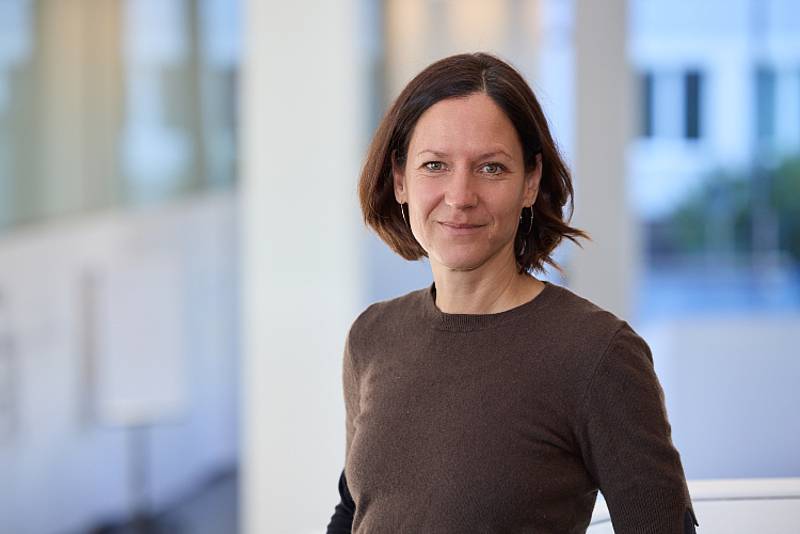
FH-Prof. DI Dr. Silvia Apprich
Head of Department; Head of Degree Programs Sustainable Packaging Technology, Sustainable Packaging Design and Technology
+43 1 606 68 77-3581
silvia.apprich@hcw.ac.at


Sustainable Packaging Design and Technology is the first part-time master’s degree program in the DACH region that deals with the interdisciplinary subject of packaging technology. This scientific technical degree program with economic elements is held in English. The students deepen their knowledge in the fields of packaging technology, sustainability, management and science and research. With advanced competencies in communication, research and project management, they are prepared for a leadership position in the packaging industry.
Master of Science in Engineering (MSc)
Tuition fee per semester
€ 363,361
+ ÖH contribution + costs for optional additional services, if applicable2
Currently no application possible
26
1 Tuition fees for students from third countries € 727 per semester. Details on tuition fees can be found in the general fee regulations.
2 The costs depend on the additional services selected from the University of Applied Sciences Campus Vienna, such as work clothing, licenses, tutorials, or excursions.
You would like to work in an area that deals with key issues of the future, such as the avoidance of food waste or the conservation of our resources. You have a technical and scientific background and are interested in the interdisciplinary subject of packaging technology. You want to deepen your knowledge of manufacturing and processing methods for packaging materials. In addition, you show strong interest in the optimization of production processes in terms of environmental, economic and social aspects. You are able to think in a networked manner and have a well-structured and organized approach to problems. You aspire to a leadership position in a company in the relevant sectors.
Work experience and employment are beneficial, but not a prerequisite for the degree program.
Sharing is good, however, not your lab space, please. You are guaranteed your own.
What you learn here is crucial to solving global problems.
Going abroad for an internship or a job: this is the next logical step when studying with us.
The relevant admission requirement is
A total of 180 ECTS credits, of which at least
In exceptional cases, the FH-council (university council) decides together with the head of the degree program. The bachelor's degree programs Sustainable Resource Management and Sustainable Packaging Technology offered at Hochschule Campus Wien fulfill the relevant admission requirement.
The course is taught entirely in English. The required language level according to the Common European Framework of Reference for Languages (CEFR) is at least
Applicants may require legalization of documents from countries other than Austria in order for them to have the evidential value of domestic public documents. Information on the required legalizations can be found here in PDF format.
For documents that are neither in German nor English, a translation by a sworn and court-certified interpreter is required. Your original documents should have all the necessary legalization stamps before translation so that the stamps are also translated. The translation must be firmly attached to the original document or a legalized copy.
As part of your online application, upload scans of your original documents including all required legalization stamps. For documents not issued in German or English, scans of the corresponding translations must also be uploaded. The head of the study program decides on the equivalence of international (higher) education qualifications. Therefore, your documents can only be checked as part of the ongoing application process.
Your path to studying at Hochschule Campus Wien begins with your registration on our application platform. In your online account, you can start your application directly or activate a reminder if the application phase has not yet started.
Due to the expected processing time for residence permits issued by the Austrian authorities, we recommend that applicants from non-EU/EEA countries submit their complete application documents as early as possible (by January at the latest).
Proof of identity
Change of name - proof
Proof of fulfillment of the relevant admission requirement
If you have not yet completed your studies, please upload proof of all courses completed to date as part of the relevant degree program, including ECTS credits.
Englisch level B2 - proof of language skills
For admission, English language skills of at least level B2 of the Common European Framework of Reference for Languages (CEFR) must be provided.
The following applies as proof:
Proof of a higher language level is also valid.
Your application is valid once you have completely uploaded the required documents. If you do not have all the documents at the time of your online application, please submit them immediately upon receipt by email to the administration of your study program (see section “Contact”).
After completing your online application, you will receive an email confirmation with information on the next steps.
The admission procedure consists of a written test and an interview with the admission committee.
Criteria
The criteria for acceptance are based solely on academic background and performance in the admission procedure. The geographical origin of the applicant has no influence on the admission decision. The admission requirements must be met in all cases. Applicants are evaluated via a 2-step admission procedure:
- Admission test
- Admission interview
The admission committee (which comprises, among others, the head of the academic section and representatives of the teaching staff) awards places to the applicants who score highest in the tests. The process as a whole and all test and assessment results from the admission procedure are documented in a transparent and verifiable manner.

The master degree program was developed together with renowned companies in the packaging industry and with professional associations of the Austrian Economic Chambers.
In teaching and research we also cooperate with the University of Munich, the Technical University of Vienna and the Austrian Research Institute for Chemistry and Technology as well as numerous renowned companies in the packaging industry. This network, which is constantly being expanded, allows us to attract outstanding lecturers, develop R&D projects and gain insight into industrial facilities through excursions. This provides you with excellent opportunities to make valuable contacts for your future career already during your studies. The degree program is offered at the Campus Vienna BioCenter with modern lecture halls and fully equipped laboratory space at the renowned Life Science campus.
Part-time: The degree program is part-time and has a high share of e-learning. Even though it is a “part-time” degree program, that does not mean you need to be employed.
In addition, you will benefit from Hochschule Campus Wien as a multidisciplinary university. For example, the Molecular Biotechnology degree programs conduct research in the field of cell-based test systems. The Industrial Packaging Technology degree program is also involved here, testing packaging for hormone activity and genotoxicity. As part of the open courses, you have the opportunity to attend courses on interdisciplinary topics. The Campus Lectures also explore current and diverse topics with prominent experts from the industry and Hochschule Campus Wien regularly invites you to join these public lecture evenings.
This master degree program will optimally prepare you for work in the development and production of packaging, in the industry, in packaging-related purchasing and sales, in the consulting sector or in retail. You will learn how to conduct cost-effectiveness analyses and optimizations in companies as well as how to independently plan and conduct life-cycle analyses. This tailor-made education, in which you will also acquire English technical language, puts you in a position to play a leading role in the international packaging industry.
The course is divided into four main topics: Packaging Technology, Sustainability, Management and Science and Research. You will learn about the latest technologies for production and testing as well as the filling and packaging process for a wide variety of packaging materials. The topic of sustainability is incredibly significant for packaging technology and will be explored extensively throughout the degree program. Presentation techniques, moderation and conflict resolution techniques, leadership as well as scientific work and research management round out your education and prepare you for a leadership position. As part of your master’s thesis, you will conduct scientific work on a topic relevant to the professional field.

"The first semester introduced us to the world of sustainable packaging and provided a good overview of current trends in packaging development."
Miguel Di Gennaro studies Packaging Technology and Sustainability.
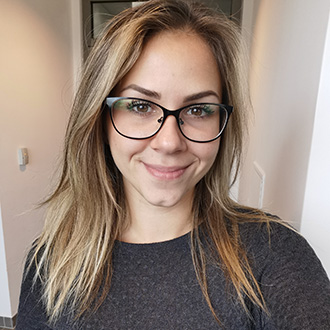
"The combination of packaging technology, sustainability, management, science and research prepares me well for promising positions in the industry."
Katharina Pavlovic studies Packaging Technology and Sustainability.
Teaching times
15 to 16 days, split over 4 to 5 blocks, per semester; attendance for the whole day required
Supported by E-learning activities
Electives in the curriculum
As part of the curriculum, you must attend 3 elective courses worth 3 ECTS each. The elective courses may be from any program offered at Hochschule Campus Wien, but must be related to packaging technology or sustainability. The possible electives and attendance of the courses is based on the number of available places. Some electives may require a separate admission procedure.
As a graduate of this program, a wide range of occupational fields and career opportunities are open to you. Find out here where your path can take you.
With an annual turnover of more than 10 billion euros and more than 35,000 employees, the Austrian packaging industry is an important factor in the Austrian economy. In the long term, the packaging industry is growing and will require even more qualified personnel, especially internationally. As a graduate of this master degree program, your economic and technical background will make you the ideal specialist for packaging technology. Your main fields of work are the manufacture of packaging, the production of goods, the trade in intensive packaging and the supply environment of the packaging industry.

Head of Department; Head of Degree Programs Sustainable Packaging Technology, Sustainable Packaging Design and Technology
+43 1 606 68 77-3581
silvia.apprich@hcw.ac.at
Favoritenstraße 222, F.2.25
1100 Vienna
+43 1 606 68 77-3590
spts@hcw.ac.at
Senior Researcher
Deputy Head of Degree Programs Sustainable Packaging Design and Technology, Sustainable Packaging Technology
Researcher
Assistant Researcher
Head of Research Center Sustainability and Packaging
Researcher
Senior Lecturer