


Daniel Trimmel, BSc MSc
Radiographer; Senior Lecturer

Project Duration: 01.02.2026 to 01.02.2028
Metabolic and non-alcoholic fatty liver disease (MASLD) is one of the most common liver diseases in Western countries and is increasingly affecting young adults as well. In light of this trend, early diagnosis and non-invasive methods for monitoring disease progression are gaining importance in clinical practice, preventive care, and health policy.
In response to this challenge, the University of Applied Sciences Campus Wien developed the idea for an interprofessional research project involving the Radiology Technology, Dietetics, and Biomedical Analysis programs, which combines modern sonographic techniques with biomedical analyses and nutritional therapy approaches.
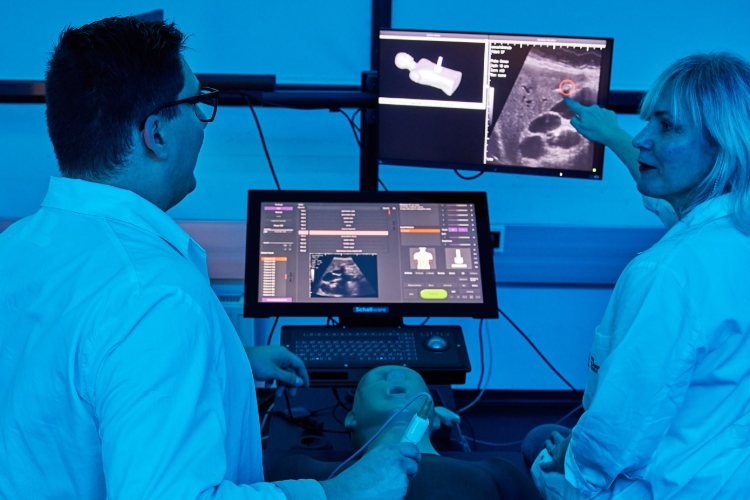
The project investigates the influence of different diets on steatotic liver changes in young adults. The ultrasound measurement UGAP (GE Healthcare) is used, which allows a quantitative assessment of the liver fat content. In addition, liver-specific, biomedical-analytical parameters, bioelectrical impedance analyses (BIA) and anthropometric data are collected in order to record changes in liver function and body composition. The aim is to quantify and influence steatotic liver changes in the context of dietary interventions.
Participants are students aged 20-30 years. After a baseline measurement, they are randomised into a control group with a generally healthy diet and an intervention group with a Mediterranean diet. Both groups receive standardised information and training videos from the Dietetics study programs. The measurements will take place at three points in time (baseline, after 6 and after 12 weeks). The sample size should be 80 people.
The central research question is whether a Mediterranean diet leads to a measurable reduction in steatotic liver changes within 12 weeks and to what extent UGAP results correlate with laboratory chemical values and BIA measurements.
Radiographer; Senior Lecturer
Dietitian; Senior Lecturer
Dietitian; Senior Lecturer
Biomedical Scientist; Senior Lecturer
Biomedical Scientist; Senior Lecturer
Senior Lecturer
Team Leader Polyvalent Diagnostics 1; Senior Lecturer