
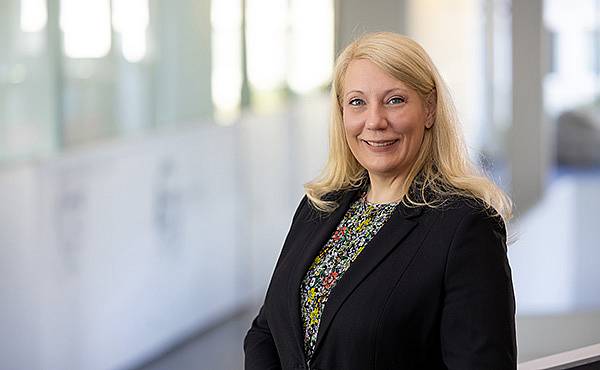
Michaela Stoffer-Marx, PhD MSc LLM
Head of Degree Program; Occupational Therapist
+43 1 606 68 77-4301
michaela.stoffer-marx@hcw.ac.at
Frequently searched

full-time
Occupational therapy helps people with physical, cognitive, psychological and social limitations, so that they can cope with everyday life as independently as possible. It concerns developing, maintaining, improving or restoring the individual's ability to act at home, at work, in school or in their free time. In occupational therapy you will train the impaired functions, compensate them with tools or adjust the spatial environment to the individual needs of the clients. The practically oriented degree program combines therapeutic, social science and medical subjects.
Please note that you can only apply for one type of organizational form (full-time or extended part-time) per academic year.
It is not possible to change after submitting your application.
Bachelor of Science in Health Studies (BSc) incl. professional qualifications
Tuition fee per semester
€ 363,361
+ ÖH contribution + costs for optional additional services, if applicable2
Application Winter semester 2027/28
15. February 2027 - 14. March 2027
36
1 Tuition fees for students from third countries € 727 per semester. Details on tuition fees can be found in the general fee regulations.
2 The costs depend on the additional services selected from the University of Applied Sciences Campus Vienna, such as work clothing, licenses, tutorials, or excursions.
You are looking for a degree program in which you can combine your interests in medicine and social sciences. You display great empathy in your interaction with people of all ages and act based on the client's wishes. Your practical skills, your technical understanding and your spatial imagination will help you to implement the suitable tools or make the appropriate adjustments to the environment. You have the ability for careful consideration and think analytically when observing movement processes and take the limits of movement into consideration. You enjoy working independently with people in their social environment and in an interdisciplinary intersection.
Thanks to the state-of-the-art infrastructure, you will gain valuable practical experience during your classes.
A practical learning phase abroad offers the opportunity to broaden your horizons and gain new impressions.
Numerous disciplines at one location: participate in research projects and learn from others.
You need a general university entrance qualification, proven by
or a relevant professional qualification with additional examinations.
Limited higher education entrance qualification
Limited higher education entrance qualifications for all higher education subjects are recognized (no specific compulsory subject). If the limited higher education entrance qualification does not include proof of English B2 or higher, English language proficiency must be proven by an examination at a recognized educational institution at the latest at the start of your studies.
Further information on the limited higher education entrance qualification can be found on the website Erwachsenenbildung.at of the Federal Ministry of Education, Science and Research.
Relevant professional qualification with additional examination
The following qualifications are defined as relevant professional qualifications:
The required language level according to the Common European Framework of Reference for Languages (CEFR) is at least
Once you have been offered a place, additional proof of suitability is required:
Applicants may require legalization of documents from countries other than Austria in order for them to have the evidential value of domestic public documents. Information on the required legalizations can be found here in PDF format.
For documents that are neither in German nor English, a translation by a sworn and court-certified interpreter is required. Your original documents should have all the necessary legalization stamps before translation so that the stamps are also translated. The translation must be firmly attached to the original document or a legalized copy.
As part of your online application, upload scans of your original documents including all required legalization stamps. For documents not issued in German or English, scans of the corresponding translations must also be uploaded. The head of the study program decides on the equivalence of international (higher) education qualifications. Therefore, your documents can only be checked as part of the ongoing application process.
The German "Fachhochschulreife" (German advanced technical college entrance qualification) is not formally equivalent to the Austrian general university entrance qualification. Whether access to the Bachelor's degree program is possible via a relevant professional qualification and which additional examinations must be taken for this is decided by the head of the degree program or study program after reviewing the application documents in the course of the admission procedure. In your online application in the selection field "Relevant admission requirement", please select the item "Foreign limited higher education entrance qualification".
Your path to studying at Hochschule Campus Wien begins with your registration on our application platform. In your online account, you can start your application directly or activate a reminder if the application phase has not yet started.
There are 36 places available each year in the Bachelor's degree program in Occupational Therapy. If you intent to enrol in addition to a professional occupation, we recommend our extended part-time program.
Please note that you may apply for only one program format (full-time or extended part-time) per academic year. You cannot change your program format after submitting your application.
Proof of identity
Change of name - proof
Relevant admission requirement for the bachelor's degree program
The relevant admission requirement is a general university entrance qualification or a relevant professional qualification.
If you do not currently have a certificate, please upload your complete certificate (all pages) from the last completed school level.
German level C1 - proof of language skills
For admission, German language skills of at least level C1 of the Common European Framework of Reference for Languages (CEFR) must be provided.
The following applies as proof:
Proof of a higher language level is also valid.
Englisch level B2 - proof of language skills
For admission, English language skills of at least level B2 of the Common European Framework of Reference for Languages (CEFR) must be provided.
The following applies as proof:
Proof of a higher language level is also valid.
Your application is valid once you have completely uploaded the required documents. If you do not have all the documents at the time of your online application, please submit them immediately upon receipt by email to the administration of your study program (see section “Contact”).
After completing your online application, you will receive an email confirmation with information on the next steps.
The admission process begins with a written online test.
Information about the written online admission test
Once you have passed the test, you will take part in the personal interview process, which consists of a practical task and an interview.
Criteria
The criteria for acceptance are based solely on performance.
The geographical origin of the applicant has no influence on the admission decision.
The admission requirements must be met in all cases. Applicants are evaluated according to the following weighting system:
The admission committee (which comprises, among others, the head of the academic section and representatives of the teaching staff and student body) awards places to the applicants who score highest in the tests. The process as a whole and all test and assessment results from the admission procedure are documented in a transparent and verifiable manner.
The Hochschule Campus Wien (HCW) is characterised by extensive expertise and a large network. Hochschule Campus Wien is the only university of applied sciences in Austria to train all seven legally regulated upper-level medical-therapeutic-diagnostic professions as well as midwifery. An important partner in the areas of education, research and development is the Vienna Healthcare Group. There is also a close cooperation with the Professional Association Ergotherapy Austria. At our attractive main location, you benefit from our modern infrastructure, which also includes functional rooms in which living situations such as kitchen, bathroom or dining area are simulated and variety of aids help you to practise in role plays. Furthermore, you have the opportunity to join a professional community across disciplines. There is great potential in research projects at the interface between health and technology and practical relevance is guaranteed when we organise one of our freely accessible lecture evenings with top-class experts as part of the Campus Lectures .
The practice-oriented degree program is situated at the intersection of health and social services. During your studies, you will learn to combine the social framework in which everyday activities are carried out at home, at work and during leisure time with the health component. To cope with everyday life, you will try out a variety of possible aids in the course of your education. You will learn hands-on about the effects of adjusting a living area or workplace to meet the physical needs of the person using it. Particularly important is the social aspect, when people’s actions and quality of life are limited by life situations such as unemployment, homelessness or living as a refugee.
Health promotion, public health, community practice and the creation of innovation are future topics in health care. In this context, 21st century skills such as creative thinking, intercultural and interprofessional work are more in demand than ever. We meet these requirements with our curriculum. A possible joint semester “FAB” at the University of Applied Sciences Metropolia (Helsinki), Hochschule Campus Wien and the University of Artevelde (Gent) will prepare you for these challenges.
You will become acquainted with the complexity of human behavior as a result of the interaction between people, environmental and activity.
Students can describe the anatomy and function of the human body.
Students can observe and describe skill components.
Students can perform performance analyses on healthy people and people with disabilities, taking into account the interaction of person, action and environment.
Integration of biomechanical, sensorimotor, cognitive, intrapersonal and interpersonal skill components.
Instruments for performing activity and performance analysis.
Implementation of activity and performance analyses from different areas of life for both healthy people and people with disabilities, taking cultural aspects into account.
Basics of adaptation and grading.
Students can perform activity analyses.
Students can perform performance analyses on both healthy people and people with disabilities.
Students can explain the meaning of adaptation and grading.
Students can apply and justify adaptation and grading in practice situations.
presenting, elaborating, explorative
self-awareness
Continuous assessment: Portfolio work, presentations, knowledge review, practical examination
Deutsch
Fundamentals, functioning and analysis of biomechanical, sensorimotor and cognitive ability components
Characteristics of physiological posture and movement
Analyses of everyday movements
Motor learning
Basics of mobilization
Basics of patient* handling and transfer
Students can name and observe the ability components biomechanics, sensorimotor skills and cognition and describe their influence on human actuation performance.
Students can combine basic anatomical knowledge with biomechanical, sensorimotor and cognitive ability components.
Students can use their basic anatomical knowledge to analyse problems in the fields of biomechanics, sensorimotor and cognition.
Students understand the significance of movement behaviour and cognition for everyday life and are able to observe and describe this and to carry out selected interventions based on this.
Lecture, practical exercises, self-awareness
Final exam: written test for knowledge retrieval, practical test
Deutsch
Basic anatomical terms, functionally oriented contents of anatomy and physiology of the locomotor system and neuroanatomy relevant to occupational therapy
Students name the basic terms of anatomy and can describe the structure and function of the human body.
Lecture, practical exercises on anatomical models
Final exam: written test, oral examination
Deutsch
Students can reflect on the complex view of occupational therapy as a human activity and justify its importance as a core concept of occupational therapy thinking/profession.
Students can analyse the influence of activity on health, participation, quality of life and well-being as the basis of their occupational therapy professional identity.
Students can reflect on different needs for activity, taking into account a client-centred approach, and explain the individual meaning of activity in the context of the person.
Knowledge of the phases of life (developmental psychology) and age-typical activities
Game: Basics, phases
Lifestyles/styles and routines with a view to variants of performance
Interdisciplinary view on critical life events and transitions
Activity profiles in different phases and situations of life with reference to social determinants (e.g. child poverty, single parents, minimum pensioners, )
"Learning from experts": contact with affected people (with disabilities, caring relatives, ...)
Concepts of Occupational Science (Balance, Equity, Transitions) in connection with health, quality of life and Life Balance
Macro, meso and micro levels
Social determinants of health, social capital and social support
Get to know and practice COPM
Students can identify needs for activity and developmental tasks in different phases of life.
Students can create client-centered and culturally sensitive activity profiles and recognize the variability of performance and coping with everyday life.
Students can carry out a standardized procedure for ascertaining actuation concerns in practice situations.
Students can describe principles of the game and its therapeutic, didactic and creative possibilities.
Students will be able to contrast the concepts of inclusion, participation and social determinants with everyday challenges in different social contexts.
Discussion, feedback, lecture with activating methods, group exercises, peer feedback, practical case studies, interviews, observations
Continuous assessment: elaborations, reflections
Deutsch
Ergotherapy-relevant content from (positive) psychology with regard to psychosocial and personality factors and the understanding of mental well-being and quality of life.
Occupational therapy relevant content from sociology with regard to social groups, society and culture as well as social action and theories of action.
Person: cognitive, physical and affective performance components with emphasis on psychosocial and personality factors: communication, cooperation, emotion, affects, frustration tolerance, critical faculties, motivation, volition, values, self-efficacy, self-confidence, spirituality, identity, commitment
Environmental factors: life situations, social role and social position, social group, social norms and deviations, gender status, power and authority, values and culture at the level of the individual, family, community and geographical region and their influence on action, diversity, physical, natural and technological environment (e.g. housing adaptation, person-environment-fit)
Action: taxonomies and different complex actions/activities/activities; routines, (in different cultures), theories of action, behaviour - action - social action, types of action; autonomy and self-reliance
Dimensions of doing: doing, being, becoming, belonging (Wilcock)
the contribution of physical activity to health and well-being:
Knowledge about the connection between climate change and health aspects
Importance of the areas of life for the individual; discussion of the categorisation of the areas of life
Immersion in a selected occupational therapy model of activity
Dealing with creative media
Dynamic system theories
Students can comprehensively present the aspects of the dimensions person, action, environment that are relevant for carrying out an activity in a specific context.
Students can grasp the complex interaction of the three dimensions person, action and environment in culturally and life-historically diverse case studies as well as in self-awareness and derive hypotheses for the individual significance of activity in the examination of these areas of life.
By referring to health concepts, students can explain the contribution of activity to health, quality of life and well-being and show understanding for autonomy and participation.
The students can explain the ICF model and explain the importance of the ICF for inter-professional cooperation.
Group work, discussion, lecture with activating methods, case solutions, self-awareness with creative media
Continuous assessment: Portfolio work, elaborations, presentations
Deutsch
Overview of current models of occupational therapy
European conceptual framework: Explanation of subject areas (activity, performance, participation, action roles, autonomy, self-reliance, routines, habits, environment, context, motivation, volition, abilities, skills, ...) and their mutual impact
Complex and linear thinking, pragmatism in connection with the history and paradigms of occupational therapy
Client*centricity
The students know the history of occupational therapy and can deduce the importance of client centricity from this.
They can explain the concept of exercise using current models of occupational therapy and establish a relationship to everyday coping, exercise needs and areas of life.
You can use occupational therapy terminology to explain the occupational therapy profession.
discussion, lecture with activating methods, work assignments (individual or group) with feedback
Final exam: written test for knowledge retrieval, written elaborations
Deutsch
Students can describe and explain the principles of evidence-based practice.
Students can critically evaluate and discuss qualitative and quantitative studies and draw correct conclusions/derivations for occupational therapy practice.
Students can search in scientific databases, library catalogues and guideline databases and document their research.
Students can present studies in English in a structured and comprehensible way and participate in discussions.
Students are able to quote correctly and can compile a bibliography.
Definition and steps of evidence-based practice
Research in scientific databases and documentation of research processes
Basic concepts of qualitative and quantitative research methods
Research Ethics
Level of evidence (EBP pyramid)
Tools for the critical evaluation of studies
Guidelines: Meaning, forms, search for guidelines
Correct citation and creation of bibliographies
Barriers to EBP in therapeutic practice and strategies for implementing EBP in practice
Forms of documentation/publication of critical assessments (e.g. systematic review, CAT)
Students can name the definition and steps of EBP and apply the basic elements of EBP.
Students can research in scientific databases, library catalogues and guideline databases and document this research.
Students are able to quote correctly and can compile a bibliography.
Students can explain the basic concepts of qualitative and quantitative research and describe the different levels of evidence.
Students can discuss ethical questions in research.
Students Students can name tools for critical evaluation and apply a tool.
Students can name barriers to EBP in therapeutic practice and discuss strategies for implementation in practice.
lecture, discussion, (group) exercises, presentations
Continuous assessment: Working out EBP in group work
Deutsch
Contents and parts of scientific journals
Search for articles
Development of studies
Reading technology
Consolidate study designs and scientific terms
Application of tools for critical appraisal
Repeat and determine EBP level
Presentation techniques
Position Paper, Statements (WFOT, COTEC, ...)
The students can critically evaluate and discuss studies.
Students can recognise and justify the evidence level of studies.
Students can present the contents and results of a study in English in a structured and comprehensible way.
Students can apply a reading technique.
Lecture, presentations, discussions
Continuous assessment: Presentations and participation in discussions
Englisch
Students communicate (in non-escalating situations) with individuals in a respectful and appreciative manner.
Students can explain the meaning of the Use of Self, apply the therapeutic modes in selected situations and reflect on their actions.
The students can apply didactic and pedagogical principles for their own knowledge acquisition and in occupational therapy practice situations.
Students can explain strategies for the design and monitoring of change processes and apply them in an exemplary manner.
Students continuously analyse their professional competences, reflect on practical expectations and experiences and derive strategies for their professional development.
The students can describe and apply legal and organisational framework conditions for the practical context and apply hygiene measures.
: Module examination with final examination character (portfolio work, practical examination, written test, presentations)
Basics of guided self-reflection
Importance of values/basic values/spirituality for professional personality development
Basics of learning (learning zones, learning levels)
Basics of communication and conversation management (including giving and taking feedback)
Specific basics of narrative conversation management - generation-specific
Basis for actuation profile
Students can describe the significance of objectives and reflection processes and can name criteria for goal formulation and critical reflection.
The students can explain the basics of learning.
Students can describe the basics of constructive and person-centred conversation and apply elements of this in practice situations.
Students can explain the importance of narrative conversation and apply elements of it in practice situations.
Students can give and take feedback rules explain and apply feedback regularly for their professional development.
self-experience, practical exercises, (peer)feedback, discussions, portfolio
Module exam
Deutsch
legal framework conditions relevant to the profession: Overview of patients' rights and measures to secure these rights; basic principles of the DSGV)
Fundamentals of ethics and diversity
Fundamentals of change management in relation to personal development
Develop and formulate individual goals, design and reflect on own change processes (professional competence development), reference to own values, inner team, ZRM, SMART, GAS
Introduction to networked (cross-module) portfolio work.
Students can explain and constructively discuss professionally relevant concepts of ethics and diversity. They can critically analyse and discuss the significance of ethical, cultural, gender and generational aspects using examples of exercises.
The students can describe selected patient rights and show the connection to basic and human rights. They can explain measures to secure patients' rights (e.g. patient advocacy, representation network, ....).
The students know the basic features of the DSGV and can describe them.
Students know the importance of change processes and can explain models of change processes.
Students can describe methods of goal development and formulation as well as selected strategies for shaping their own change processes.
Portfolio, individual mentoring (competence development talks), lecture, group work, discussions, (peer) feedback
Module exam
Deutsch
Using an ET process model, students can explain the objectives, procedure and interrelationships of all phases of the ET process, taking diversity into account.
In practice situations, students can plan, carry out and reflect on the phases of diagnosis, target agreement and evaluation with clients with different problems in a client-centred and evidence-based manner using professional reasoning.
The students name the possibilities of information collection and proceed in a structured way according to the areas of person, action, environment. They analyse and interpret collected information and are able to carry out selected assessments in practice and relate them to action concerns.
The students document findings and evaluation results in a correct, structured, clear and comprehensible manner.
Types of diagnostic procedures (findings, diagnostics, prognosis, evaluation), quality criteria, content and quality assurance differentiation (body function, activity, participation, environment), survey methods (interview, questionnaire, observe, measure)
Selected assessments to collect data on body functions, activity, participation, environmental factors
Students can assess the strengths and limitations of various diagnostic procedures on the basis of the theoretical principles.
Students can name different methods of diagnosing bodily functions and structure, activities, participation and the environment, and can carry out selected methods in practice.
Students can describe how standardized assessments are correctly used, performed and evaluated.
The students can name the quality criteria and explain their significance for diagnostic and evaluation procedures.
Students can select a suitable assessment for a specific case. They can perform and evaluate the assessment correctly, interpret the results, and observe the quality criteria.
Students will be able to select a suitable instrument for conducting a performance analysis, perform it and assess the quality of analyses.
Students are able to make differentiated observations and interpret them on the basis of different frames of reference.
Students can analyse and interpret the collected results of diagnostic procedures and relate them to operational needs.
Group work, discussion, lecture with activating methods, work assignments with feedback, peer feedback, work with core case studies, practical exercises
Final exam
Deutsch
Overview of the ET process, using a process model, e.g. CPPF, OTIPM
different tools for the collection of actuation concerns or participation e.g. Activity Card Sort, COSA/OSA, OPHI - II, BIDOC, PEAP,IPA, PEM-CY
Practice a COPM
Goal setting and goal formulation
SMART - Criteria
Criteria of good documentation
Evaluation
Basic knowledge for quality assurance
Basic forms of professional reasoning
Students can describe the phases of the occupational therapy process and explain the significance of the individual process steps.
Students can raise actuation concerns, taking into account the basics of communication, and correctly carry out a corresponding standardised procedure.
Students can collect information in a structured way according to the areas of person-action-environment.
In practice situations, students can establish contact and conduct an initial interview and justify their approach in terms of professional reasoning.
Students can formulate client-centered therapy goals in practice situations in a verifiable way and recognize forms of professional reasoning.
Students can describe the criteria of good documentation and analyse the quality of documentation.
Group work, discussion, lecture with activating methods, work assignments with feedback, peer feedback, work with core case studies, practical exercises
Final exam
Deutsch
The students can choose suitable measures from a selection of intervention measures that are based on the person, action and environment, and are client-centred.
Students can carry out a core repertoire of therapeutic measures, methods and means from different frames of reference in individual and group settings.
Students can reflect and argue the interventions in terms of professional reasoning and evidence-based practice.
: Module examination with final examination character
Knowledge test
Demonstrate interventions, create videos
Work on case studies in a networked manner
portfolio
Peer feedback
Based on clients of different age and diagnosis groups: ADL training, I-ADL training
Strategies for compensation and adaptation of everyday activities or courses of action
Strategies for learning and practicing everyday activities or action sequences
Use of tools and technologies including online activities of everyday life
Mobility, transfer, handling
Acting in everyday life without damaging the joints
Fall prevention in everyday life
Students can carry out or apply selected measures/methods/means to promote everyday skills.
The students can train activities of daily life adapted to the respective impairment, develop compensation strategies and make appropriate environmental adaptations.
Students can research appropriate aids and ensure that the aid/adaptation will improve the task performance.
The students can handle technologies in the context of environmental controls and everyday activities (e.g. official channels).
The students can instruct patients on compensation strategies and the use of aids.
Practical exercises, lecture with activating methods, group exercises with
(Peer) feedback, problem-based learning based on core case studies
Case Studies
Module exam
Deutsch
Processing of selected case studies on the basis of existing findings and operation concerns.
Application of the measures, methods and means learned in the other LVs of the module.
Application of the different forms of professional reasoning.
Students can select interventions (measures, methods and means) for concrete case studies that are geared to everyday life and skill components and demonstrate their application.
Students can reflect and argue the planning and selection of occupational therapy interventions in terms of professional/clinical reasoning.
Case work
Module exam
Deutsch
Focus on evidence-based programmes for training specific skills
Basics in terms of:
Biomechanical functional training, application of physical measures (cold, heat)
Sensomotoric training (coarse/fine and postural motor skills, sensitivity, balance, coordination training, ball skills)
Perception training
Cognitive training (memory, attention, visuo-spatial W.)
Training of psychosocial skills (e.g. training of social competences)
Basics of the production of hand splints
Students can carry out measures/methods/means to promote motor, sensory, cognitive and psychosocial ability components and skills in selected exercise situations.
Students can adapt measures/methods/methods/means to individual needs in the sense of adaptation and grading.
Students reflect on the measures/methods/measures/means selected and adapted by them in terms of professional reasoning and evidence-based practice.
Work with (core) case studies, lecture, demonstration, practical exercises
Module exam
Deutsch
Basic knowledge of technical and creative techniques with a focus on expression, structuring and planning ability
Dealing with digital media in the sense of creative expression
Guiding and instructing in the use of materials and (digital) tools with individuals and groups
Self-appropriation of techniques
Adapting a craft/creative technique to people with different skills and in different contexts
Students are able to develop craft/creative techniques independently and to guide others.
Students can use their skills in activity analysis to assess the therapeutic potential of various creative techniques and adapt them in terms of adaptation and grading.
Through their own experience, students can analyse and reflect on the effects of artistic and craft techniques in terms of structuring, expression and planning skills.
Students can analyse and reflect on artistic and manual techniques from an occupational therapy point of view with regard to self-efficacy, health and well-being.
The students can explain and demonstrate the creative use of digital technologies as therapeutic media in therapy.
Group work, discussion, feedback, peer feedback, case solutions, practical exercises, portfolio work
Module exam
Deutsch
Students are aware of their own and society's attitudes towards mental health/illness, can discuss them and evaluate them according to ethical standards. (Expert for everyday life and activity, professional; health lawyer)
Students can explain the fields of occupational therapy, clinic, diagnostics, therapy and rehabilitation of selected diseases and disorders in the field of psychiatry.
Students can plan and justify the occupational therapy process for people with mental health disorders on the basis of evidence.
Students understand problems relating to mental health/illness and are able to perform client-centred diagnosis and occupational therapy measures in mental health promotion, prevention, therapy and rehabilitation.
Students analyse, reflect and discuss their own behaviour and the effects of their own person in exercise settings and derive strategies for their professional actions.
Students can independently present and demonstrate their learning progress in an electronic portfolio.
: Module examination with final examination character
Case study with portfolio presentation
Evidence-based and client-centred occupational therapy interventions (entire occupational therapy process)
selected assessments; selected concepts; settings; measures
Remotivation Process; ZEPS; Recovery; Enabling action
Analysis and processing of selected case studies with regard to person/ environment/ activity
Mental disorders from an occupational therapy perspective
Selected communication concepts in the context of mental health promotion
Client*inside contact
Main features of work with relatives
The students can plan and justify the occupational therapy process for selected cases of the department in different settings, based on evidence and client-centred.
Students can select, describe and justify a selected range of relevant intervention options of the department and carry out the interventions in a client-centred manner.
The students can describe relevant diagnostic instruments and perform them exemplarily.
The students can classify, describe and apply selected occupational therapy concepts in an exemplary manner.
Students can reflect, represent and present their learning contents and their learning progress in an e-portfolio.
Inverted classroom method, portfolio, team teaching, activating methods, group work, case studies, discussions, role plays with self-experience (peer) feedback, work assignments
Module exam
Deutsch
attitudes and values, ethical issues and societal positions related to mental health/illness
Definitions of terms
Determinants of mental health / illness and area-related occupational therapy offers in the health care system; client-centeredness and its limits in the work area
10 steps for mental health; recovery process
Selected communication instruments
General psychopathology and classification tools
Cause, clinic, diagnostics and therapy of selected occupational therapy relevant clinical pictures (F1-F6)
Interdisciplinary team in psychiatry
Forms of mental health care
Introduction to portfolio work
Students can discuss questions of their own attitudes and ethics regarding mental health/illness and relate them to social aspects and explain the limits of client-centeredness.
Students can describe determinants of mental health and analyse and explain the influence of mental disorders on person/environment/action.
Students can research, differentiate and explain different forms of psychiatric care and explain therapeutic and rehabilitative interventions in a multidisciplinary team.
Students are able to name and describe terms, clinical classification tools and their application as well as describe, analyse and present the psychiatric basics of selected disorders in a case-related manner.
Students can reflect, present and explain their learning content and their learning progress in an e-portfolio.
Lecture, group work, discussion, (peer) feedback, activating methods, work assignments, case work, practical exercises, team teaching
Module exam
Deutsch
Under professional supervision and guidance, students can carry out parts of the occupational therapy process in a client-centred manner, taking into account the knowledge and skills of professional action competence acquired up to this point.
Students can create a professional relationship in interaction with clients and colleagues and recognise and reflect on aspects of therapeutic attitude
Reflection of individual practical experiences with special consideration of the theory-practice transfer
Presentation of occupational therapy processes from the internship
Free topics from the areas: professional relationship building, therapeutic attitude, self-care
In their interaction with clients and colleagues, students recognise cultural, gender and generational aspects and reflect on their attitudes.
Students analyse and reflect on their practical experience in working with clients and explicitly apply different forms of professional reasoning.
Students recognize aspects of interprofessional work and discuss them in the context of a reflection.
Students develop solution strategies for professional, communicative and ethical challenges in the current internship context in situations accompanying the internship with teachers and/or peers.
Students recognise the need for self-care, develop strategies for their daily work and implement them step by step.
(Peer)feedback, portfolio, discussion, (case) presentations, peer group
Continuous assessment
Deutsch
Introduction to occupational therapy work under guidance and supervision with special emphasis on the following points:
Work with clients: Planning, implementation and reflection of the occupational therapy process
Work in intra- and interprofessional teams
Work organisation
Establishing professional relationships with clients and colleagues
Documentation
Applied evidence-based practice and professional reasoning
Students are able to recognise dimensions of evidence-based practice and are able to independently acquire and apply knowledge and skills relevant to the conduct of individual therapy sessions.
The students can reflect on all steps of the therapeutic process according to concrete guidelines in the sense of clinically professional reasoning and document them conclusively and professionally correct.
Students can create a professional relationship through interaction with clients and colleagues.
Students act in accordance with professional ethics and use reflection and feedback to further develop their therapeutic actions and professional attitude.
The students show personal responsibility and self-organisation in the design of the internship
Students can describe the main areas of responsibility of those professional groups they get to know during their internship.
guided internship
Continuous assessment
Deutsch
Students communicate (in non-escalating situations) with individuals in a respectful and appreciative manner.
Students can explain the meaning of the Use of Self, apply the therapeutic modes in selected situations and reflect on their actions.
The students can apply didactic and pedagogical principles for their own knowledge acquisition and in occupational therapy practice situations.
Students can explain strategies for the design and monitoring of change processes and apply them in an exemplary manner.
Students are able to continuously analyse their professional competences, reflect on practical expectations and experiences and derive strategies for their professional development.
Students can describe legal and organisational conditions for the practical context and apply hygiene measures.
: Module examination with final examination character
Theory and practice of patient-centered conversation (among other things according to each), therapist as leading element
Fundamentals of pedagogy and didactics, forms of learning and teaching
Basics of adult education
Design of teaching/learning processes for the acquisition of knowledge and for working with clients
Shaping and reflecting your own change processes (professional competence development), reference to your own values, use of self, shaping peer feedback
Students can explain the structure of a client interview (according to the Calgary Cambridge Guides), describe the individual steps and recognize them in a conversation.
Students can identify communicative skills and explain their benefits.
In practice situations (with acting patients), students show effective empathic reactions to the client's emotions.
Students can select communication skills appropriate to the situation and apply them in the initial occupational therapy consultation (in practice situations with acting patients)
The students can explain the basics of learning and teaching.
Students can explain didactic and pedagogical principles and explain their benefits for their own knowledge acquisition and for working with clients.
Students can describe different forms of guidance.
Students can select appropriate forms of activity guidance for people in practice situations and carry out the guidance taking into account didactic and pedagogical principles.
Students can regularly reflect on their development process (with peers and/or teachers) and evaluate the goals for their professional development. They document this in a descriptive and more in-depth reflexive form in a cross-module development portfolio.
Lecture, practical exercises with and without acting patients*, group work, discussions, peer feedback/mentoring, portfolio
Module exam
Deutsch
Getting to know organizational and administrative processes, internship manuals (incl. task pool)
Interdisciplinary tasks and exercises on e.g.: ET process documentation, dealing with serious fates (illness/death/death)
Professional reasoning
Basic knowledge of interprofessional cooperation (within the framework of moviemornings)
Hygiene in the occupational therapy setting: Introduction to practical hygiene measures with special emphasis on nosocomial infections, hygiene guidelines and standards
Department specific tasks and exercises (incl. specific patient rights)
Use of Self, Therapeutic Modes
Accompany free topics in the areas of communication and cooperation with clients* and team, including change processes
Students can describe administrative-organisational procedures for internships.
The students can describe subject-specific patient rights.
Students can describe and apply professionally relevant hygiene guidelines and measures.
Students can discuss internship-related topics (subject-related, interdisciplinary and interprofessional) with regard to their professional competence.
Students can analyse and reflect on their internship expectations regarding communication and cooperation with clients* and teams and develop strategies for dealing with expected challenging situations.
Lecture/presentation, practical exercises, portfolio, discussions, (peer)feedback, case discussions, group work
Module exam
Deutsch
Students can describe selected noncommunicable chronic diseases (NCD) and can explain the influence of health determinants in this context.
Students can describe everyday challenges (e.g. pain, fatigue ...) of people with NCD and explain their influence on health and well-being.
Students can analyse the individual lifestyle of clients with chronic problems and apply appropriate strategies for lifestyle changes to improve their health and well-being.
Students can reflect on their own view and experience of sexuality and spirituality and discuss their own attitude towards working with clients with NCD.
Students can reflect on their attitude towards suicidal behaviour and discuss a suitable approach within the occupational therapy process.
Students can reflect on their attitude towards palliative care and discuss a suitable approach within the occupational therapy process.
Instruments for the survey of quality of life/style
Consulting concepts and programs for the management of pain, fatigue
Dealing with suicidal tendencies
Importance of sexuality and spirituality for the quality of life
Occupational therapy in palliative care (including dealing with dying and death)
Advice on how to achieve a healthy lifestyle, health coaching on the basis of Motivational Interviewing
Students can describe the harmful effects of NCD on physical and mental health.
Students can identify individual needs for everyday coping of clients with NCD and select appropriate evidence-based measures.
Students can advise clients in both preventive and therapeutic contexts on how to organise their everyday life and lifestyle and thus enable them to improve their quality of life.
Students can reflect on their own view and experience of the reciprocal effects of illness and lifestyle on everyday life as well as on health and well-being, and discuss them on the basis of selected problems.
Students can reflect on their own attitudes towards suicidality and palliative care and discuss professional behaviour and procedures in the occupational therapy process.
Focus topic days, knowledge transfer, practical exercises, discussion, reflection
Final exam
Deutsch
Basics of pathology, selected KH images of internal medicine
Effects of NCD on health and well-being and individual daily life
The importance of lifestyle and health determinants
Students can define the term Non Communicable Deseases (NCD).
The students can describe the basics of pathology as well as selected clinical pictures of internal medicine.
Students can describe the mutual impact of illness and lifestyle on everyday life and on health and well-being.
Lecture
Final exam: Written test
Deutsch
Students are aware of their own and society's attitudes towards age, can discuss these in terms of diversity/interculturality and evaluate them according to ethical standards.
Students can describe the tasks of occupational therapy for older people in different contexts as well as geriatric and gerontological basics.
Students can plan the occupational therapy process with older people on the basis of evidence and justify and critically reflect on it in terms of professional reasoning.
The students can select and carry out client-centred diagnostic findings and therapeutic interventions with or for older people.
Students understand problems related to health/illness in old age and are able to carry out client-centred occupational therapy interventions with older people and/or in role-play in selected exercise situations.
: Module examination with final examination character
Oral examination, practical examination, group work, presentations, case studies, portfolio work
the occupational therapy process with people in different age groups in the old age phase of life (including aspects of multimorbidity, frailty, ...) with regard to activation, participation and autonomy
Basics of diagnostic/evaluation methods and occupational therapy measures for selected problems in old age (e.g. people with dementia, falls in old age, hearing and visual impairments ...)
Prevention of falls
Basic knowledge of work/counselling for relatives and multi-professional cooperation in working with older people
selected geriatric basics of reablement and mobile acute geriatrics
The students can plan the occupational therapy process on an evidence-based and client-centred basis for selected problems of older people.
The students can select a selected spectrum of occupational therapy interventions in the field of work on a case-by-case basis, describe them, justify them on the basis of evidence and carry them out in practice situations.
The students can describe, carry out, evaluate and correctly interpret client-centred diagnostic/evaluation options relevant to occupational therapy work with older people.
The students can describe medical basics of selected clinical pictures from the field of geriatrics and analyse them from an occupational therapy perspective.
Students can illustrate the complexity of the client's internal system in working with older people and the relevance of multi-professional cooperation.
Case study work, lecture, practical exercises with feedback, peer reflection, group work, discussions
Module exam
Deutsch
Gerontology with special consideration of differentiation of age groups in the old age stage of life, social determinants of health of old people, ageism, multimorbidity, old people as experts,
instant aging
Learning in old age, geragogy, psychological aspects of the old age stage of life
Work contexts with older people (incl. interprofessional team; from GF and PHC to long-term; support offers for older people such as social services, care allowance, ...)
specific communication with older people (individually and in groups), possible validation, biographical approaches, hearing and vision impairment,
Understanding the age stage (specific issues, diversity, challenges, etc.)
Students can describe gerontological basics, social determinants of health of elderly people as well as multimorbidity and can explain their importance for occupational therapy work with elderly people.
The students can research and describe different work settings with older people and analyse the tasks of occupational therapy and the interprofessional team.
The students reflect on their own view/attitude regarding age, can relate it to social aspects and discuss the influence of their own attitude on therapeutic work with older people.
Students can describe communicative basics for occupational therapy work with older people and apply specific communication techniques in exercise situations.
Lecture, self-awareness, practical exercises, peer reflection, group work, discussions, portfolio
Module exam
Deutsch
Students can reflect on their own experiences, attitudes and social developments concerning the period of childhood and adolescence, discuss aspects of diversity/interculturality and name guidelines for child protection.
Students can describe the field of occupational therapy with children and adolescents, the different settings and objectives, and the role of occupational therapy in interprofessional teams.
Students can present medical, (developmental) psychological and pedagogical basics for occupational therapy with children and adolescents and explain their significance for the therapeutic process.
Students can plan, justify and critically reflect on the occupational therapy process for children and young people in standard situations in a client-centred and evidence-based manner.
The students can carry out selected occupational therapy measures for diagnosis and intervention in children and young people.
Diversity of life situations and realities of children and young people
Reflection of own experiences and attitudes towards childhood and adolescence
Development models, developmental pathways of childhood skills and everyday skills
Humanistic and constructivist conception of man
Fields of work, settings, objectives and role of occupational therapy with children and young people
Effects of selected disease and disorder patterns on activity and participation.
the occupational therapy process within the framework of health promotion, prevention, therapy and rehabilitation with children and adolescents in standard situations
ascertain the concerns of children and young people, parents and other relevant persons
Basics of diagnostic findings and therapeutic measures for selected developmental disorders and clinical pictures of childhood and adolescence (e.g. attention deficit and hyperactivity syndrome, circumscribed developmental disorder of motor functions, autism spectrum disorder, infantile cerebral palsy, cognitive impairment)
Guidelines and evidence relevant to occupational therapy
Practical practice of selected parts of the occupational therapy process
The importance of play in the development of the child and in occupational therapy
Basics of parental work and counselling (reflection on different family systems, parenting styles, ...)
Students reflect on their own experiences, attitudes and social developments during the period of childhood and adolescence. They discuss aspects of diversity/interculturality.
Students can describe the field of occupational therapy with children and adolescents, the different settings and objectives, and the role of occupational therapy in interprofessional teams.
Students can present developmental psychological and pedagogical basics for occupational therapy with children and adolescents and explain their significance for the therapeutic process.
Students are able to plan the occupational therapy process for children and young people in standard situations in a client-centred and evidence-based manner and to justify and critically reflect on their choice.
The students can carry out selected occupational therapy measures for diagnosis and intervention in children and young people.
Lecture, discussion, group work, work assignments, case studies, practical exercises
Final exam
Deutsch
Development of the child (incl. prenatal development)
Cause, clinic, diagnostics, therapy, rehabilitation and prognosis of the most relevant congenital and acquired diseases, disabilities and malformations in childhood and adolescence relevant for occupational therapy:
Premature birth with risks and consequences, circumscribed developmental disorders, autism spectrum disorder, ADHD, infantile cerebral palsy, cognitive impairment, sensory disabilities and perceptual disorders, syndromes, muscle diseases, arm plexus paresis, dysraphism, tumours, multiple disabilities, etc.
Selected child and adolescent psychiatric problems
Raising awareness of rare diseases
Emergency measures and child protection, duties in the event of suspected threats to the welfare of children
Students can explain the cause, clinic, diagnostics, therapy and rehabilitation of selected occupational therapy relevant diseases and disorders of childhood and adolescence.
Students can name emergency measures, child protection guidelines and duties in case of suspected child welfare risks and know how to react.
Lecture, discussion, case studies, videos
Final exam
Deutsch
Students are aware of their own and society's attitudes towards physical illnesses and disabilities, can discuss these in terms of diversity/interculturality and evaluate them according to ethical standards.
Students can explain the cause, clinic, diagnosis, therapy and rehabilitation of selected occupational therapy relevant diseases and disorders from the fields of neurology, traumatology, orthopaedics and rheumatology.
The students can plan and justify the occupational therapy process for people with neurological, traumatological, orthopaedic and rheumatological indications on the basis of evidence.
The students can select and carry out client-centred diagnostic and therapeutic measures in the above-mentioned fields.
Overview of the departments of neurology, traumatology, orthopaedics, rheumatology
Selected diagnostic procedures:
free initial diagnosis, subject-specific assessments, hand findings, sensitivity findings, functional examination, examination of balance, tone, neuropsychological functions, etc.
Selected treatment methods:
joint protection, functional training, tone regulation, sensitivity training, physical methods,
specific ADL training and supply of aids,
basics of splint fabrication
Students can reflect and discuss their own experiences and attitudes towards physical illness and disability and related aspects of interculturality and diversity.
The students can describe a selected spectrum of diagnostic possibilities relevant to the fields of work mentioned.
The students can select and correctly perform client-centered diagnostic procedures for the above-mentioned fields of work.
The students can describe a selected spectrum of therapeutic measures relevant to the fields of work mentioned.
The students can select therapeutic measures for the above-mentioned fields of work in a client-centred manner and carry them out correctly in different work settings.
lecture, practical exercises, group work, videos, accompanied self-study
Final exam: Knowledge retrieval and practical test
Deutsch
Basics of neurology
Basics of neuropsychology
Implementation and modification of the occupational therapy process in the context of health promotion, prevention, therapy and rehabilitation for selected neurological and neuropsychological diseases and disorders such as insult, craniocerebral trauma, multiple sclerosis, neglect syndrome, apraxia, etc.
Students can describe neurological and neuropsychological basics of selected disease patterns.
Students can plan the occupational therapy process for selected neurological and neuropsychological clinical pictures on an evidence-based and client-centred basis.
The students can perform case-related occupational therapy diagnosis and treatment on an evidence-based and client-centred basis.
lecture, group work, case studies, problem-based learning
Final exam: Processing of case studies
Deutsch
Basics of orthopaedics, traumatology and rheumatology
Implementation and modification of the occupational therapy process within the framework of health promotion, prevention, therapy and rehabilitation for selected clinical pictures in the fields of orthopaedics, traumatology and rheumatology
such as rheumatic diseases (arthrosis, arthritis), injuries and diseases of the upper extremity, especially the hand (tendons and nerve injuries ....), the lower extremity and the spine
Students can describe the medical basics of selected clinical pictures from the fields of traumatology, orthopaedics and rheumatology.
Students can plan the occupational therapy process for selected clinical pictures from the fields of traumatology, orthopaedics and rheumatology on an evidence-based and client-centred basis.
The students can perform case-related occupational therapy diagnosis and treatment on an evidence-based and client-centred basis.
lecture, group work, case solutions, problem-based learning
Final exam: Processing of case studies
Deutsch
Students analyse and reflect on their own behaviour and the effects of their own person in different settings (especially the 1st internship) and derive strategies for their professional development from this.
Students analyse and discuss aspects of ethics and diversity on the basis of situations from their internships in conjunction with corresponding theories on ethics and diversity.
Students can describe procedures in conflict management and apply them in the context of solution-oriented discussion.
Students know the importance of self-care, can describe strategies for self-care and apply them to their role as occupational therapists in training in the sense of mental hygiene (and stress management).
: Module examination with final examination character
Portfolio work, active participation in self-awareness days, practical examination, presentation
Self-care
Theory on Expert*in/Noviz*in
Basics, basic skills: drama triangle, de-escalation, conflict management/resolution
Practical aspects of ethics and diversity
Students can explain the basics of the drama triangle, de-escalation, conflict management and solution-oriented communication models.
In selected dilemma situations, the students show approaches to solution-oriented conversation.
Students can critically analyse and discuss the significance of cultural, gender and generational aspects in selected dilemma situations and explain their own views on them.
Students regularly set goals for their professional development and regularly reflect on their development process (with peers and/or teachers). They document this in a descriptive and more in-depth reflexive form in a cross-module development portfolio.
Students can describe concepts of self-care and explain their significance for professional work.
The students derive concrete strategies for their role as occupational therapists in training from the concepts of self-care and implement them step by step.
individual mentoring (competence development talks), practical exercises with and without acting patients, lecture, discussion, (peer)feedback, portfolio, group work
Module exam
Deutsch
PLP 2 - Reflection and feedback on internship documentation
Self-confrontation based on the practical experience in the context of self-awareness, Sekoan, resilience
growth mind set
Based on their practical experience, students reflect on their personal values and consciously deal with their influence on their therapeutic work.
The students reflect on their experiences from the internship and identify their strengths and weaknesses in terms of their professional competence.
The students derive concrete individual learning steps and strategies for the further development of their professional attitude/action from the strengths/weaknesses analysis and implement them. In doing so they use the knowledge of the Growth Mind Set concept.
Lecture/presentation, self-awareness, group discussions, (peer)feedback, group work, portfolio
Module exam
Deutsch
Students can write a scientific literary work: they can develop a research question, systematically research in databases, record, reproduce and evaluate scientific texts, network and discuss the findings of studies, guidelines and textbooks and draw conclusions for practical application.
Students can apply the basic skills of scientific writing and citation.
Students can present the literature review they have written themselves based on data and results using presentation techniques common in the scientific field.
: Module examination with final examination character
Writing and presenting a literature review
Development of a research question, documentation of the own research
Writing a concept
Presentation and critical reflection of your own work steps in a small group
give feedback to fellow students on their work process
Writing a literature review
Presentation of the literature review
The students can develop a question and write a concept.
Students can document the results of their research in a structured and comprehensible way.
Students can critically evaluate studies and assess the evidence level of studies.
Students can link current findings from research and the content of guidelines with knowledge from textbooks and draw conclusions for practice in terms of evidence-based practice.
Students can correctly apply principles of academic writing and citation.
The students can write and present a literature review.
Presentation of the work steps in small groups, feedback, peer feedback, text feedback
Module exam
Deutsch
Work steps of a literature review
Structure of a review
Read, present and discuss published reviews
Documentation of a systematic search in databases
Citation and preparation of a bibliography
Criteria for scientific writing
Students can name the steps for creating and writing a review and explain the individual steps.
Students can name the different sections of a review, explain the contents of the sections and name quality criteria for reviews.
Students can systematically research in scientific databases, guideline databases and libraries and document their research in a comprehensible way.
Students can create references and bibliographies according to the given citation style and name the criteria for a scientific writing style.
lecture, group work, discussion, lecture with activating methods, practical exercises
Module exam
Deutsch
Students can carry out the planning, implementation and evaluation of occupational therapy groups in the leadership role, reflect on them and justify them in terms of professional reasoning.
Students can explain and apply evidence-based group programmes.
Students are able to build and shape the therapeutic relationship with the participants, taking into account intercultural, gender and generational aspects, and to guide the group activities in a targeted manner.
Students can cooperate and communicate in an appreciative manner in teamwork, reflect on their own attitude in the team and thus contribute to a constructive team culture.
Practising first conversations
Clinical/professional reasoning
Application of the occupational therapy process with concrete implementation with client groups (planning, reflection and feedback)
Cooperation, communication and reflection within the team
Critical reflection and discussion of group dynamics (taking into account the roles of leadership, co-leadership and participants) in working with the client group
Reflection and discussion of ethical, intercultural, gender- and generation-specific as well as interprofessional aspects of practical work
The students can plan the occupational therapy process for the client group as a team and develop it further through feedback and critical reflection.
Students can reflect on the team processes and their contribution to them and expand their ability to cooperate.
Students can take on different roles in teamwork, analyse and reflect on their own strengths and weaknesses in the exercise of these roles and actively shape their individual development process in this context.
Students can discuss ethical, intercultural, gender- and generation-specific as well as interprofessional aspects for implementation in practice.
Students participate actively and constructively in teamwork and in the planning and reflection processes.
Tutorial, feedback and peer feedback, critical reflection in the group, group work, discussion. Working with drama patients
Continuous assessment
Deutsch
Making initial calls,
Occupational therapy programs for groups
Leading and planning groups
Application of the occupational therapy process with concrete implementation with client groups (implementation with clients),
Theories on teamwork
Fall prevention, lifestyle redesign for different target groups, graphomotor skills, ZEPS, Ernergy conservation programs (Fatique....) and others
Students can describe the theoretical basics of groups, group dynamics and leading groups.
Students can select and apply occupational therapy group activities in a targeted manner and vary them by means of adaptation and grading in the interests of client centricity.
Using manuals, students can learn the content and didactics of evidence-based group programmes.
Students can select participants specifically on the basis of initial interviews.
In the role of group leadership and co-leadership, students can communicate with the participants in an appreciative manner and implement the evidence-based group programmes in a technically correct manner.
The students can describe the basics of teamwork and use this knowledge to actively contribute to team development.
Lecture, group work and practical work with client groups
Continuous assessment
Deutsch
Students can apply the occupational therapy process to work in communities and organisations.
Students can develop a health-promoting offer for target groups relevant to health policy in rural or urban areas.
The students can develop and implement a preventive or health-promoting offer in an organisation/company.
Focus on healthy ageing and equal health opportunities: transition, social isolation, lifestyle redesign, poverty in old age, mental health
community development framework
Standards of health promotion
Inclusion and quality of life
National and regional framework conditions for project implementation, financing possibilities
Project Management
Presentation technology
Students can make contact with members of a community and with stakeholders, using participatory and consultative forms of communication.
The students can carry out a needs analysis with the community regarding participation, social inclusion and quality of life with a suitable framework and design an innovative project based on this.
The students can cooperate in project development and show teamwork skills.
Students can evaluate their own motivation for personal development, their courage to innovate, as well as their agility and tolerance for ambiguity.
Students can evaluate their professional reasoning by dealing with complex situations in and of communities and reflect on their experiences for future tasks.
Lecture and discussion on the basics of community work and health promotion as well as project management
Ideas workshop for project development
Contact to community and stakeholders
Tutorials on project development with peer feedback
Practical exercises on presentation techniques
Concluding reflection
The practical implementation of the planned projects is possible within the framework of a subsequent internship or an optional module.
Final exam: Oral presentation of the projects with innovative methods
Critical self-reflection and evaluation with regard to communication and collaboration skills, motivation, innovation, agility and tolerance of ambiguity
Quality of the project and professional reasoning
Deutsch
ASchG, Bildschirmarbeitsverordnung, DSGV, basic principles of industrial science and industrial psychology with a focus on digitisation and older employees
Organisational framework: Tax forms in organisations, corporate culture, economic efficiency, mission
Ergonomic workplace design
Environmental design
Assessments and measurement methods
Body perception, biomechanics, spiral dynamics, analysis of the working posture, relief exercises
Mental stress, stress management, break management
Consulting and Coaching
Models for behavioural change
Students are able to apply industrial science, industrial psychology and legal principles in complex situations.
With the help of interviews and observations and by applying appropriate assessments, students can analyse workplaces with regard to physical and mental stress and its influence on the health of workers.
The students can develop and implement a preventive or health-promoting offer according to the given problem in the company / at the workplace autonomously and show personal agility.
Students can demonstrate their counselling and coaching skills in the real workplace, including knowledge transfer with regard to behavioural and relational ergonomics, stress and break management and evidence-based exercise instructions.
Students can evaluate and modify possible client-centred strategies for changing behaviour in one-off interventions.
Lecture with activating methods and discussion
Case-based learning of basic knowledge with presentation and feedback,
Practical exercises: Video and photo analyses, testing of sitting and standing workstations, exercise instructions according to spiral dynamics, stress management
Self-awareness: body awareness exercises and analysis of one's own posture, possibilities of pain reduction
Case work in interprofessional team teaching with industrial psychology
Advanced training of the consulting competence in 5 steps
Final exam: Presentation of case studies, written posture analysis, reflection report on assessments and counselling situations, practical advice in the field and illustration of the process carried out in a written or oral report.
Deutsch
Under professional supervision, students can independently carry out parts of the occupational therapy process in a client-centred manner, taking into account the knowledge and skills of professional action competence acquired up to this point.
Students can create a professional relationship through interaction with clients and colleagues and reflect on their therapeutic attitude.
Reflection of the individual internship experience with special consideration of the theory-practice transfer
Presentation of occupational therapy processes from the internship
Free topics derived from the current internship situation
In their interaction with clients and colleagues, students can recognise cultural, gender and generational aspects and reflect on their attitudes.
Students can identify aspects of interprofessional work at national and international level and discuss them in the context of reflection.
Students can point out ethical aspects in their work with clients and discuss them constructively in learning groups.
The students can reflect and argue their own therapeutic approach in direct client work on the basis of experiences in practical training in the sense of professional reassignment.
Students are able to present the current life situation of a client* in a comprehensive manner, taking into account the interrelationships of context, aspects of activity and personality.
Students can derive concrete strategies for everyday practical work from the concepts of self-care and implement them.
(Peer)feedback, portfolio, discussion, (case) presentations, peer group
Continuous assessment
Deutsch
Ergotherapeutic work under guidance and supervision with special emphasis on the following:
Work with clients: Planning, implementation and reflection of the occupational therapy process
Work in intra- and interprofessional teams
Work organisation
Establishing professional relationships with clients and colleagues
Documentation
Applied evidence-based practice and professional reasoning
Students can identify and name dimensions of evidence-based practice and are able to independently acquire and apply knowledge and skills relevant to the context of practice.
Students can reflect and argue on the planning and implementation of all steps of the occupational therapy process in terms of clinical/professional reasoning and adapt the therapeutic measures accordingly.
In working on specific tasks, students can document all phases of the occupational therapy process independently and comprehensibly.
Students can take cultural, gender and generational aspects into account in the design of the occupational therapy process in terms of diversity.
Students can contribute their occupational therapy expertise in intra-, and multi-professional teams.
Students are able to design communication and interaction with various target groups (client*internal systems, groups and communities) in a respectful, appreciative, cooperative and situationally appropriate manner.
Students are able to act in accordance with professional ethics and develop their therapeutic action and professional attitude, taking into account reflection and feedback from the current and previous internship.
The students show personal responsibility and self-organisation in the design of the internship.
Supervised internship
Continuous assessment
Deutsch
Students can communicate in an appreciative and respectful manner in their role as group leaders.
Students can apply and reflect on strategies for cooperation and teamwork in practice situations.
Students can reflect on the basics of counselling and can use their communicative skills in a goal-oriented manner in the context of counselling.
Students continuously analyse their professional competences, reflect on practical expectations and experiences and derive strategies for their professional development.
Attendance of a further education course, event, congress, conference, open course, which supports the individual professional development of the respective students
Students can attend an individual training course adapted to their personal needs and level of education and reflect and report on it.
individual
Continuous assessment
Deutsch
KE conversations (focus on own development - based on topics from self-awareness in the 3rd semester)
Theory of consulting concepts and practical exercises
Shared decision making
Role, tasks of (and demands on) the group management with focus on leadership competencies
Students can describe elements of conversation in and leadership of groups.
In selected practice situations, students can communicate with groups in an appreciative and respectful manner in their role as group (co-)leaders, taking into account intercultural, gender and generational specifics.
Students can describe different counselling concepts and carry out solution-oriented, client-centred counselling in selected contexts, taking into account the shared decision making process.
Students can regularly reflect on their development process (with peers and/or teachers) and evaluate the goals for their professional development. They document this in a descriptive and more in-depth reflexive form in a cross-module development portfolio.
Lecture, practical exercises with and without acting patients*, group work, (peer)feedback, discussions, portfolio
Final exam
Deutsch
Interdisciplinary tasks including practice: e.g.: specific documentation with special focus on goal development and formulation, enablement skills, diversity, professional reasoning
Institutional and legal framework of the internships
Advanced exercises for specific departments
Students can explain the legal/institutional framework of their internships (and relevant patient rights) in a national or international context.
The students can demonstrate practical skills in practice situations.
Students can discuss and reflect on internship-related topics (e.g. interprofessional team, seniority, ...) with national and/or international peers with regard to their professional competence.
Students become aware of their attitudes and positions with regard to ethical, cultural, gender and generational aspects of their practical work and are able to explain them.
lecture, presentations, discussions, (peer)feedback, group work, practical exercises, portfolio
Continuous assessment
Deutsch
Students can plan occupational therapy services in different care settings using professional legal, ethical, economic, ecological and quality assurance principles and guidelines
The students know the professional groups working in the Austrian health and social services sector and their competence, can identify interprofessional interfaces and design successful examples of interprofessional cooperation.
Within the framework of inter-professional networks, students can work out and exchange overriding health-related topics in an international context.
Students can reflect on the importance of professional interest groups and professionally represent their occupational therapy services to the outside world.
They recognise the necessity and knowledge of possibilities for professional political commitment.
Organisation and tasks of professional interest groups
Basics of marketing (services marketing, market, company and competitor analysis, means of communication in marketing, corporate identity and corporate design, ...)
The students can justify the importance of professional interest groups.
The students can discuss current issues of professional policy.
The students can offer and market occupational therapy services professionally.
performing, elaborating
Final exam: Project presentation
Deutsch
Profession, interprofessionality, multiprofessionality in an international context
Paradigms of the different professional groups involved in international comparison
Interprofessional cooperation - opportunities and challenges
Selected methods for coping with challenging situations
Analysis and processing of selected challenging situations from everyday therapeutic life (in interprofessional and international student teams)
Students can compare national and international perspectives on challenging situations in the therapeutic field of action.
Students are able to analyse challenging situations in the therapeutic field of action in interprofessional and international teams and to work on them in a solution-oriented way, while presenting the position of their own profession.
Students can apply selected methods to cope with challenging situations in an exercise context.
Students can prepare the results of their analysis and work in inter-professional and international teams and present them in plenary sessions.
presenting, elaborating, explorative
in interprofessional and international group settings
Final exam: Group presentation, reflection
Englisch
Fundamentals of business administration
Legal, administrative, organisational and ethical requirements for the exercise of a freelance profession or the establishment and management of a practice
Students can explain the steps necessary to open and run their own practice in terms of legal, professional, administrative and organisational requirements and also take ethical aspects into account.
The students can apply business management principles, which are necessary for the freelance practice of occupational therapy, in an exemplary manner.
Predominantly performing, elaborating
Final exam: Final inspection in writing
Deutsch
Health Care and Health Policy in Austria
Data protection in the healthcare sector
Extracts relevant to the profession from medical law, social security law and labour law
The students can present the structure and organisation of the Austrian health care system.
Students can describe the principles of medical, social security and labour law and apply them to the special circumstances of occupational therapy.
The students can present the guidelines of data protection and derive the necessary measures for the occupational therapy sector.
Students can use the basics of professional law for occupational therapists for occupational therapy practice.
Students will be able to apply the legal requirements in the field of tele-ergotherapy to practice.
Predominantly performing, elaborating
Final exam: written test
Deutsch
Students are able to carry out the entire occupational therapy process independently under professional supervision and in a client-centred manner, take into account all dimensions of evidence-based practice and are able to acquire and apply relevant knowledge and skills independently.
Students can create a professional relationship through interaction with clients and colleagues and reflect on their therapeutic attitude.
Reflection of individual practical experiences with special consideration of the theory-practice transfer
Presentation of occupational therapy processes from the internship
Free topics from the current internship situation
In their interaction with clients and colleagues, students recognise ethical, cultural, gender and generational aspects and reflect on their attitudes.
Students can reflect and argue their occupational therapy approach (occupational therapy process) in their work with clients/systems on the basis of experiences from the internship in terms of professional reasoning.
Students recognize aspects of interprofessional work on a national and international level and are able to analyze similarities and differences based on different internship experiences.
Students can derive concrete strategies for their everyday practical and study life from the concepts of self-care and implement them.
(Peer)feedback, portfolio, discussion, (case) presentations, (online if required) Peer group
Continuous assessment
Deutsch
occupational therapy under supervision with special emphasis on the following areas:
work with clients: Planning, implementation and reflection of the occupational therapy process
Work in intra- and interprofessional teams
Work organisation
Establishing professional relationships with clients and colleagues
Documentation (especially ICF orientation)
Applied evidence-based practice including professional reasoning
Students take into account all dimensions of evidence-based practice and can independently acquire and apply knowledge and skills relevant to the context of practice.
Students can reflect and argue on the planning and implementation of all steps of the occupational therapy process in terms of clinical/professional reasoning and are able to adapt them to the current situation.
In working on specific tasks, students are able to document all phases of the occupational therapy process independently and comprehensibly, and write target-group-oriented reports.
Students can identify challenging situations in the context of diversity and analyse cultural, gender and generational aspects.
The students can contribute their occupational therapy expertise in intra- and multi-professional teams and cooperate with other professions.
Even in challenging situations, students are able to communicate and interact with diverse target groups (client*internal systems, groups and/or communities) in a respectful, appreciative, cooperative and situationally appropriate manner.
Students act in accordance with professional ethics and further develop their therapeutic actions and professional attitude, taking into account reflection and feedback from the current and previous internships.
The students show personal responsibility and self-organisation in the design of the internship and in the organisation of the work processes.
Supervised internship, portfolio, (peer) feedback
Continuous assessment
Deutsch
Students are able to communicate with individuals and groups (clients and colleagues) in challenging (escalating) situations in a respectful and appreciative manner.
By analysing situations from their internships, students are able to recognise ethical dilemmas, develop strategies for dealing with them and thereby show tolerance for ambiguity.
Students can explain the importance of innovation and entrepreneurship and can design innovation processes.
Students continuously analyze their professional competencies with regard to their role as a career starter* in an interprofessional team and derive strategies for their professional development from this analysis.
Interdisciplinary tasks such as: challenging situations with clients and/or in (inter)professional teams, seniority, documentation-practical application of occupational therapy models;
Feedback on PLP4 + PLP5 documentation and tasks
Free topics (especially in the areas of communication and cooperation with clients* and team)
Students can discuss and reflect on internship-related topics (e.g. interprofessional team, seniority, ...) with national and/or international peers with regard to their professional competence.
Students can reflect on their practical experience with a special focus on challenging situations and/or ethical dilemmas and develop strategies for dealing with these situations.
Practical exercises, (peer)feedback, discussion, portfolio
Continuous assessment: Active participation in exercises as part of the course.
Deutsch
Role novice*in, novice*in expert*in
Tolerance of ambiguity
Application training, Future Workshop 1 (incl. free topics)
Key competencies (especially 4Ks) for innovative processes
Models on the topic of career entry/transition
The students are aware of the special role of young professionals and can describe strategies for role design.
Students can describe key competencies for innovative processes and critically reflect on their own level of competence and their professional attitude towards them.
Students regularly set goals for their professional development and regularly reflect on their development process (with peers and/or teachers). They document this in a descriptive and more in-depth reflexive form in a cross-module development portfolio.
lecture, practical exercises, group work, discussion, (peer)feedback, portfolio
Continuous assessment: Portfolio work, active participation in exercises as part of the course.
Deutsch
Students can describe the phases of the scientific research process. They can formulate research-relevant questions from the profession-specific area.
Students can select and apply scientific research methods appropriate to the research question and prepare the collected data to answer the questions. They take into account research-ethical standards.
Students can prepare scientific findings for professional and scientific development and write a Bachelor's thesis.
ATTENTION:
the workload for the bachelor's examination is located in the 5th semester, because the international FAB semester (6th semester) requires 30 ECTS credits to obtain a double degree.
The exam takes place at the end of the 6th semester.
Students can present their bachelor thesis in a data- and result-based manner using presentation techniques common in the scientific field, discuss the results and answer detailed and advanced questions about their bachelor thesis.
Using a complex case description, students can describe the occupational therapy process in an evidence-based and client-centred way.
Final exam: viva voce
Deutsch
Identification of the topic and formulation of the research question for Bachelor thesis 2
Creation of concepts 1 and 2
Presentation and reflection of the individual steps of the creation process in small groups and during supervision meetings
Planning of the methodical procedure
The students can create a scientific concept.
Students can systematically research, record and evaluate literature on the topic.
Students can select and plan a scientific research method appropriate to the research question.
Presentation of the respective work results, discussion, feedback, peer feedback
Continuous assessment: Preparation and submission of a feasible Bachelor thesis concept that meets the requirements of the course of studies
Deutsch
Tasks and guidelines for the Bachelor thesis
Phases of the research process: topic identification, literature research, concept development, literature processing, implementation and evaluation of the methodological steps, writing the paper, editing
Basic principles for planning, implementation and evaluation of selected empirical and theoretical research methods such as interview, focus group, questionnaire, literature work (text analysis, review, etc.)
academic writing and reviewing
good scientific practice and quality criteria for research
Students can name and explain the work phases for writing and editing a scientific paper
Students can plan, execute and evaluate basic elements of theoretical and empirical research methods.
The students can describe the criteria for good scientific practice.
lecture, group work, exercises, discussion, feedback
Continuous assessment: active participation in the Bachelor thesis supervision appointments
Deutsch
Students can plan and justify the ET process in their chosen elective in different work settings in a client-centred and evidence-based manner even for complex and previously unknown problems.
Students are able to recognise and discuss complex ethical issues, aspects of diversity and the concepts of participation and autonomy and take these into account in their occupational therapy planning and action.
Students can describe tasks and focal points of the other professional groups in the interprofessional team and can explain their role in the interprofessional team.
The students can pass on their knowledge/know how in the context of training, consulting and coaching, e.g. to relatives, clients, teams, network partners.
Students can individually collect the necessary credit points for this course during their studies by:
Participation in extracurricular-facultative courses of their own degree programme
Participation in extracurricular faculty courses offered by the department or university (open lectures)
Participation in selected congresses, conferences and further training
variable
Continuous assessment: Certificate of participation or proof of examination
Deutsch
Cause, clinic, diagnostics, therapy, rehabilitation and prognosis of the child and adolescent psychiatric diagnoses most relevant for occupational therapy (e.g. emotional and social disorders, depression, self-harming behaviour, trauma, anxiety disorders, eating disorders, neonatal abstinence syndrome)
Promotion of mental health and resilience of children and young people
the occupational therapy process in the context of prevention, therapy and rehabilitation in child and adolescent psychiatry
Diagnosis and therapeutic measures for selected child and adolescent psychiatric problems (e.g. emotional and social disorders, depression, self-harming behaviour, trauma, anxiety disorders, neonatal abstinence syndrome)
Practical training of elements of different therapeutic methods and approaches in child and adolescent psychiatry: e.g. Marte Meo; occupational therapy social competence training (EST), various cognitive training
inter-professional cooperation as well as financial, socio-political and institutional framework conditions of occupational therapy in child and youth psychiatry (cooperation with the youth welfare office, residential groups, etc.)
ethical issues and diversity in the work in child and adolescent psychiatry
(child protection, housing law, external accommodation, ...)
Guidelines and evidence relevant to occupational therapy
Case work on selected tasks of the occupational therapy process in child and youth psychiatry
Students can plan and justify the ET process in child and adolescent psychiatry in different work settings in a client-centred and evidence-based way.
Students can explain their role in an inter-professional team and describe tasks and focal points of other professional groups in their work with children and young people
Students are able to recognise and discuss ethical issues, aspects of diversity and the concepts of participation and autonomy in mental and psychiatric problems in childhood and adolescence and take these into account in their occupational therapy planning and action.
Students can describe the basics of selected therapy concepts and apply individual elements of them.
Students can describe measures to promote mental health and resilience in children and young people.
Lecture, group work, discussion, work orders, group exercises, case solutions, practical exercises
Continuous assessment: practical tasks, written work, case work and oral examination
Deutsch
HoDT,
Bobath concept,
CIMT,
Therapeutic leadership according to Affolter
basal stimulation
Environmental management systems
smart home
Use of technologies in different contexts (therapy and everyday life)
The students can plan and justify the ET process in the Department of Neurology in different work settings, client-centered and evidence-based, even for more complex and new problems.
The students can describe selected therapy concepts and relevant methods from the neurological department, select these in a client-centred way and can apply them.
Students can describe the main focus of occupational therapy, taking into account the respective framework conditions of a particular setting in their work with neurologically ill patients.
Students can apply the ET Process in the Department of Neurology in a client-centred and evidence-based manner to complex problems, taking into account aspects of ethics and diversity.
Students can describe, discuss and apply client-centred strategies for participation, autonomy and empowerment.
Students can explain their role in an interprofessional team and take into account aspects of interprofessionality (collaborative practice) in the whole occupational therapy process.
Selected case work with motor and cognitive problems, group work, practical exercises, self-awareness, theoretical knowledge input
Final exam: practical tasks, written work, case work and oral examination
Deutsch
In-depth medical basics of selected orthopaedic, rheumatological and traumatological clinical pictures
selected occupational therapy diagnostic instruments
in-depth knowledge of joint protection, advice on aids and care
Production of selected hand splints (static splints, dynamic splints)
Mobilisation techniques
physical methods
In-depth knowledge of diagnostic findings and therapeutic measures for selected clinical pictures and indications in the fields of orthopaedics, rheumatology and traumatology (e.g. diseases and injuries of the hand, spinal diseases, diseases and injuries of large joints) including case work on selected tasks of the occupational therapy process
different institutional frameworks and settings (acute care, rehabilitation, extramural, intramural)
Students are able to plan and justify the ET process in the departments of orthopaedics, rheumatology and traumatology in a client-centred and evidence-based manner, even in the case of complex and previously unknown problems, taking into account different settings and framework conditions and taking into account aspects of ethics and diversity.
The students can select, adapt and produce adequate splints for selected clinical pictures or within the scope of preventive measures.
The students can select selected therapeutic concepts and measures for the promotion of biomechanical abilities (strength, mobility, stability, endurance), in particular the mobilization of joints, adequately to the requirements of the therapy and apply them in basic principles.
Students can describe, discuss and apply client-centred strategies for participation, autonomy and empowerment.
Students can explain their role in an interprofessional team and take into account aspects of interprofessionality (collaborative practice) in the whole occupational therapy process.
Lecture, group work, discussion, work orders, group exercises, case solutions, practical exercises
Final exam: practical tasks, written work, case work and oral examination
Deutsch
Gerontopsychiatric occupational therapy
Forensic occupational therapy
Selected fields of occupational therapy in the field of psychiatry (e.g. trauma-sensitive work, ZEPS, addictions, occupational therapy in the home environment; community-based occupational therapy etc.)
Students can apply the ET Process in selected fields of psychiatry in a client-centred and evidence-based way for complex problems, taking into account individual, intercultural, gender and generational aspects.
Students can describe the basics of selected therapy concepts and select and apply them in a client-centred manner.
Students can explain the main focus of occupational therapy activity, taking into account the particular conditions of a particular setting in the field of psychiatry.
Students can recognise and discuss ethical issues, aspects of diversity and the concepts of participation and autonomy in mental and psychiatric problems and take these into account in their occupational therapy planning and action.
Students can explain their role in an interprofessional team and take into account aspects of interprofessionality (collaborative practice) in the whole occupational therapy process.
Students can describe, discuss and apply client-centred strategies for participation, autonomy and empowerment.
workshop, group work, (impulse) lecture
Continuous assessment: practical tasks, written work, case work and oral examination
Deutsch
mobile occupational therapy for elderly people and their relatives/professional assistants* (e.g. " home occupational therapy for dementia ", Reablement, AAL/AT)
Occupational therapy approaches for occupational justice in the institutional setting
Deepening: Work/counselling for relatives and multi-professional cooperation in the work with older people, multi-professional (network) work
Consolidation: occupational therapy in a palliative context (incl. dealing with serious fates/death)
Deepening in diagnosis/evaluation and occupational therapy measures for selected problems in old age
Individual consolidation in selected fields of occupational therapy with older people
Students are able to plan and justify the ET process in the Department of Geriatrics in a client-centred and evidence-based manner, even for complex and previously unknown problems, taking into account different settings and general conditions. In this way, they enable individuals and groups to operate.
Students can describe and discuss client-centred strategies for participation, autonomy and empowerment.
Students can recognise and discuss ethical issues, aspects of diversity and the concepts of participation and autonomy in older people and take these into account in their occupational therapy planning and action.
Students can explain their role in an interprofessional team and take into account aspects of interprofessionality (collaborative practice) in the whole occupational therapy process.
The students pass on their knowledge/know how within the scope of training, consulting and coaching, e.g. to relatives, clients, teams, network partners.
Lecture, group work, discussion, work orders, group exercises, case solutions, practical exercises
Final exam: Case study work, lecture, practical exercises with feedback, peer reflection, group work, discussions
Deutsch
the occupational therapy process within the framework of health promotion, prevention, therapy and rehabilitation with children and adolescents in complex situations and new fields of activity
inter-professional cooperation as well as financial, socio-political and institutional framework conditions of occupational therapy with children
ethical issues and diversity in working with children and young people
In-depth knowledge of findings and therapeutic measures for selected developmental disorders and clinical pictures of childhood and adolescence (e.g. attention deficit and hyperactivity syndrome, circumscribed developmental disorder of motor functions, autism spectrum disorder, infantile cerebral palsy, cognitive impairment, acquired brain damage, oncology)
Practical training of elements of different therapeutic methods and approaches: e.g. CO-OP approach, sensory integration therapy (ASI), TEACCH,
kindergarten- and school-based occupational therapy: field of activity, models and interventions
Guidelines and evidence relevant to occupational therapy
Case work on selected tasks of the occupational therapy process
Consolidation: Parental work, counselling and coaching of parents and teachers
Students can plan and justify the ET process with children and adolescents in different work settings in a client-centred and evidence-based manner, even for more complex and new problems.
Students can explain their role in an inter-professional team and describe tasks and focal points of other professional groups in their work with children and young people
Students recognise and discuss complex ethical issues, aspects of diversity and the concepts of participation and autonomy in childhood and adolescence and take these into account in their occupational therapy planning and action.
Students can describe the basics of selected therapy concepts and apply individual elements of them.
Lecture, group work, discussion, work orders, group exercises, case solutions, practical exercises
Continuous assessment: practical tasks, written work, case work and oral examination
Deutsch
The students evaluate the occupational therapy possibilities in new work settings and develop innovative approaches.
You will develop professional responsibility and expand your knowledge of professional reasoning in your role as a proactive health advocate.
Students can individually collect the necessary credit points for this course during their studies by:
Participation in extracurricular-facultative courses of their own degree programme
Participation in extracurricular faculty courses offered by the department or university (open lectures)
Participation in selected congresses, conferences and further training
variable
variable
Continuous assessment: Certificate of participation or proof of examination
Deutsch
occupational science
Sustainable development goals
Environmental sustainability and professional reasoining
policy strategic reasoning
Human rights and occupational therapy; promote Occupation as human rights
Occupation based social transformation
Social capital
Migration and health (care)
Effects on health e.g. vulnerable groups
Diversity, culturally sensitive action in the health sector.
Primary care
community adapting
Fundamentals of Innovation & Entrepreneurship
Tools for the development of innovative thinking
Students can analyse a concrete district / a Grätzel / an urban development area with regard to social transformations and their effects on (collective) everyday activities.
In the spirit of global citizenship, students can establish relationships between local and global challenges in the health and social sectors with regard to the Sustainable Development Goals.
Discussion, feedback, lecture with activating methods, work assignments with feedback, peer feedback, practical exercises,
Continuous assessment: Case handling, presentation, reflection report
Deutsch-Englisch
Optional:
Practical project in new fields of work (possible implementation parallel to the current internship, e.g. 1x/week: school, hostel, company etc.
ECTS for preparation, support
or
Implementation of the project from the 4th semester (healthy ageing)
or
Project proposal on the topic of Health Promotion & Entrepreneurship: Submission for an (interdisciplinary) project ... for activity-based offer ... Cooperation with interdisciplinary players; project submission TIG Gesundes Grätzel, project objective: human health
Further topics:
New technologies (e.g. 3D printing)
Primary care
Domestic occupational therapy
Occupational therapy research
The students can develop and implement concrete contributions of occupational therapy to health and social challenges in different settings.
The students can describe innovative therapeutic methods and carry them out in an exemplary manner.
Discussion, lecture with activating methods, work assignments in the group with feedback, peer feedback, case solutions, practical exercises, problem-based learning
Continuous assessment: Case handling, presentation, reflection report, portfolio
Deutsch-Englisch
Students are able to carry out the entire occupational therapy process independently under professional supervision and in a client-centred manner, integrate all dimensions of evidence-based practice and are able to acquire and apply relevant knowledge and skills independently.
Students can create a professional relationship through interaction with clients and colleagues and reflect on their therapeutic attitude from the perspective of a beginner.
Reflection of individual internship experiences with special consideration of the theory-practice transfer and the forthcoming career entry
Presentation of a case study from the internship with focus on aspects of diversity and ethics
Free topics from the following areas: inter-professional cooperation (incl. ICF), evidence-based, documentation, professional identity
Students can analyse cultural, gender and generational aspects of interaction with clients and colleagues and reflect on their professional attitudes with regard to their forthcoming career entry.
Students can analyse and reflect on their behaviour and their contribution to occupational therapy in an inter-professional and, if necessary, international team.
Students can reflect and argue their occupational therapy approach (occupational therapy process) in their work with clients and/or communities on the basis of experiences from the internship in terms of professional reasoning.
Students are able to present the life situation of a client* comprehensively, taking into account the complex relationships between context, aspects of activity (past - present - future) and personality in terms of conditional and ethical reasoning.
The students derive concrete strategies for their everyday work and study from the concepts of self-care and put them into practice.
(Peer)feedback, portfolio, discussion, (case) presentations, (online if required) Peer group
Continuous assessment
Deutsch
Independent/independent occupational therapy work under supervision with special emphasis on the following areas:
Work with clients: Planning, implementation and reflection of the occupational therapy process
Work in intra- and interprofessional teams
Work organisation
Establishing professional relationships with clients and colleagues
Documentation (especially ICF orientation)
Applied evidence-based practice including professional reasoning
Students can integrate all dimensions of evidence-based practice and are able to independently acquire and apply knowledge and skills relevant to the context of practice.
Students are able to reflect and argue on the planning and implementation of all steps of the occupational therapy process in terms of clinical/professional reasoning and proceed in a solution-oriented manner.
Students can document all phases of the occupational therapy process independently and comprehensibly in accordance with the ICF classification and write target group-oriented reports.
Students can integrate cultural, gender and generational aspects in the design of the occupational therapy process in the sense of diversity.
Students can contribute their occupational therapy expertise in intra-, multi-professional teams and act and cooperate for the benefit of the client*s internal systems.
Students are able to design communication and interaction with various target groups (client*internal systems, groups and communities) as well as in mono- and interprofessional teams in a respectful, appreciative, cooperative and situationally appropriate manner.
Students are able to act in accordance with professional ethics and develop their therapeutic action and professional attitude, taking into account reflection and feedback from the current and previous internships.
In the design of the internship, the students show personal responsibility and independence in the organisation of work processes comparable to the level of a career starter*.
Supervised internship, portfolio, (peer) feedback
Continuous assessment
Deutsch
Students are able to communicate with individuals and groups (clients and colleagues) in challenging (escalating) situations in a respectful and appreciative manner.
By analysing situations from their internships, students are able to recognise ethical dilemmas, develop strategies for dealing with them and thereby show tolerance for ambiguity.
Students can explain the importance of innovation and entrepreneurship and can design innovation processes.
Students continuously analyze their professional competencies with regard to their role as a career starter* in an interprofessional team and derive strategies for their professional development from this analysis.
Interdisciplinary tasks such as: professional identity with focus on transition process "from students to job starters", free topics
Feedback on PLP 6 documentation and tasks
Students can discuss and reflect on internship-related topics with national and/or international peers with regard to their professional action competence.
Students can reflect on their practical experiences with a special focus on their transition process from student to entrant.
Portfolio, practical exercises, discussions
Continuous assessment: Active participation in exercises as part of the course.
Deutsch
Key competences for entrepreneurship
Ethical considerations in the context of innovation and entrepreneurship
Future Workshop 2 (incl. free topics)
Forms of supervision (supervision, intervision, collegial counselling)
Students can describe key competences for entrepreneurship and critically reflect on their own competence level and their professional attitude towards it.
Students reflect on their development process (with peers and/or teachers) in the sense of a final résumé of the entire education. They document this in a descriptive and more in-depth reflexive form in a cross-module development portfolio.
individual mentoring (competence development talks), practical exercises, discussions, group work, portfolio
Continuous assessment: Portfolio work, active participation in exercises as part of the course.
Deutsch
Students can describe the phases of the scientific research process. They can formulate research-relevant questions from the profession-specific area.
Students can select and apply scientific research methods appropriate to the research question and prepare the collected data to answer the questions. They take into account research-ethical standards.
Students can prepare scientific findings for professional and scientific development and write a Bachelor's thesis.
Implementation of the planned work steps
Presentation and reflection of the individual work steps of the creation process in support interviews
Writing the Bachelor thesis 2
Students can apply a scientific research method and evaluate and interpret the data in a comprehensible way.
Students can write a profession-specific Bachelor's thesis.
Presentation of the respective work results, discussion, feedback
Final exam: Bachelor thesis
Deutsch
Students use e-learning tools for cooperation in international peer groups and can work on and discuss subject-specific content in English.
Students can describe the different legal, socio-political and health economic conditions in the countries participating in the FAB programme and their impact on the participation of various communities in the urban setting. In doing so, they take into account concepts of Occupational Science, such as Occupational Justice.
The students describe different models of Community Based Practice (CBP) as well as different approaches and roles that occupational therapists take in CBP to enable people to participate in communities.
The students discuss the importance of cooperation with different stakeholders in order to achieve occupational therapy goals.
The students develop a project plan for occupational therapy interventions in the context of urban transformations. They apply their knowledge and problem-solving skills to institutions, communities and individuals. They integrate intercultural skills and an understanding of global thinking and acting.
Students can define the specific strengths of occupational therapy in terms of participation in communities and share them with others via social media.
Students can critically assess their own action competence and reflect on their personal learning process
: Presentation of the project plan
Development and presentation of a project plan for occupational therapy interventions in the context of urban transformations including all knowledge and skills acquired during the FAB semester.
In-depth reflection of the personal learning and development process
The students develop a project plan for occupational therapy interventions in the context of urban transformations. They apply their knowledge and problem-solving skills to institutions, communities and individuals. They integrate intercultural skills and an understanding of global thinking and acting.
Students can define the specific strengths of occupational therapy in terms of participation in communities and share them with others via social media.
Students can critically assess their own action competence and reflect on the personal learning process.
lecture, group work, group discussion, excursion, project work, presentations
Module exam
Englisch
Getting to know the FAB group: forming a student community.
Comparison of the different cultural settings in the participating countries.
Urban transformation and its impact on social change, community development and participation.
Reflection of the learning process
The students use e-learning tools for cooperation in international peer groups and can work on and discuss subject-specific content in English.
Students can describe the different legal, socio-political and health economic conditions in the countries participating in the FAB programme and their impact on the participation of various communities in the urban setting. In doing so, they take into account concepts of Occupational Science such as Occupational Justice.
The students are familiar with various models of Community Based Practice (CBP). They know different approaches and roles that occupational therapists take in CBP to enable people to participate in communities.
Students understand the importance of cooperation with different stakeholders to achieve occupational therapy goals.
lecture, group work, group discussion, urban exploration
Module exam
Englisch
Students reflect on the particular challenges of maintaining and creating health and well-being in changing societies with a special focus on the European context. They identify differences and similarities in the 3 countries involved.
The students then identify new areas of responsibility and roles of occupational therapy in traditional and new fields of activity.
Students develop innovative solutions using methods of critical thinking.
Students can communicate the range of services offered by occupational therapy in a multicultural society to others and convincingly argue the use of occupational therapy.
Students can represent the particular strengths of their own profession in an international setting.
Students can critically assess their own action competence and reflect on the personal learning process.
Students can reflect on the importance of continuous professional and personal development for the quality of their professional activities.
: Presentation of results
New challenges in health care in the 3 participating countries, current professional developments, development of new professional fields
Innovative set of methods: coaching, educating, consulting, advocating,
The occupational therapist as entrepreneur
Basics of marketing and public relations
Reflection of the own learning process
Students recognise the particular challenges for maintaining and creating health and well-being in changing societies with a special focus on the European context. They identify differences and similarities in the 3 countries involved.
The students then identify new areas of responsibility and roles of occupational therapy in traditional and new fields of activity.
Students develop innovative solutions using methods of critical thinking.
Students can communicate the range of services offered by occupational therapy in a multicultural society to others and convincingly argue the use of occupational therapy.
Students can represent the particular strengths of their own profession in an international setting.
Students are aware of the importance of continuous professional and personal development for the quality of their professional activities.
Students can reflect on the importance of continuous professional and personal development for the quality of their professional activities.
lecture, group work, group discussion, excursion, presentations
Module exam
Englisch
Students can describe the phases of the scientific research process. They can formulate research-relevant questions from the profession-specific area.
Students can select and apply scientific research methods appropriate to the research question and prepare the collected data to answer the questions. They take into account research-ethical standards.
Students can prepare scientific findings for professional and scientific development and write a Bachelor's thesis.
Students can present their bachelor thesis to an international audience in a data and results-based manner using presentation techniques common in the scientific field.
: Bachelor thesis
Implementation of the planned work steps
Presentation and reflection of the individual work steps of the creation process in support interviews
Writing the Bachelor thesis
Presentation of the Bachelor thesis
Students can describe the phases of the scientific research process. They can formulate research-relevant questions from the profession-specific area.
Students can select and apply scientific research methods appropriate to the research question and prepare the collected data to answer the questions. They take into account research-ethical standards.
Students can prepare scientific findings for professional and scientific development and write a Bachelor's thesis.
Students can present their bachelor thesis to an international audience in a data and results-based manner using presentation techniques common in the scientific field.
Presentation of the respective work results, discussion, feedback
Module exam
Deutsch-Englisch
Students are able to carry out the entire occupational therapy process independently under professional supervision and in a client-centred manner, integrate all dimensions of evidence-based practice and are able to acquire and apply relevant knowledge and skills independently.
Students can create a professional relationship through interaction with clients and colleagues and reflect on their therapeutic attitude from the perspective of a beginner.
Students take into account the specific cultural conditions of the country in which they are doing their internship, in relation to the institution, the therapeutic team and the individual patient*.
: Assessment of practical performance during the internship, portfolio work, written work orders/internship documentation, sight-hour,
active participation in the technical supervision
Independent/independent occupational therapy work under supervision at an internship position at the host university with special emphasis on the following areas:
Work with clients: Planning, implementation and reflection of the occupational therapy process with special consideration of cultural country-specific aspects
Work in intra- and interprofessional teams
Work organisation
Establishing professional relationships with clients and colleagues
Documentation (especially ICF orientation)
Applied evidence-based practice including professional reasoning
Students are able to carry out the entire occupational therapy process independently under professional supervision and in a client-centred manner, integrate all dimensions of evidence-based practice and are able to acquire and apply relevant knowledge and skills independently.
Students can create a professional relationship through interaction with clients and colleagues and reflect on their therapeutic attitude from the perspective of a beginner.
Students take into account the specific cultural conditions of the country in which they are doing their internship, in relation to the institution, the therapeutic team and the individual patient*.
Supervised internship, portfolio, (peer) feedback
Module exam
Englisch
Students describe explanatory models for health and illness as well as the principles, methods, modes of action and fields of application of public health and health promotion.
In an international working group, you will develop an activity-oriented health promotion project for a specific target group and in an individual setting.
The students discuss implementation possibilities, critically evaluate the developed project and present the results in an international context.
The students show a self-responsible health awareness and a high level of health competence.
Students can critically assess their own action competence and reflect on the personal learning process.
: Presentation of a project plan for a health promotion project
Definition of Public Health and Health Promotion
Development and presentation of a health promotion project: contacting stakeholders, writing a project manual, writing and presenting a project portfolio.
Reflection of the own health awareness as well as the own learning process
Students describe explanatory models for health and illness as well as the principles, methods, modes of action and fields of application of public health and health promotion.
In an international working group, you will develop an activity-oriented health promotion project for a specific target group and in an individual setting.
The students discuss implementation possibilities, critically evaluate the developed project and present the results in an international context.
The students show a self-responsible health awareness and a high level of health competence.
Students can critically assess their own action competence and reflect on the personal learning process.
lecture, group work, group discussion, excursion, project work, presentations
Module exam
Englisch
Head of Degree Program; Occupational Therapist
+43 1 606 68 77-4301
michaela.stoffer-marx@hcw.ac.at
+43 1 606 68 77-4300
ergotherapie@hcw.ac.at
Katharina Deimel
Favoritenstraße 232, G.3.02
1100 Wien
Sophie Fekete
Favoritenstraße 232, I.3.22
1100 Wien
Barbara Kucher
Favoritenstraße 232, I.3.22
1100 Wien
Isabel Seiler
Favoritenstraße 232,G.3.02
1100 Wien
Peter Hromek
(Karenz)
Occupational Therapist; Senior Lecturer
Deputy Head of Degree Program; Senior Lecturer
Occupational Therapist; Senior Lecturer
Occupational Therapist; Senior Lecturer
Occupational Therapist; Senior Lecturer
Occupational Therapist; Senior Lecturer
Team Leader Subject Didactics Extended Part-time; Occupational Therapist; Senior Lecturer
Occupational Therapist; Senior Lecturer
Occupational Therapist; Senior Lecturer
Team Leader Workplace Health Management Campus Vital; Occupational Therapist; Senior Lecturer
Team Leader Subject Didactics Full-time; Occupational Therapist; Senior Lecturer
Occupational Therapist; Senior Lecturer
Occupational Therapist; Senior Lecturer
Occupational Therapist; Senior Lecturer (Parental Leave)
Occupational Therapist; Senior Lecturer
Occupational Therapist; Senior Lecturer