




Master's Program (Master Professional)

Tax Consulting

Tax Consulting

part-time


Tax Consulting combines your professional experience with tax law expertise and prepares you specifically for the tax advisor exam. High-caliber lecturers from the fields of tax consulting, law, and financial administration, as well as close cooperation with the Chamber of Tax Advisors and Auditors (KSW), make this program unique. You will deepen your knowledge of national and international tax law, accounting, and financial reporting while expanding your professional network. This program is the next step for your career in tax consulting and is also open to non-members of the chamber.

Department
Administration, Economics, Security, Politics
Thema
Technologies
Networking

Highlights

  • career-oriented and tailored to tax consulting

  • preparation for the professional examination for tax advisors

  • ASW diploma in accounting and applied business administration in the first semester

  • ten scholarships of €7,350 each from the KSW


    Facts

    Final degree

    Master Professional (MPr)

    Duration of course
    4 semesters
    Organisational form
    part-time

    Tuition fee 1, 2

    € 14.900,-

    once payment 2 
    + ÖH contribution + costs for optional additional services, if applicable 3

    ECTS
    120 ECTS
    Language of instruction
    German

    Application winter semester 2026/27

    01. March 2026 - 30. June 2026

    Study places

    25

    Location

    Hochschule Campus Wien and ASW Wien 4

    1 KSW awards a total of ten scholarships worth €7,350 each. In addition to successfully completing the admission procedure, the criteria for these scholarships include, in particular, being in active employment with a KSW member. For further support, please contact our cooperation partners directly.

    2 Alternative model for semester fees: one payment of €3,400 plus three payments of €4,000 per semester

    3 The costs incurred depend on the additional services selected at Hochschule Campus Wien, such as licenses, tutorials, or excursions.

    4 ASW = "Akademie der Steuerberater:innen und Wirtschaftsprüfer:innen" (Academy of Tax Advisors and Auditors)


    Before the studies

    You have completed a relevant Bachelor's degree or an equivalent or higher degree. You are enthusiastic about the world of numbers, especially when it comes to accounting, financial reporting, or complex economic issues. You want to understand tax law principles and apply them confidently. You have good social skills, enjoy working in a team, and take pleasure in advising others. At the same time, you want to expand your professional network and establish contacts with experts and colleagues.

    Why you should study with us

    Excellent network

    You will build a sustainable network from day one of your studies.

    Close cooperation

    You will benefit from our cooperation with the Chamber and Academy of Tax Advisors and Auditors.

    Selected teachers

    Decision-makers and experts in their field will teach you at Hochschule Campus Wien.

    Relevant admission requirements

    The relevant admission requirement consists of two parts:

    1. Final degree

    You need

    • a completed Bachelor's degree in a relevant subject or
    • an equal or higher degree from a recognized domestic or foreign post-secondary or tertiary educational institution.

    A total of at least 180 ECTS credits must be proven for those degree programs that had already introduced the ECTS credit system at the time of your accreditation.

    Students of the Bachelor Professional Tax Management meet the admission requirements for this consecutive Master Professional Tax Consulting, but will not be given preferential treatment in the selection process.

    2. Relevant professional experience

    You need at least two years of relevant professional experience (this may be gained through part-time employment or, if working fewer hours, over a proportionally longer period of professional experience).

    Relevant professional experience includes, for example

    • working in a tax consulting firm or
    • working in the tax, controlling, and/or accounting department of a company.

    Further details

    Applicants from external educational institutions must provide proof of academic achievement in the following core subject areas (minimum number of ECTS credits with examples of course titles):

    • At least 18 ECTS Credits – Tax and law in:
      • Introduction to tax law
      • Introduction to procedural law
      • General sales tax law
      • Internal market regulations and EU directives
      • Tax claims, tax authorities, and communication with parties
      • Austrian constitutional law
      • Fundamentals of private law
      • Corporate and company law
      • Bilateral and multilateral treaty law and national foreign tax law
    • At least 8 ECTS Credits – Operation and examination in:
      • Fundamentals of business administration
      • Fundamentals of accounting
      • Bookkeeping and financial reporting
      • Fundamentals of business management indicators
      • Statistics
    Exemption assessment

    If no or only partial proof of 26 ECTS (see above) is provided and/or interested parties with a Bachelor's degree in a different subject wish to complete the Master Professional, they must take a corresponding exemption assessment prior to the admission procedure, which corresponds to the above list in terms of scope and content.

    The recommended standard literature for this assessment is:

    • Bieber/Kofler/Tumpel, Steuerrecht (current version)
    • Ehrke-Rabl, elements Steuerrecht (current version)

    The exemption assessment serves to determine whether students have the basic subject knowledge required to begin the program. It is held once a year before the start of the academic year and covers the above-mentioned course content.

    The assessment is taken in writing and is designed, organized, and corrected by the program's lecturers. Registration takes place within the deadline announced by the program. Applicants who have enrolled in the relevant program or are seeking admission are eligible to take the exemption assessment. Participation is required unless the applicant has recognized prior education in the relevant subject areas.

    The head of program is responsible for admission to the Master Professional with the option of specifying additional proofs of academic achievement that must be completed.

    The head of program of the Master Professional decides on individual credit transfer modes and the possible recognition of comparable degrees as a prerequisite for admission on the basis of the applicable examination regulations of Hochschule Campus Wien.

    Language requirements for admission

    The required language level according to the Common European Framework of Reference for Languages (CEFR) is at least

    • German - level C1.

    Legalization of foreign documents

    Applicants may require legalization of documents from countries other than Austria in order for them to have the evidential value of domestic public documents. Information on the required legalizations can be found here in PDF format.

    Translation of your documents

    For documents that are neither in German nor English, a translation by a sworn and court-certified interpreter is required. Your original documents should have all the necessary legalization stamps before translation so that the stamps are also translated. The translation must be firmly attached to the original document or a legalized copy.

    Online application - uploading documents

    As part of your online application, upload scans of your original documents including all required legalization stamps. For documents not issued in German or English, scans of the corresponding translations must also be uploaded. The head of the study program decides on the equivalence of international (higher) education qualifications. Therefore, your documents can only be checked as part of the ongoing application process.

    Your path to studying at Hochschule Campus Wien (HCW) begins with your registration on our application platform. In your online account, you can start your application directly or activate a reminder if the application phase has not yet started.

    When submitting your online application, please upload scans of your original documents, including all necessary certification notes. If your documents are not in German or English, you must also upload scans of the corresponding translations. The study programme director decides on the equivalence of international (higher education) qualifications. Your documents can therefore only be checked as part of the ongoing application process.

    Documents for your online application

    Proof of identity

    • passport or
    • identity card or
    • Austrian driving license (proof of citizenship required) or
    • residence permit (proof of citizenship required)

    Proof of citizenship

    Proof of citizenship is only required if you have uploaded an Austrian driving license or residence permit as proof of identity. For foreign documents, please upload them together in one file:

    • scan of the original document and
    • legalization (if necessary - find out here) and
    • German or English translation by a certified legal interpreter (if the original document was not issued in German or English)

    Change of name - proof

    • e.g. marriage certificate - only required if your current name does not match the name on your proof of identity or on the documents required to prove the admission requirements

    Proof of fulfillment of the relevant admission requirement

    • a completed Bachelor's degree in a relevant subject or
    • an equivalent degree at a recognized domestic or foreign post-secondary educational institution.

    A total of at least 180 ECTS credits must be proven for those degree programs that had already introduced the ECTS credit system at the time of accreditation.

    For documents that are neither in German nor English, please refer to the tab “Foreign Documents and Degrees” above.


    Proof of academic achievement for the admission procedure

    Proof of academic achievement of at least 26 ECTS from the core subject areas, with examples of lecture titles, as follows:

    • at least 18 ECTS Credits - core subject area of taxation and law
    • at least 8 ECTS Credits - core subject area of business and auditing

    For details, please refer to the tab "Admission Requirements" above or to the instructions under "Important Information" during the application process.

    You do not need to provide this proof if 

    • you have completed the study program Bachelor Professional Tax Management at HCW, or
    • the required number of ECTS credits is already stated on your degree certificate (see above "Proof of fulfillment of the relevant admission requirement").

    Proof of relevant professional experience

    You must provide proof of at least two years of relevant professional experience (this may be gained through part-time employment or, if working fewer hours, over a proportionally longer period) about

    • working in a tax consulting firm or
    • work in a tax, controlling, and/or accounting department of a company.

    German level C1 - proof of language skills

    For admission, German language skills of at least level C1 of the Common European Framework of Reference for Languages (CEFR) must be provided.

    The following applies as proof:

    • secondary school leaving certificate from a German-speaking school
    • completion of at least three years of studies in German
    • supplementary examination pre-study course - German C1
    • German certificate (not older than 3 years), e.g.:
      • Austrian German Language Diploma: ÖSD Certificate C1
      • Goethe Institute: Goethe Certificate C1
      • telc: German C1 University
      • German language test for university admission for foreign applicants: DSH-2
      • German Language Diploma of the Standing Conference of the Ministers of Education and Cultural Affairs of the Länder in the Federal Republic of Germany: DSD II - C1
      • Test of German as a foreign language (Test DaF): Level TDN 4 in all parts
      • Language Center of the University of Vienna: Course and successfully passed exam at level C1/2

    Proof of a higher language level is also valid.


    Curriculum vitae in tabular form in German


    Letter of motivation in German


    Legalizations and translations, if applicable

    • see tab “Foreign documents and degrees” above

    Your application is valid once you have completely uploaded the required documents. If you do not have all the documents at the time of your online application, please submit them to the secretary's office by email as soon as you receive them.

    After completing your online application, you will receive an email confirmation with information on the next steps.

    The admission procedure consists of a written test and an interview with the admissions committee.

    • The written admission test assesses the applicant's professional suitability by testing their knowledge of tax and law, business and auditing, personality, and interaction. Applicants then have an oral interview with members of the admissions committee, which provides an initial impression of their personal suitability.
    • The criteria for admission are based solely on performance. The geographical origin of applicants has no influence on their admission. The admission requirements must be met.

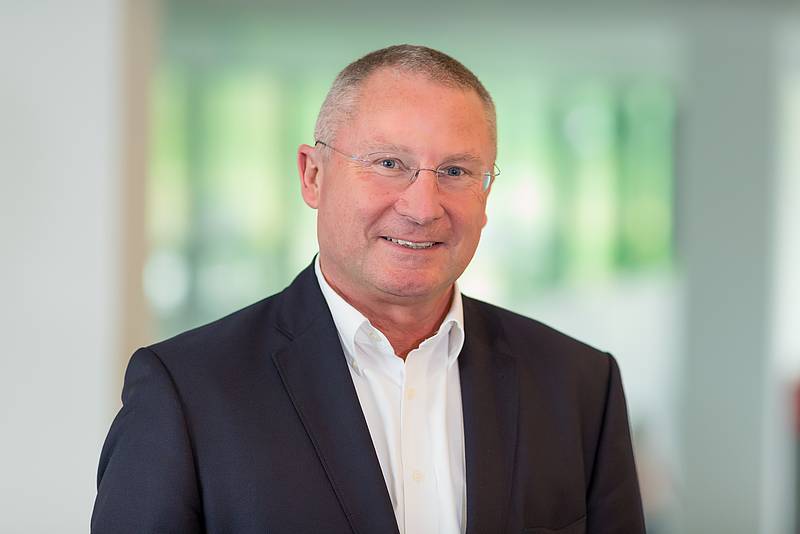
    Do you still have questions about the program? Make an appointment with the office at taxmanagement@hcw.ac.at and you will receive a personal consultation with the head of department and head of program Dr. Friedrich Stanzel via Zoom.


    During the studies

    You will acquire a sound education for tax advisors, covering both scientific and theoretical fundamentals as well as job-related, practical content. At the same time, you will strengthen your consulting skills and social skills so that you can provide professional support to clients and build a valuable professional network. 

    In the first semester, you will complete the lectures at ASW and also earn a diploma in accounting and applied business administration. In the remaining three semesters, you will study partly at ASW and partly at Hochschule Campus Wien.

    The program covers key areas of focus:

    • National and international economic issues based on the principles of jurisprudence with the help of (international) income tax and sales tax law
    • Fundamental principles of accounting, including national and international accounting regulations
    • Fundamental concepts of business administration, including corporate goals and strategies as well as jurisprudence
    • Accounting policies in connection with the relevant legal matters

    Curriculum

    Module business administration
    9.5 SWS
    15 ECTS
    business tax theory | ILV

    business tax theory | ILV

    2 SWS   2 ECTS

    Content

    • Corporations from a business management perspective;
    • Introduction to balance sheet tax law;
    • Group taxation;
    • private foundations.

    Teaching method

    Lecture, group work, self-study

    Examination

    Final exam: LV individual examinations


    Literature

    Foliensatz

    Weiterführende Literatur:

    Bertl et. al. (Hrsg.), Handbuch der österreichischen Steuerlehre, Band IV (Kap. 2.1, 2.2 und 2.4)

    Bertl et. al. (Hrsg.), Handbuch der österreichischen Steuerlehre, Band VI

    Doralt, Steuerrecht

    Doralt /Ruppe, Steuerrecht, Band I und II

    Unger/Vock, Casebook Steuerrecht

    Literaturangaben in der aktuellen Auflage.

    Teaching language

    Deutsch

    2 SWS
    2 ECTS
    investment and financing calculation | ILV

    investment and financing calculation | ILV

    2 SWS   3 ECTS

    Content

    • How models work and their importance in finance
    • Investment/financing calculation based on dynamic methods and taking taxes into account:
      (modified) internal rate of return method, annuity method, terminal value method, (detailed treatment of) net present value method
    • Complete financial plan
    • External financing, internal financing

    Teaching method

    • Lecture incl. application of the theoretical basics to calculation examples
    • discussion
    • Self-study

    Examination

    Final exam: individual written examinations

    Literature

    Eberhartinger (Hrsg.), Handbuch der österreichischen Steuerlehre, Band IV: Investition, Finanzierung und Steuern, in der aktuellen Auflage

    Wala/Haslehner/Kreidl, Investitionsrechnung und betriebliche Finanzierung, in der aktuellen Auflage

    Teaching language

    Deutsch

    2 SWS
    3 ECTS
    JAK, Financial Statements | ILV

    JAK, Financial Statements | ILV

    2 SWS   3 ECTS

    Content

    • Basics of the annual financial statement analysis
    • Preparation of the annual financial statements
    • Analysis of the individual areas as well as calculation and interpretation of associated key figures:
      • Investment analysis
      • Financing analysis
      • Liquidity analysis (in particular cash flow statement)
      • Profit and loss analysis

    Teaching method

    • Lecture including application of the theoretical principles to specific annual financial statements
    • discussion
    • Self-study (incl. repetition of necessary, already completed skills from the area of preparing annual financial statements in accordance with the Austrian Commercial Code)

    Examination

    Final exam: individual written examinations


    Literature

    Egger/Samer/Bertl, Der Jahresabschluss nach dem UGB, Band 3: Jahresabschlussanalyse und Unternehmensplanung mit Kennzahlen, in der aktuellen Auflage

    Zur tiefgehenden Analyse: Coenenberg/Haller/Schultze, Jahresabschluss und Jahresabschlussanalyse, in der aktuellen Auflage

    Teaching language

    Deutsch

    2 SWS
    3 ECTS
    Cost and activity accounting including short-term income statement | SE

    Cost and activity accounting including short-term income statement | SE

    1 SWS   2 ECTS

    Content

    • Cost center accounting (incl. simultaneous approach)
    • Cost unit accounting (costing) and cost unit income statement
    • Period income statement
    • Decision accounting
      • Break-even analysis
      • Production program planning (without / with simple bottleneck)
      • Price limits

    Teaching method

    • Lecture incl. application of the theoretical basics to calculation examples
    • discussion
    • Self-study (incl. repetition of necessary skills from the area of cost accounting)

    Examination

    Final exam: individual written examinations

    Literature

    Zunk/Grebnic/Baumüller/Bauer, Kostenrechnung (aktuellen Auflage)

    Wala/Haslehner/Hirsch, Kostenrechnung, Budgetierung und Kostenmanagement (aktuelle Auflage)

    Teaching language

    Deutsch

    1 SWS
    2 ECTS
    Planning calculation incl. Forecast | ILV

    Planning calculation incl. Forecast | ILV

    1 SWS   2 ECTS

    Content

    • Budget and planning calculations: Preparation of an integrated budget from the performance budget, budgeted balance sheet and financial plan and effects of business cases on the budget
    • Control by means of target/actual comparisons and variance analyses
    • Continuance forecast

    Teaching method

    • Lecture incl. application of the theoretical basics to calculation examples
    • discussion
    • Self-study

    Examination

    Final exam: individual written examinations

    Literature

    Egger/Samer/Bertl, Der Jahresabschluss nach dem UGB, Band 3: Jahresabschlussanalyse und Unternehmensplanung mit Kennzahlen (aktuelle Auflage)

    Prell-Leopoldseder, Einführung in die Budgetierung und integrierte Planungsrechnung (aktuelle Auflage)

    Teaching language

    Deutsch

    1 SWS
    2 ECTS
    company valuation | ILV

    company valuation | ILV

    1.5 SWS   3 ECTS

    Content

    • Principles of company valuation
    • Principles of determining company values
    • Company valuation methods including their mathematical implementation
      • Equity approach
      • Entity approach
      • APV method
      • Simplified procedure: Multiplier method

    Teaching method

    • Lecture incl. application of theoretical principles to calculation examples
    • discussion
    • Self-study (incl. repetition of necessary, already completed skills from the area of investment and financing)

    Examination

    Continuous assessment: written pretest: 30%; individual written examinations: 70%

    Literature

    KFS/BW 1, Fachgutachten zur Unternehmensbewertung, aktuelle Fassung, zuzüglich Empfehlungen KFS/BW 1 E1 - E8

    Aschauer/Purtscher: Einführung in die Unternehmensbewertung, in der aktuellen Auflage

    Teaching language

    Deutsch

    1.5 SWS
    3 ECTS
    Module accounting
    8 SWS
    15 ECTS
    Preparation of annual financial statements, special issues of the annual financial statements and content of the management report | ILV

    Preparation of annual financial statements, special issues of the annual financial statements and content of the management report | ILV

    3 SWS   6 ECTS

    Content

    After completing the course, students will know who is subject to the accounting obligation. They know the components of the annual financial statements and can prepare them in accordance with the existing legal requirements. These steps are also examined from an auditor's perspective. In addition to the principles of proper accounting, students are familiar with the value concepts and valuation regulations in accordance with the Austrian Commercial Code (UGB) and Income Tax Act (EStG) and can apply these using examples, including with regard to leasing. Explicit reference is also made to the expert opinions and statements of the Chamber and AFRAC.

    • In addition, special accounting problems are dealt with, including the accounting of profit participation rights, hedging relationships and income taxes, share-based payments.

    Teaching method

    Lecture with activating methods, group work, calculation examples, discussion

    Examination

    Continuous assessment: Performance is assessed both in the context of cooperation (30%) and in a final test (70%). Collaboration can be assessed through teamwork, individual work or by calculating on the blackboard. In the case of online teaching, work in breakout rooms is possible. If students are unable to participate due to a lack of attendance, this can be compensated for by submitting a term paper.

    Literature

    Bertl, R., Deutsch-Goldoni, E., Hirschler, K., Buchhaltungs- und Bilanzierungshandbuch, LexisNexis, aktuelle Auflage

    Teaching language

    Deutsch

    3 SWS
    6 ECTS
    Principles of International Financial Reporting Standards | ILV

    Principles of International Financial Reporting Standards | ILV

    2.5 SWS   5 ECTS

    Content

    After an introduction to the significance, origin and implementation of international accounting, students are familiarized with the overall concept of IFRS. They learn the framework concept as well as individual standards, including IAS 1, 2, 12, 16, 40, 19, 20, 21, 23, 38, 36, 37 and IFRS 16, 9, 15. In addition to understanding the individual standards and their application, individual focal points are highlighted using calculation examples for clarification.

    Teaching method

    Lecture with activating methods, group work, calculation examples, discussion


    Examination

    Continuous assessment: Pretest 10%, cooperation 30%, final test 60% Performance is assessed both in an initial test (10%) and cooperation (30%) as well as in a final test (60%). Cooperation can be assessed through teamwork as well as individual work and by calculating on the blackboard. In the case of online teaching, work in breakout rooms is possible. If students are unable to participate due to a lack of attendance, this can be compensated for in consultation with the course instructor.

    Literature

    Maximilian Schreyvogl, IFRS kompakt für den Einstieg, Vom Jahresabschluss zum Reporting Package (Ausgabe Österreich), Linde

    David Grünberger, IFRS 2024 (bzw. aktueller Stand), Ein systematischer Praxisleitfaden, LexisNexis

    Kodex IFRS

    Literaturangaben jeweils in der aktuellen Auflage

    Teaching language

    Deutsch-Englisch

    2.5 SWS
    5 ECTS
    Basic Principles of payroll accounting | ILV

    Basic Principles of payroll accounting | ILV

    1.5 SWS   2 ECTS

    Content

    • Fundamentals of payroll accounting (systematics)
    • Current payroll accounting topics
    • Annual financial statements
    • Special topics from the area of payroll tax law

    Teaching method

    Lecture & joint implementation of payroll accounting examples

    Examination

    Continuous assessment: written examination, written elaboration of a group project, presentation of the group project

    Literature

    Prinz, Personalverrechnung: Eine Einführung (2024 bzw. jeweils aktuelle Fassung)

    Doralt, Kodex Steuergesetze (jeweils aktuelle Fassung)

    Teaching language

    Deutsch

    1.5 SWS
    2 ECTS
    Group accounting | ILV

    Group accounting | ILV

    1 SWS   2 ECTS

    Content

    On completion of the course, students should be able to prepare simple consolidated financial statements and other necessary reports, e.g. the consolidated cash flow statement or detailed statements of changes in equity and fixed assets. First of all, the consolidation methods of full consolidation and the equity method, as well as proportionate consolidation, are to be mastered to the extent that they can be applied to simple examples in the context of commercial balance sheet II. Sufficient space should be devoted to the area of deferred taxes. In addition to the scope of consolidation, particular attention must be paid to the basic valuation, goodwill and the treatment of controlling and non-controlling interests when consolidating capital. Consolidation in multi-level groups is also dealt with, as is the elimination of intercompany profits and losses. Even though the focus is on UGB accounting, the differences and necessities of IFRS consolidation are discussed.

    Teaching method

    Lecture with activating methods, group work, calculation examples, discussion

    Examination

    Continuous assessment: Cooperation, final test: Performance is assessed both in the context of cooperation (30%) and in a final test (70%). Collaboration can be assessed through teamwork as well as individual work and by calculating on the blackboard. In the case of online teaching, work in breakout rooms is possible. If students are unable to participate due to a lack of attendance, this can be compensated for by submitting a term paper.

    Literature

    Fröhlich, Ch., Konzernrechnungslegung kompakt, Linde, aktuelle Auflage

    Teaching language

    Deutsch

    1 SWS
    2 ECTS

    Module Tax procedure and fiscal criminal law
    3.5 SWS
    6 ECTS
    special questions of financial and white-collar criminal law | ILV

    special questions of financial and white-collar criminal law | ILV

    1.5 SWS   3 ECTS

    Content

    Brief repetition of the principles as well as the significance and relevance in daily practice for public accounting firms and accounting staff. Presentation of special problems based on current problems in practice, case law and science.

    Teaching method

    Lecture, discussions, self-study

    Examination

    Final exam: Performance is assessed either on the basis of a written examination or a contribution to a group project (presentation of a special topic, taking into account the associated practical problems, literature and case law).

    Literature

    Leitner/Brandl/Kert (Hrsg), Handbuch Finanzstrafrecht, in der aktuellen Auflage

    Leukauf-Steininger, Strafgesetzbuch, in der aktuellen Auflage

    Seiler/Seiler, Finanzstrafgesetz, in der aktuellen Auflage

    Leitner, Tagungsbände zur Tagung Finanzstrafrecht, in der aktuellen Auflage

    Kert/Kodek, Das große Handbuch Wirtschaftsstrafrecht, in der aktuellen Auflage

    Tannert/Kotschnigg/Twardosz, Kommentar zum Finanzstrafrecht, in der aktuellen Auflage

    Teaching language

    Deutsch

    1.5 SWS
    3 ECTS
    special questions of procedural law | ILV

    special questions of procedural law | ILV

    2 SWS   3 ECTS

    Content

    In-depth treatment of selected special areas with special consideration of practical problems and relevant case law (BFG, VwGH, VfGH):

    • legal innovations and developments
    • Liabilities under tax law (§§ 9 ff, 80 ff BAO)
    • flexible system between tax authorities and taxpayers when levying taxes (Sections 114 ff, 118, 119 ff, 143 ff, 161 ff, 184 BAO)
    • Statute of limitations (§§ 207 ff BAO)
    • Suspension of legal effect (§§ 293 ff BAO)

    Various special problems (reasons for decisions, deadlines, notifications, appeal proceedings, etc.)

    Teaching method

    Lecture, group work, self-study

    Examination

    Final exam: written examination

    Literature

    Doralt, Werner (Hrsg): Kodex Steuergesetze (aktuelle Auflage)

    Tanzer, Michael / Unger, Peter. Einführung in das Recht der Bundesabgabenordnung, Wien: LexisNexis (aktuelle Auflage)

    Ritz, Christoph: BAO-Kommentar, Wien (aktuelle Auflage)

    Leitner, Roman / Plückhahn, Otto, Finanzstrafrecht kompakt (aktuelle Auflage)

    Althuber/Tanzer/Unger, BAO Handbuch (aktuelle Auflage)

    Teaching language

    Deutsch

    2 SWS
    3 ECTS
    Module income tax
    4.5 SWS
    7 ECTS
    special questions of income tax law I | VO

    special questions of income tax law I | VO

    1.5 SWS   3 ECTS

    Content

    • Special issues relating to the determination of profit and income
    • Special issues of assessment
    • Determination of profits and assessment of co-entrepreneurships
    • Special issues of withholding taxes (KESt/ImmoESt)
    • International aspects

    Teaching method

    Lecture, group work, self-study

    Examination

    Continuous assessment: Written examination and ongoing cooperation

    Literature

    Kodex Steuergesetze (jeweils aktuelle Auflage)

    Doralt/Ruppe, Grundriss des Österreichischen Steuerrechts Band I (aktuelle Auflage)

    Standardkommentare zum EStG (zB Doralt/Kirchmayr/Mayr/Zorn, EStG Kommentar; Jakom EStG-Kommentar) (aktuelle Auflage)

    Teaching language

    Deutsch

    1.5 SWS
    3 ECTS
    special questions of corporate tax law | ILV

    special questions of corporate tax law | ILV

    3 SWS   4 ECTS

    Content

    • Group taxation
    • Personal tax liability
    • Investment income exemption
    • Taxation of add-backs
    • Hybrid structures
    • Hidden distribution
    • Non-deductible expenses
    • Current developments in legislation and case law

    Teaching method

    Lecture, group work, self-study

    Examination

    Final exam: written examination

    Literature

    Bücher:

    Doralt, Werner (Hrsg): Kodex Steuergesetze

    Doralt/Kirchmayr/Mayr/Zorn: Einkommensteuergesetz. Wien: facultas.wuv (Loseblatt)

    Hofstätter, Franz; Reichel, Kurt: Einkommensteuergesetz. Wien: LexisNexis (Loseblatt)

    Renner/Strimitzer/Vock (Hrsg.): Körperschaftsteuer. Wien: LexisNexis (Loseblatt)

    Baldauf, Anton; Kanduth-Kristen, Sabine; Laudacher, Marco; Lenneis, Christian; Marschner, Ernst: Jakom Einkommensteuergesetz.

    Lang/Schuch/Staringer (Hrsg.): Körperschaftsteuergesetz.

    Achatz/Kirchmayr, Körperschaftsteuergesetz.

    Rauch, Thomas, Arbeitsrecht für Arbeitgeber.

    Knell, Alexandra, Praxisfragen des Arbeitsrechts.


    Fachzeitschriften:

    ASoK-Spezial Arbeitsrecht


    Literaturangaben in der jeweils aktuellen Auflage.

    Teaching language

    Deutsch

    3 SWS
    4 ECTS
    Module public law
    2 SWS
    4 ECTS
    union law | SE

    union law | SE

    1 SWS   2 ECTS

    Content

    Tax law case studies with reference to Union law

    Teaching method

    Case-oriented learning; group discussions; analysis, presentation, argumentation

    Examination

    Continuous assessment

    Literature

    Öhlinger/Potacs, EU-Recht und staatliches Recht, LexisNexis in der aktuellen Auflage

    Teaching language

    Deutsch

    1 SWS
    2 ECTS
    constitutional law | SE

    constitutional law | SE

    1 SWS   2 ECTS

    Content

    Tax law case studies with reference to constitutional law

    Teaching method

    Case-oriented learning; group discussions; analysis, presentation, argumentation

    Examination

    Continuous assessment

    Literature

    Öhlinger/Potacs, EU-Recht und staatliches Recht, LexisNexis in der aktuellen Auflage

    Teaching language

    Deutsch

    1 SWS
    2 ECTS
    Module UMRE reorganisation tax law
    2.5 SWS
    5 ECTS
    corporate and corporate law | ILV

    corporate and corporate law | ILV

    2.5 SWS   5 ECTS

    Content

    • Concept of the entrepreneur and the company
    • The transfer of the company and its legal consequences
    • Basic structure and common features of all companies; legal form-specific differences in raising and maintaining capital and liability
    • Competencies and interaction of the various corporate bodies

    Teaching method

    Lecture, group work, self-study

    Examination

    Final exam: written examination

    Literature

    Schummer, Gerhard: Personengesellschaften, Verlag LexisNexis (Skriptum)

    Mader Peter/Janisch Sonja/Warto Patrick: Kapitalgesellschaften, Verlag LexisNexis (Skriptum)

    Rieder, Bernhard / Huemer, Doris: Gesellschaftsrecht, facultas.wuv

    Literaturangaben in der jeweils aktuellen Auflage.

    Teaching language

    Deutsch

    2.5 SWS
    5 ECTS
    Module VAT Law
    3.5 SWS
    4 ECTS
    Current developments in tax jurisprudence such as greening the tax system | VO

    Current developments in tax jurisprudence such as greening the tax system | VO

    1 SWS   1 ECTS

    Content

    Tax law case studies

    Teaching method

    Case-oriented learning; group discussions; analysis, argumentation

    Examination

    Final exam: Written examination on the case groups discussed

    Literature

    ris.bka.gv.at/vwgh

    Teaching language

    Deutsch

    1 SWS
    1 ECTS
    special questions of national sales tax law | ILV

    special questions of national sales tax law | ILV

    2.5 SWS   3 ECTS

    Content

    • Uniform definition of land under EU law
    • Hobby
    • Supply and other services in relation to immovable property
      • Delimitation
      • Supply of work
    • Supply of immovable property
    • Own use and exchange-like turnover
    • Basis of assessment
    • Tax exemption for supplies of immovable property
    • Tax exemption for VuV of real estate
    • Waiver of the tax exemption
    • Restriction of the waiver option
    • Reduced tax rate 10%
      • Overview of
      • Letting for residential purposes
      • Ancillary services
      • Services provided by WEG
      • Accommodation
    • Special cases
    • Invoicing
    • Input tax deduction
      • Input tax deduction for actual taxation
      • Allocation to the company
      • Input tax exclusions
      • Input tax apportionment
    • Input tax adjustment
    • VAT forwarding for own use
    • Obligation to keep records
    • Due diligence-UStV
    • Reverse charge
      • Services of foreign entrepreneurs
      • Construction services

    Teaching method

    Lecture, solution of examples

    Examination

    Final exam: Written examination

    Literature

    Doralt (Hrsg), Kodex Steuergesetze, Linde Verlag

    Berger/Bürgler/Kanduth-Kristen/ Wakounig (Hrsg), UStG-ON, Manz

    Mayr/Ungericht, UStG, Manz

    Melhardt, USt-Handbuch 2020, Linde Verlag

    Melhardt/Tumpel, Umsatzsteuergesetz, Linde Verlag

    Pernegger, Umsatzsteuer für die die betriebliche Praxis, Linde Verlag

    Ruppe/Achatz, Umsatzsteuergesetz, Verlag Österreich

    SWK, Steuer- und Wirtschaftskartei, Linde Verlag

    ÖStZ, Österreichische Steuerzeitung, LexisNexis

    taxlex, Zeitschrift für Steuer und Beratung, Manz


    Literaturangaben in der jeweils aktuellen Auflage.

    Teaching language

    Deutsch

    2.5 SWS
    3 ECTS
    Module Scientific Work
    2 SWS
    4 ECTS
    research methodology | ILV

    research methodology | ILV

    1 SWS   2 ECTS

    Content

    • Scientific research in national and international databases and libraries
    • Scientific texts and parameters for their publication

    Teaching method

    Lecture, group work, self-study

    Examination

    Continuous assessment: Will be announced in the course of the detailed preparation of the course

    Literature

    Kerschner, Wissenschaftliche Arbeitstechnik und Methodenlehre für Juristen

    Dax/Hopf, AZR - Abkürzungs- und Zitierregeln der österreichischen Rechtssprache und europarechtlicher Rechtsquellen

    Bydlinski, Grundzüge der juristischen Methodenlehre

    Konrath, SchreibGuide Jus

    Bacher/Raltchev, Schreiben und Recherchieren für Juristen

    Keiler/Bezemek, leg cit3

    Literaturangaben in der jeweils aktuellen Auflage.

    Teaching language

    Deutsch

    1 SWS
    2 ECTS
    writing in a scientific context | SE

    writing in a scientific context | SE

    1 SWS   2 ECTS

    Content

    • Discussion of legal methodology & repetition of legal citation
    • Critique of style using examples from legislation, case law and literature

    Teaching method

    Lecture, group work, self-study

    Examination

    Continuous assessment: will be announced in the course of the detailed preparation of the LV

    Literature

    Kerschner, Wissenschaftliche Arbeitstechnik und Methodenlehre für Juristen

    Dax/Hopf, AZR - Abkürzungs- und Zitierregeln der österreichischen Rechtssprache und europarechtlicher Rechtsquellen

    Bydlinski, Grundzüge der juristischen Methodenlehre

    Konrath, SchreibGuide Jus

    Bacher/Raltchev, Schreiben und Recherchieren für Juristen

    Keiler/Bezemek, leg cit3

    Literaturangaben in der jeweils aktuellen Auflage.

    Teaching language

    Deutsch

    1 SWS
    2 ECTS

    Module Tax procedure and fiscal criminal law
    1.5 SWS
    1 ECTS
    non-profit law | VO

    non-profit law | VO

    1.5 SWS   1 ECTS

    Content

    • Requirements for the granting of tax benefits in accordance with §§ 34 ff BAO
    • Activities of non-profit organizations
    • VAT treatment of services provided by non-profit organizations
    • Income tax treatment of the income of charitable organizations

    Requirements for obtaining preferential treatment for donations in accordance with Sections 4a, 4b and 4c EStG

    Teaching method

    Presentation of the legal situation with practical examples and opportunity for discussion

    Examination

    Final exam: written examination

    Literature

    Baldauf, Anton/Renner, Bernhard/Wakounig, Marian: Die Besteuerung der Vereine, in der aktuellen Auflage

    Teaching language

    Deutsch

    1.5 SWS
    1 ECTS
    Module income tax
    1 SWS
    2 ECTS
    special questions of income tax law II | SE

    special questions of income tax law II | SE

    1 SWS   2 ECTS

    Content

    • Special issues relating to the determination of profit and income
    • Special issues of assessment
    • Determination of profits and assessment of co-entrepreneurships
    • Special issues of withholding taxes (KESt/ImmoESt)
    • International aspects

    Teaching method

    Lecture, group work, self-study

    Examination

    Continuous assessment: Written examination Elaboration/presentation of given topics

    Literature

    Kodex Steuergesetze (jeweils aktuelle Auflage)

    Doralt/Ruppe, Grundriss des Österreichischen Steuerrechts Band I (jeweils aktuelle Auflage)

    Standardkommentare zum EStG (zB Doralt/Kirchmayr/Mayr/Zorn, EStG Kommentar; Jakom EStG-Kommentar) (jeweils aktuelle Auflage)

    Teaching language

    Deutsch

    1 SWS
    2 ECTS
    Module International tax law
    5.5 SWS
    10 ECTS
    OECD guidelines and model agreements (including DTA) | SE

    OECD guidelines and model agreements (including DTA) | SE

    1.5 SWS   2 ECTS

    Content

    • OECD Model Tax Convention and OECD Model Commentary
    • Significant deviations from the UN Model Tax Convention
    • Practice of double taxation agreements
    • Multilateral instrument
    • Key OECD guidelines/reports
    • Taxation of the digitalized economy

    Teaching method

    Lecture, group work, self-study. The course is partly held in English (OECD documents etc.).

    Examination

    Continuous assessment: Course-immanent examination character

    Literature

    OECD-Musterabkommen und OECD-Musterkommentar

    OECD-Guidelines/-Reports (online via OECD-Website)
    Doppelbesteuerungsabkommen (DBA) via BMF-Website (https://www.bmf.gv.at/themen/steuern/internationales-steuerrecht/doppelbesteuerungsabkommen.html)

    Schmidjell-Dommes, Internationales Steuerrecht, Lexis Nexis, aktuelle Auflage

    Bendlinger/Kanduth-Kristen/Kofler/Rosenberger, Internationales Steuerrecht, Lexis Nexis, aktuelle Auflage

    Aigner/Kofler/Tumpel (Hrsg), DBA - Doppelbesteuerungsabkommen - Kommentar, Linde Verlag, aktuelle Auflage

    Lang, Introduction to the Law of Double Taxation Conventions, Linde Verlag, aktuelle Auflage

    Literaturangaben in der jeweils aktuellen Auflage.

    Teaching language

    Deutsch-Englisch

    1.5 SWS
    2 ECTS
    OECD transfer prices | SE

    OECD transfer prices | SE

    2 SWS   4 ECTS

    Content

    • OECD transfer pricing principles
      Selection of methods, application of methods taking into account the current work on the BEPS project (base erosion and profit shifting), benchmarking
      Documentation requirements (national, OECD - master file concept)
      National / international profit adjustments
      Dispute resolution (counter-adjustments, mutual agreement procedure, arbitration proceedings)
    • Transfer of functions (production, distribution, services, intellectual property)
    • (Digital) permanent establishments (profit determination and allocation with special consideration of OECD work on the taxation of the digital economy)
    • Conflict prevention (horizontal monitoring - accompanying control, ICAP 2.0 [International Compliance Assurance Program], Advance Ruling)

    Teaching method

    E-learning
    Lecture - teaching discussion, case work and presentation in small groups

    Examination

    Continuous assessment: 20 % presentation, 20 % participation; 30 % written elaboration, 30 % written test

    Literature

    Fachbücher:
    OECD-Verrechnungspreisguidelines in aktueller Fassung (http://oecd.org/tax/)
    Österreichische Verrechnungspreisrichtlinien
    Verrechnungspreisdokumentationsgesetz und Durchführungsverordnung
    Kodex Doppelbesteuerungsabkommen, aktuelle Auflage, Lindeverlag;
    Kodex Verrechnungspreise, aktuelle Auflage, Linde Verlag
    Brandl Rainer / Macho Roland / Schrottmeyer Norbert / Vock Martin: Begleitende Kontrolle, SWK-Spezial, Wien: Lindeverlag
    Gottholmseder Georg / Schröger Matthias, Grundlagen der Verrechnungspreise, Wien, Lexis Nexis
    Macho, Roland / Steiner, Gerhard / Spensberger, Erich: Verrechnungspreise kompakt, Transfer Pricing in der Gestaltungs- und Prüfungspraxis, Wien: Lindeverlag
    Macho, Roland / Steiner, Gerhard / Spensberger, Erich: Case Studies – Verrechnungspreise kompakt, Wien: Lindeverlag,
    Müller Eduard / Woischitzschläger Hubert / Zöchling Hans: Co-operative Tax Compliance in Österreich, Wien: Lindeverlag
    Vögele Alexander / Borstell Thomas / Engler Gerhard: Verrechnungspreise, München: Verlag C.H. Beck 

    Fachzeitschriften:
    SWI – Steuer und Wirtschaft International, Lindeverlag
    TPI – Transfer Pricing International, Lindeverlag

    Literaturangaben in der jeweils aktuellen Auflage.

    Teaching language

    Deutsch-Englisch

    2 SWS
    4 ECTS
    Austrian foreign tax law and legal comparisons | SE

    Austrian foreign tax law and legal comparisons | SE

    2 SWS   4 ECTS

    Content

    • The work of the OECD in international tax law: From the adaptation of the standard on the exchange of information to the unified approach in the taxation of the digitalized economy
    • The work of the UN Tax Committee: The reception of the OECD standards and the global significance of the institution
    • The work of the EU in the area of direct taxation
    • Austria's tax policy decisions

    Teaching method

    E-learning
    Lecture - teaching discussion, case work and presentation in small groups

    Examination

    Continuous assessment: 20 % presentation, 20 % participation; 30 % written elaboration, 30 % written test

    Literature

    Fachbücher:
    Kodex Doppelbesteuerungsabkommen, aktuelle Auflage, Lindeverlag;
    Aigner/Kofler/Tumpel (Hrsg), DBA - Doppelbesteuerungsabkommen - Kommentar, Linde Verlag, aktuelle Auflage
    Schmidjell-Dommes, Internationales Steuerrecht, Lexis Nexis, aktuelle Auflage
    Petruzzi/Spies, Tax Policy Challenges in the 21st Century
    United Nations Handbook in Selected Issues in Protecting the Tax Base (Second Edition)


    Aktuelle Publikationen internationaler Organisationen:
    OECD: www.oecd.org/tax/
    United Nations: www.un.org/esa/ffd/ffd-follow-up/tax-committee.html


    Fachzeitschriften:
    SWI – Steuer und Wirtschaft International, Lindeverlag
    TPI – Transfer Pricing International, Lindeverlag
    Intertax – WoltersKluwer

    Literaturangaben in der jeweils aktuellen Auflage.

    Teaching language

    Deutsch-Englisch

    2 SWS
    4 ECTS
    Module Master Thesis
    1 SWS
    1 ECTS
    finding a master’s thesis topic – the research question | SE

    finding a master’s thesis topic – the research question | SE

    1 SWS   1 ECTS

    Content

    • Discussion of proposed topics for students' Master's theses
    • Formulation of a research question (operationalization, formulation of objectives)
    • Analysis of research methodological approaches (instruments)

    Teaching method

    Lecture, group work, self-study

    Examination

    Final exam: LV individual examinations

    Literature

    Bosch, Karl: Elementare Einführung in die Angewandte Statistik – Mit Aufgaben und Lösungen. Wiesbaden: Vieweg
    Bansch, Axel: Wissenschaftliches Arbeiten. Seminar- und Diplomarbeiten. Oldenbourg Wissenschaftsverlag
    Karmasin, Matthias / Ribing, Rainer: Die Gestaltung wissenschaftlicher Arbeiten: Ein Leitfaden für Seminararbeiten, Bachelor-, Master- und Magisterarbeiten, Diplomarbeiten und Dissertationen. Stuttgart: UTB
    Kruse, Otto: Keine Angst vor dem leeren Blatt. Ohne Schreibblockaden durchs Studium. Frankfurt/New York: Campus Verlag

    Literaturangaben in der jeweils aktuellen Auflage.

    Teaching language

    Deutsch

    1 SWS
    1 ECTS
    Module Legal Theory
    2 SWS
    5 ECTS
    Civil Law | ILV

    Civil Law | ILV

    1 SWS   3 ECTS

    Content

    • Introduction to the basic concepts of private law
    • Theory of legal transactions
    • General part of the law of obligations and selected special obligations (e.g. sales and work contracts)
    • Change of creditor and debtor as well as termination of contractual obligations
    • Fundamentals of property law

    Teaching method

    Case-oriented learning, group discussions, analysis, presentation, argumentation

    Examination

    Continuous assessment: Permanent review with final LV examination

    Literature

    Englmair/Boscheinen-Duursma: Basis Recht, ASW

    Peter Bydlinski, Grundzüge des Privatrechts, Manz-Verlag

    Andreas Vonkilch, Einführung in das Privatrecht, Verlag Österreich

    Vertiefende Literatur: Perner/Spitzer/Kodek, Bürgerliches Recht inklusive Glossar


    Literaturangabe in der jeweils aktuellen Auflage

    Teaching language

    Deutsch

    1 SWS
    3 ECTS
    Insolvency Law | ILV

    Insolvency Law | ILV

    1 SWS   2 ECTS

    Content

    • Statutory crisis indicators and grounds for opening insolvency proceedings
    • Options for out-of-court restructuring
    • Main features of insolvency proceedings

    Teaching method

    Case-oriented learning, group discussions, analysis, presentation, argumentation

    Examination

    Continuous assessment: Permanent review with final LV examination

    Literature

    Fink/Trenker, Insolvenzrecht, LexisNexis (Skriptum)

    Vertiefende Literatur: Dellinger/Oberhammer/Koller, Insolvenzrecht, Manz-Verlag

    Literaturangaben in der jeweils aktuellen Auflage.

    Teaching language

    Deutsch

    1 SWS
    2 ECTS
    Module UMRE reorganisation tax law
    3 SWS
    5 ECTS
    reorganization tax law | ILV

    reorganization tax law | ILV

    3 SWS   5 ECTS

    Content

    • Corporate restructuring measures (mergers, transformations, demergers, contributions)
    • Introductory and in-depth treatment of reorganization tax law (mergers, transformations, contributions, mergers, real divisions, demergers) with selected focal points
    • Special areas with particular consideration of practical problems and relevant case law (BFG, VwGH, VfGH)

    Teaching method

    Literature study, lecture, group work

    Examination

    Final exam: Permanent review with final LV examination

    Literature

    Walter, Thomas: Umgründungssteuerrecht – Ein systematischer Grundriss, facultas.wuv, jeweils aktuelle Auflage, Wien.

    Wiesner/Hirschler/Mayr: Handbuch der Umgründungen, Band 1-3, Lexis 360 – Lexis Nexis

    Jann, Umgründungen im Steuerrecht, Lexis 360 – Lexis Nexis

    Wundsam, Walter / Zöchling, Hans / Huber, Paul / Kuhn, Wolfgang: UmgrStG online – Handkommentar zum Umgründungssteuergesetz, Verlag Manz

    Kalss, Susanne / Nowotny, Christian / Schauer, Martin: Österreichisches Gesellschaftsrecht, Verlag Manz

    Kalss, Susanne: Verschmelzung – Spaltung – Umwandlung, Verlag Manz


    Literaturangaben in der jeweils aktuellen Auflage.

    Teaching language

    Deutsch

    3 SWS
    5 ECTS
    Module VAT Law
    3.5 SWS
    6 ECTS
    sales tax law in the internal market | ILV

    sales tax law in the internal market | ILV

    2.5 SWS   4 ECTS

    Content

    • Value added tax law in the Union
    • Current VAT law developments in the Union
    • Current case law of the ECJ on VAT law
    • Basic concepts of VAT law in English

    Teaching method

    Lecture, group work, self-study

    Examination

    Continuous assessment: Written examination

    Literature

    Bücher:

    Doralt, Werner (Hrsg): Kodex Steuergesetze

    Berger, Wolfgang / Bürgler, Christian / Kanduth-Kristen, Sabine / Wakounig, Marian: UStG-ON-Kommentar, Wien: Manz;

    Melhardt, Stefan: USt-Handbuch, Wien: Linde Verlag

    Melhardt, Stefan / Tumpel, Michael: Umsatzsteuergesetz - Kommentar. Wien: Linde Verlag;

    Pernegger, Robert, Umsatzsteuer für die die betriebliche Praxis, Wien: Linde Verlag

    Fachzeitschriften:

    SWK, Steuer- und Wirtschaftskartei, Wien: Linde Verlag

    ÖStZ, Österreichische Steuerzeitung, Wien: LexisNexis

    taxlex, Zeitschrift für Steuer und Beratung, Manz

    Terra/Kajus European VAT Directives

    Lernprogramme:

    VAT eLearning course
    ec.europa.eu/taxation_customs/common/elearning/vat/index_en.htm


    Literaturangaben in der jeweils aktuellen Fassung

    Teaching language

    Deutsch-Englisch

    2.5 SWS
    4 ECTS
    traffic taxes, selected other taxes | VO

    traffic taxes, selected other taxes | VO

    1 SWS   2 ECTS

    Content

    Fundamentals of real estate transfer tax

    • Selected facts of the Fees Act
    • Basics of the standard consumption tax
    • Basics of the insurance tax
    • Basics of the Motor Vehicle Tax Act
    • Basics of energy taxation including the energy tax rebate
    • Basics of excise duties (mineral oil tax, tobacco tax, alcohol tax, beer tax, sparkling wine tax)
    • Relevant procedural law topics

    Teaching method

    ILV

    Examination

    Final exam: LV individual examinations

    Literature

    Doralt, Werner / Ruppe, Hans-Georg / Ehrke-Rabel, Tina: Steuerrecht II.

    Bauer-Eder / Lang / Netzer / Proksch / Wiedermann, Gebühren, Verkehrssteuern, Bewertung.

    Pinetz, Verkehrssteuern, Grunderwerbsteuer, Rechtsgeschäftsgebühren (Skript ASW)

    Arnold, Wolf-Dieter / Arnold, Nikolaus: Kommentar zum Grunderwerbsteuergesetz 1987.

    Petritz / Petritz-Klar: Kommentar zum Grunderwerbsteuergesetz.

    Gaier, Richard: Gebühren und Verkehrsteuern.

    Arnold, Wolf-Dieter / Arnold, Nikolaus: Rechtsgebühren.

    Petritz / Petritz-Klar / Bavenek-Weber, Gebührengesetz.

    Varro, Daniel: Stiftungseingangssteuer.

    Ludwig, Praxishandbuch Normverbrauchsabgabe.

    Grabner/Sarnthein, Praxishandbuch NoVA.

    Bieber, Verbrauchsteuern in Österreich, LexisNexis.

    Bayer / Schwab, Verbrauchsteuern und Umweltabgaben, Wien, LexisNexis.


    Literaturangaben in der jeweils aktuellen Auflage.

    Teaching language

    Deutsch

    1 SWS
    2 ECTS

    Module leadership & communication
    3 SWS
    6 ECTS
    leadership, communication, conflict management  | ILV

    leadership, communication, conflict management  | ILV

    1 SWS   2 ECTS

    Content

    The focus is on analyzing and evaluating one's own personality, identifying personal strengths and weaknesses, developing communication skills in a professional environment and dealing effectively with stressful situations.

    Teaching method

    Workshop, group discussion, reflection exercises, lecture

    Examination

    Final exam: Final examination

    Literature

    Wird im Zuge der Detailausarbeitung der LV bekanntgegeben

    Teaching language

    Deutsch

    1 SWS
    2 ECTS
    leadership, negotiation, consulting | ILV

    leadership, negotiation, consulting | ILV

    1 SWS   2 ECTS

    Content

    The focus is on personal development combined with specific skills that are crucial for success both in advising clients and in dealing with employees and promoting their potential.

    Teaching method

    Workshop, group work, discussion, reflection exercises, lecture

    Examination

    Continuous assessment: Final examination

    Literature

    Wird im Zuge der Detailausarbeitung der LV bekanntgegeben

    Teaching language

    Deutsch

    1 SWS
    2 ECTS
    Consulting management | ILV

    Consulting management | ILV

    1 SWS   2 ECTS

    Content

    The focus is on personal development in conjunction with targeted skills that are crucial to success, both in advising clients and in dealing with employees and promoting their potential.

    Teaching method

    Workshop, group work and discussion, reflection exercises, lecture

    Examination

    Continuous assessment: Final examination

    Literature

    Wird im Zuge der Detailausarbeitung der LV bekanntgegeben

    Teaching language

    Deutsch

    1 SWS
    2 ECTS
    Module Master Thesis
    1 SWS
    24 ECTS
    master’s examination | AP

    master’s examination | AP

    0 SWS   2 ECTS

    Content

    -

    Teaching method

    -

    Examination

    Final exam: Module examination

    Literature

    -

    Teaching language

    Deutsch

    2 ECTS
    master’s thesis | MT

    master’s thesis | MT

    0 SWS   20 ECTS

    Content

    Writing the Master's thesis

    Teaching method

    -

    Examination

    Final exam: Master thesis

    Literature

    Bücher:
    Bosch, Karl: Elementare Einführung in die Angewandte Statistik – Mit Aufgaben und Lösungen. Wiesbaden: Vieweg
    Bansch, Axel: Wissenschaftliches Arbeiten. Seminar- und Diplomarbeiten. Oldenbourg Wissenschaftsverlag
    Karmasin, Matthias / Ribing, Rainer: Die Gestaltung wissenschaftlicher Arbeiten: Ein Leitfaden für Seminararbeiten, Bachelor-, Master- und Magisterarbeiten, Diplomarbeiten und Dissertationen. Stuttgart: UTB
    Kruse, Otto: Keine Angst vor dem leeren Blatt. Ohne Schreibblockaden durchs Studium. Frankfurt/New York: Campus Verlag


    Fachzeitschriften:
    Abhängig vom gewählten Masterarbeitsthema
    Literaturangaben in der jeweils aktuellen Auflage.

    Teaching language

    Deutsch

    20 ECTS
    seminar for the master’s thesis | SE

    seminar for the master’s thesis | SE

    1 SWS   2 ECTS

    Content

    Presentation of individual sections and the status of the Master's thesis

    • Data collection and evaluation
    • Advice on further work
    • Critical discussion and reflection of own and other students' work and defense of own research approach
    • Approaches to scientific theory

    Teaching method

    Lecture, group work, self-study

    Examination

    Continuous assessment: -

    Literature

    Bücher:
    Bosch, Karl: Elementare Einführung in die Angewandte Statistik – Mit Aufgaben und Lösungen. Wiesbaden: Vieweg
    Bansch, Axel: Wissenschaftliches Arbeiten. Seminar- und Diplomarbeiten. Oldenbourg Wissenschaftsverlag
    Karmasin, Matthias / Ribing, Rainer: Die Gestaltung wissenschaftlicher Arbeiten: Ein Leitfaden für Seminararbeiten, Bachelor-, Master- und Magisterarbeiten, Diplomarbeiten und Dissertationen. Stuttgart: UTB
    Kruse, Otto: Keine Angst vor dem leeren Blatt. Ohne Schreibblockaden durchs Studium. Frankfurt/New York: Campus Verlag


    Fachzeitschriften:
    Abhängig vom gewählten Masterarbeitsthema
    Literaturangaben in der jeweils aktuellen Auflage.

    Teaching language

    Deutsch

    1 SWS
    2 ECTS

    Lecture times

    Every two weeks, in blocks, Friday and Saturday (whole day)


    After graduation

    The curriculum of the Master Professional was developed in close consultation with the ASW and tailored precisely to the needs and further development of this profession and thus to the five specialist examinations for tax consulting in accordance with WTBG 2017.

    As a graduate, you will work in the following areas:

    • Accounting firms, especially tax consulting

    • Management consultancies

      • Financial institutions

      • Finance/controlling and tax departments of companies

        Studying made easy

        People smiling at each oter
        Try out studying

        Try out your desired study program (content only in German)

        >
        Bücher mit Geld
        Funding & Scholarships

        More information here

        >
        Hände zeigen auf Weltkarte
        Time abroad

        Expertise, language skills, broadening horizons

        >
        Fish jumps out of fishbowl into another fishbowl
        Open Lectures

        Find out more

        >
        Center for academic writing
        >
        Intensive German course
        >
        EICC
        >
        Recognition of Qualifications
        >
        Accessibility
        >
        queer@HCW
        >

        Networking with graduates and organizations

        We work closely with the Federal Ministry of Finance, accounting firms, companies, universities, institutions, and schools. This ensures you have access to professional internships, job opportunities, and opportunities to participate in research and development activities. Many of our partnerships are listed on the Campusnetzwerk website. It's always worth taking a look, as it may lead you to a new job or an interesting event organized by one of our cooperation partners.

         

        Events

        all events
        <
        >
        Currently no Events available on this topic.
         

        Downloads

        Themenfolder Verwaltung, Wirtschaft, Sicherheit, Politik
        pdf, 564 KB

        Contact

        Head of Program

        Administration

        Susanne Kunst

        Favoritenstraße 226, A.1.12 (campus overview)
        1100 Wien

        +43 1 606 68 77-3700
        taxmanagement@hcw.ac.at

        Office hours: 
        Mon - Fri 9.00 a.m. - 3.00 p.m.
         

        Teaching staff and research staff


        You want to know more? We will help you.


        Have you found all the information you are looking for?

        • Yes
        • No