



Master's Degree Program

Bioprocess Engineering

Bioprocess Engineering

part-time


Bioprocess Engineering

The unique characteristics of the living cell are what make the process technologies different from others. Bioprocess technology makes it possible to transfer biotechnological methods to technical applications in the industry. Procedures that are already established in the laboratory must be optimized so that they work well for industrial production on a large scale. In addition to process technology know-how, this also requires knowledge about biotechnology, biopharmaceutical technology and laboratory practice. Quality management and quality assurance provide important parameters.

Department
Applied Life Sciences
Topic
Technologies

Highlights

  • Wide range of applications: from sustainable biotechnology to biopharmaceutical production

  • Modern, state-of-the-art laboratories, in particular the Scientific Brewhouse

  • International degree program with a focus on digitalization (e.g. Digital Twins)


    Facts

    Final degree

    Diplom-Ingenieur (DI) comparable to Master of Science in Engineering (MSc)

    Duration of course
    4 semesters
    Organisational form
    part-time

    Tuition fee / semester

    € 363,361

    + ÖH contribution + costs for optional additional services, if applicable2

    ECTS
    120 ECTS
    Language of instruction
    German, partially English

    Currently no application possible

    Study places

    18

    1 Tuition fees for students from third countries € 727,- per semester. Details on tuition fees can be found in the general fee regulations.
    2 The costs depend on the additional services selected from the University of Applied Sciences Campus Vienna, such as work clothing, licenses, tutorials, or excursions.

    Before the studies

    You have basic know-how in process technology and natural sciences. You are a process-oriented, system-related and analytical thinker. Innovation excites you. You want to strengthen your research skills in order to further develop and optimize process technologies. You enjoy working on projects in a team and would like to take on management responsibilities. Average English skills are expected. Language of instruction is German

    Why you should study with us

    Study place = lab place

    Sharing is good, however, not your lab space, please. You are guaranteed your own.

    Highly sought-after knowledge

    What you learn here is crucial to solving global problems.

    International network

    Going abroad for an internship or a job: this is the next logical step when studying with us.

    Relevant admission requirement

    The relevant admission requirement is

    • a completed bachelor's degree in natural sciences and technology or
    • an equivalent degree at a recognized domestic or foreign post-secondary educational institution.

    A total of 180 ECTS and of which at least

    • ​​​​​​60 ECTS credits from natural science subjects such as chemistry, microbiology, mathematics, statistics, biochemistry, molecular biology and
    • 13 ECTS credits from technical subjects such as process engineering, fundamentals of bioprocess technology, measurement and control technology.

    For further information, please contact the administration of your study program.

    Language requirements for admission

    The required language level according to the Common European Framework of Reference for Languages (CEFR) is at least

    • German - level C1.

    Legalization of foreign documents

    Applicants may require legalization of documents from countries other than Austria in order for them to have the evidential value of domestic public documents. Information on the required legalizations can be found here in PDF format.

    Translation of your documents

    For documents that are neither in German nor English, a translation by a sworn and court-certified interpreter is required. Your original documents should have all the necessary legalization stamps before translation so that the stamps are also translated. The translation must be firmly attached to the original document or a legalized copy.

    Online application - uploading documents

    As part of your online application, upload scans of your original documents including all required legalization stamps. For documents not issued in German or English, scans of the corresponding translations must also be uploaded. The head of the study program decides on the equivalence of international (higher) education qualifications. Therefore, your documents can only be checked as part of the ongoing application process.

    Your path to studying at Hochschule Campus Wien begins with your registration on our application platform. In your online account, you can start your application directly or activate a reminder if the application phase has not yet started.

    There are 18 places available each year on the master's degree program Bioprocess Engineering. The ratio of study places to applicants is currently approx. 1:1.5.

    Documents for your online application

    Proof of identity

    • passport or
    • identity card or
    • Austrian driving license (proof of citizenship required) or
    • residence permit (proof of citizenship required)

    Change of name - proof

    • e.g. marriage certificate - only required if your current name does not match the name on your proof of identity or on the documents required to prove the admission requirements

    Proof of fulfillment of the relevant admission requirement

    • degree certificate and
    • Transcript of Records or Diploma Supplement*

    If you have not yet completed your studies, please upload proof of all courses completed to date as part of the relevant degree program, including ECTS credits.

    *(optional as a second file) Transcript of Records or Diploma Supplement


    German level C1 - proof of language skills

    For admission, German language skills of at least level C1 of the Common European Framework of Reference for Languages (CEFR) must be provided.

    The following applies as proof:

    • secondary school leaving certificate from a German-speaking school
    • completion of at least three years of studies in German
    • supplementary examination pre-study course - German C1
    • German certificate (not older than 3 years), e.g.:
      • Austrian German Language Diploma: ÖSD Certificate C1
      • Goethe Institute: Goethe Certificate C1
      • telc: German C1 University
      • German language test for university admission for foreign applicants: DSH-2
      • German Language Diploma of the Standing Conference of the Ministers of Education and Cultural Affairs of the Länder in the Federal Republic of Germany: DSD II - C1
      • Test of German as a foreign language (Test DaF): Level TDN 4 in all parts
      • Language Center of the University of Vienna: Course and successfully passed exam at level C1/2

    Proof of a higher language level is also valid.


    Curriculum vitae in tabular form in German


    Letter of motivation in German


    Legalizations and translations, if applicable

    • see tab “Foreign documents and degrees” above

    Your application is valid once you have completely uploaded the required documents. If you do not have all the documents at the time of your online application, please submit them immediately upon receipt by email to the administration of your study program (see section “Contact”).

    After completing your online application, you will receive an email confirmation with information on the next steps.

    The admission procedure consists of a written test and an interview with the admission committee.

    • Aim
      The aim is to ensure places are offered to those persons who complete the multi-level admission procedure with the best results. The tests are designed to assess the skills needed for an applicant's chosen profession.
    • Procedure
      The written admission test assesses the applicant's knowledge of natural sciences and technology. Applicants then undergo an admission interview on the same day to provide a first impression of their personal aptitude. The qualities interviewers are looking for include professional motivation, an understanding of the profession, performance, time management. Points are assigned to each section of the test.
    • Criteria
      The criteria for acceptance are based solely on performance. The geographical origin of the applicant has no influence on the admission decision. The admission requirements must be met in all cases. Applicants are evaluated according to the following weighting system:
      • Written admission test (60%)
      • Admission interview (40%)

    The study places are awarded at the latest in mid-July based on this ranking. The process as a whole and all test and assessment results from the admission procedure are documented in a transparent and verifiable manner.

    Written test and interview 
    We offer several dates in May and June. After reviewing your application, we will send you a list of dates to choose from.

    Planned start of the first semester
    End of August

    Do you still have questions about the study?

    Make an appointment with Elisabeth Holzmann (administration) elisabeth.holzmann@hcw.ac.at for a a personal consultation via Zoom.


    During the studies

    Your education and research benefit from our close partnerships with well-known biotech companies as well as the University of Natural Resources and Life Sciences, Vienna (BOKU) and the Vienna Institute of Biotechnology (VIBT), who share the campus with us. The partnership enables you to take advantage of the BOKU's excellent infrastructure. In addition to the laboratories, this includes an industrial pilot plant with which it is possible in a preliminary stage to research production processes on a laboratory scale. Furthermore, numerous R&D projects in the degree program offer you the opportunity to work with cutting-edge applications and to make valuable contacts for your future career. Practical relevance is also guaranteed at our Campus Lecture evenings, which are open to all and feature contributions from prominent experts.

    Bioprocess technology makes it possible to transfer biotechnological methods to technical applications in the industry. Microorganisms, animal cells or other biological materials can be used in a variety of technical applications to produce individual products, to develop test kits or to plan production plants. A bio-industrial pilot plant at our campus provides us the unique opportunity of being able to develop biotechnological production processes on a laboratory scale and transfer them to the pilot scale in order to precisely research their scalability.

    The simulation of the production processes on a pilot scale helps determine deviations in each process step and develop process parameters for the commercial evaluation of the production processes. The results benefit teaching, research and the industry. For example, we use the facility together with the multi-technology company 3M to evaluate the latest filtration systems and applications for the production of medicinal products.

    The degree program focuses on process technology, biotechnology, biopharmaceutical technology and practical laboratory experience.

    • Process technology covers control technology and plant engineering as well as plant design. In biotechnology you will specialize in bioprocess technology, downstream processing including practical laboratory experience, industrial microbiology and waste management technologies.
    • Within the framework of biopharmaceutical technology you will acquire knowledge about pharmacology, toxicology, company hygiene, process analysis, quality control and validation.
    • Knowledge of patent law, project management and corporate management will round out your portfolio. You will apply the methods of scientific work within the framework of your master's thesis.

    In the fourth semester, the lectures are offered occasionally as distance learning. This opens up a mobility window for you.

    Curriculum

    Module Biologics and Production Systems
    4 SWS
    8 ECTS
    Bioproducts Production | VO

    Bioproducts Production | VO

    1.5 SWS   3 ECTS

    Content

    • Presentation of biologically and biotechnologically manufactured products with a focus on their application as innovative drugs (monoclonal antibodies, vaccines, gene therapy, cellular therapies).
    • Fundamentals of drug development, also from a regulatory and economic perspective.
    • Clinical development and associated challenges and aspects of tolerability and efficacy.
    • Holistic view from the perspective of manufacturers and developers, but also patients.
    • Fundamentals of genetics and immunology with regard to their application in the context of modern, biological therapeutic approaches and vaccines.

    Teaching method

    Blended learning

    Examination

    Final exam: Final written examination

    Teaching language

    Deutsch-Englisch

    1.5 SWS
    3 ECTS
    Mastercellbank Characterisation | UE

    Mastercellbank Characterisation | UE

    1.5 SWS   3 ECTS

    Content

    • Introduction to eukaryotic cell culture
    • Best practices to protect cell banks from mycoplasma contamination
    • Molecular techniques to detect and prevent mycoplasma contamination
    • Characterization of genetic variations

    Teaching method

    learning practical skills

    Examination

    Continuous assessment: Protocol submission

    Teaching language

    Deutsch-Englisch

    1.5 SWS
    3 ECTS
    Microbial Production Process Engineering | VO

    Microbial Production Process Engineering | VO

    1 SWS   2 ECTS

    Content

    • Brief repetition: products, expression systems, customers
    • Metabolic engineering: goals, preconditions, methods
    • Product or production optimization
    • Focus on biomedicine: antibodies - vaccines - gene therapy vectors
    • Examples from recent literature
    • Problems in production/upscaling

    Teaching method

    Blended learning

    Examination

    Final exam: Final inspection

    Teaching language

    Deutsch-Englisch

    1 SWS
    2 ECTS
    Module Biotechnological Plant Engineering
    3.5 SWS
    7 ECTS
    Measurement, Control and Automation | VO

    Measurement, Control and Automation | VO

    2 SWS   4 ECTS

    Content

    Measurement and control technology:

    • Basics of measurement technology; instrumentation of a bioreactor
    • Controller types (PID controller, two-point controller, cascade control, etc.)
    • Requirements for control loops (control quality, stability)
    • Design of control loops, determination of controller parameters
    • Control of bioreactor parameters (temperature, pH, pO2, power, pCO2, feed rate, etc.)


    Automation:

    • Fundamentals of plant automation (control technology, process control systems) and process control technology (step chains, sequence control)
    • Introduction to Industry 4.0 and the concept of digital twins
    • Practical design of a flow and level control system - Exercise in automation

    Teaching method

    Blended learning

    Examination

    Final exam: Final written examination

    Teaching language

    Deutsch

    2 SWS
    4 ECTS
    Thermodynamic I | VO

    Thermodynamic I | VO

    1.5 SWS   3 ECTS

    Content

    Introduction to thermodynamics

    • Changes of state
    • First law of thermodynamics
    • Heat calculation
    • Second law of thermodynamics
    • Work - fluid systems
    • Exergy
    • Heat transfer
    • Technical heat transfer

    Teaching method

    Blended learning

    Examination

    Final exam: Final written examination

    Teaching language

    Deutsch

    1.5 SWS
    3 ECTS
    Module Biotechnological Quality Management
    2.5 SWS
    5 ECTS
    Aseptic Operations | VO

    Aseptic Operations | VO

    2.5 SWS   5 ECTS

    Content

    Industrial hygiene:

    • Good manufacturing practice
    • Procedures to avoid harmful contamination
    • Specific implementation and tools
    • Operational elements

    Sterilization and disinfection:

    • Terms and concepts of sterilization, pasteurization, disinfection and cleaning
    • Principles and correlation of different methods of germ inactivation
    • Steam sterilization, chemical and thermal disinfection processes
    • Calculation models for sterilization

    Biosafety and biosecurity:

    • Concepts of biosafety and worker protection in accordance with EN 45001
    • Recognition, assessment and treatment of biological hazards in the context of the Austrian Ordinance on Biological Agents
    • Biosafety: risk factors, risk classes, practical examples, technical safety measures, legal principles
    • Biosecurity: Access security in the microbiological laboratory

    Plant cleaning:

    • Cleaning of surfaces in contact with the product
    • Process and beverage matrices
    • Analysis and planning of cleaning validation
    • Exercise example for cleaning and cleaning validation, e.g. on a fermentor


    Teaching method

    Blended learning

    Examination

    Final exam: Intermediate examination (weighting 40%)

    Final written examination (weighting 60%)

    Teaching language

    Deutsch

    2.5 SWS
    5 ECTS
    Module Mathematics and Statistics
    5 SWS
    10 ECTS
    Bioprocesses: Scale Up, Transfer and Digital Twins | VO

    Bioprocesses: Scale Up, Transfer and Digital Twins | VO

    2 SWS   4 ECTS

    Content

    • The process schemes: Batch, fed-batch, semi-continuous and continuous for basic operations, especially fermentation.
    • Process parameters for the design and evaluation of bioprocesses can be determined and evaluated (e.g. oxygen saturation, biomass concentration, product, substrate consumption, yield coefficients, etc.).
    • Models for process transfer and scale-up
    • Creation of digital twins of basic operations in bioprocess engineering

    Teaching method

    Blended learning

    Examination

    Final exam: Final written examination

    Teaching language

    Deutsch

    2 SWS
    4 ECTS
    Differential Equations | ILV

    Differential Equations | ILV

    1 SWS   2 ECTS

    Content

    • Differential and integral calculus
    • Introduction to nth-order differential equations
    • Separation of variables

    Teaching method

    Blended learning

    Examination

    Continuous assessment: immanent examination character

    Teaching language

    Deutsch

    1 SWS
    2 ECTS
    Specific Statistics | ILV

    Specific Statistics | ILV

    1 SWS   2 ECTS

    Content

    The course deals with statistical topics in the context of biostatistics:


    Exploratory data analysis
    Fundamentals of statistical inference (hypothesis testing)
    Statistical modeling, model selection


    • Non-linear functions; applying scale transformations to linearize non-linear dependencies;
    • Distributions: In-depth: Normal, Poisson, binomial; log and gamma distribution; checking the normal distribution assumption (QQ plot, Shapiro-Wilk test); identifying outliers (Grubbs test);
    • Parameters: Mean, median, variance; measures of location, dispersion and shape;
    • Multivariate analysis; factors and cluster analysis; logistic analysis;
    • Statistical tolerancing: calculation of measurement chains and basics of statistical tolerancing;
    • Discussion of the error concept: dispersion, minimization, implementation in device tolerance, limit value and alarm value, sampling statistics and legal sampling plans, e.g. testing for sterility according to the pharmacopoeia
    • Sampling: Calculating samples: being able to describe 1- and 2-dimensional samples with dimensional figures and graphs; planning minimum sample sizes to determine relevant deviations for simple alternative tests

    Teaching method

    Blended learning

    Examination

    Final exam: Homework, in class Participation, final examination

    Teaching language

    Deutsch

    1 SWS
    2 ECTS
    Statistical Design of Experiments I  | ILV

    Statistical Design of Experiments I  | ILV

    1 SWS   2 ECTS

    Content

    • Logic and aim of statistical comparative studies
    • elementary evaluative statistics
    • basic experimental designs
    • errors in the statistical assessment of data
    • required sample size
    • Interpretation of P-value
    • coefficient of determination and residual error
    • elementary variance analysis methods, ANOVA, regression, etc.


    Teaching method

    Blended learning

    Examination

    Final exam: Partial performance and final written examination

    Teaching language

    Deutsch

    1 SWS
    2 ECTS

    Module Biologics and Production Systems
    1.5 SWS
    3 ECTS
    Scale Up of a Brewing Process | UE

    Scale Up of a Brewing Process | UE

    1.5 SWS   3 ECTS

    Content

    Scale up internship at the Scientific Brewhouse

    • Recipe scaling 20L to 150L (test brewing plant)
    • Scale up of technical parameters
    • Operation of an automated pilot plant
    • Comparative study: 20L brew vs 150L brew
    • Recording of analytical and technical parameters
    • Quality control
    • Filling into KEGs and bottles
    • Labeling of the product

    Teaching method

    Learning practical skills

    Examination

    Continuous assessment: Protocol submission

    Teaching language

    Englisch

    1.5 SWS
    3 ECTS
    Module Biotechnological Operations
    1.5 SWS
    3 ECTS
    Bioprocessing (Practical Course)  | UE

    Bioprocessing (Practical Course)  | UE

    1.5 SWS   3 ECTS

    Content

    In the course of this exercise, the exemplary production of a biopharmaceutical product is worked through and dealt with in all its aspects from process design and fermentation to harvesting and filtration.

    The production systems are animal cells and microorganisms.

    Teaching method

    learning practical skills

    Examination

    Continuous assessment: Protocol submission

    Teaching language

    Deutsch-Englisch

    1.5 SWS
    3 ECTS
    Module Biotechnological Plant Engineering
    3.5 SWS
    7 ECTS
    Plant Engineering | VO

    Plant Engineering | VO

    2 SWS   4 ECTS

    Content

    Plant engineering:

    • Procedure for the planning and realization of systems
    • Explanation of planning content and planning steps
    • Arrangement of plant components with regard to the ideal design of material and personnel flows, taking hygiene requirements into account
    • Spatial and qualitative design of the plant areas
    • Outline of the necessary ancillary functions (supply and disposal)


    Plant design:

    • Basic specifications for apparatus, components and connections with regard to their construction and design as well as their material properties for use in bioprocess engineering


    Technical risk management:

    • Organization of projects
    • Project concept
    • Types of projects
    • Methods of project planning and project control
    • Project management approaches
    • Project organization,
    • Methods of project definition and project context analysis
    • Roles in the project
    • Requirements for project members
    • Project culture
    • Management skills

    Teaching method

    Blended learning

    Examination

    Final exam: Final written examination

    Teaching language

    Deutsch

    2 SWS
    4 ECTS
    Thermodynamic II | VO

    Thermodynamic II | VO

    1.5 SWS   3 ECTS

    Content

    In-depth study of thermodynamic processes:

    • Circular processes
    • Two-phase systems - Steam
    • refrigeration technology

    Technical energy systems:

    • Introduction to energy systems
    • Heat pump
    • Renewable energy

    Teaching method

    Blended learning

    Examination

    Final exam: Final written examination

    Teaching language

    Deutsch

    1.5 SWS
    3 ECTS
    Module Biotechnological Quality Management
    5 SWS
    10 ECTS
    Quality in Operation  | ILV

    Quality in Operation  | ILV

    1.5 SWS   3 ECTS

    Content

    Process management and optimization

    • Process analysis and design: Methods for analyzing and designing processes.
    • Continuous improvement: principles and methods such as Kaizen and the PDCA cycle.
    • Lean management: basics and application in process optimization.

    Quality tools and techniques

    • Seven quality tools: flow chart, cause-effect diagram, histogram, Pareto diagram, control chart, scatter diagram and check sheet.
    • Failure mode and effects analysis (FMEA): implementation and benefits.

    Quality testing and assurance

    • Testing methods and techniques: Non-destructive testing, random testing.

    Quality management in practice

    • Case studies: Analysis and discussion of real case studies.
    • Practical examples: Processing of case studies.

    Management and communication

    • Communication: Effective communication of quality management issues.
    • Training and awareness: Development and implementation of training programs.

    Teaching method

    Lecture with structured exercises

    Examination

    Continuous assessment: Immanent performance assessment during the course (homework)

    Teaching language

    Deutsch

    1.5 SWS
    3 ECTS
    Technical Risk Management | ILV

    Technical Risk Management | ILV

    2 SWS   4 ECTS

    Content

    Basics of risk management:

    • Terms relating to risk analysis;
    • Typical areas of application and special legal aspects
    • Cases of damage from the process industry;
    • Risk assessment (qualitative, semi-quantitative, quantitative)

    Methods:

    • FMEA
    • HAZOP
    • Fault tree analysis (basics)

    Application of special risk analysis methods:

    • Fault tree analysis
    • Event tree analysis and layer of protection analysis
    • HACCP
    • SWIFT (Structured What-If) Analysis, checklists

    Teaching method

    Blended learning

    Examination

    Final exam: Final written examination

    Teaching language

    Deutsch

    2 SWS
    4 ECTS
    Validation | ILV

    Validation | ILV

    1.5 SWS   3 ECTS

    Content

    • Basics of validation
    • Regulatory requirements and guidelines
    • Device and system qualification (DQ, IQ, OQ, PQ)
    • Risk analysis
    • Method validation
    • Process validation
    • Cleaning and sterilization validation
    • Validation management and documentation

    Teaching method

    Blended learning

    Examination

    Continuous assessment: Blended learning tasks

    Written final exam


    Teaching language

    Deutsch

    1.5 SWS
    3 ECTS
    Module Biotechnology for Sustainability
    1.5 SWS
    3 ECTS
    Platform Chemicals and Biopolymeres | ILV

    Platform Chemicals and Biopolymeres | ILV

    1.5 SWS   3 ECTS

    Content

    • Introduction: Definitions of terms, reasons for use, overview of the market situation
    • Biotechnological processes for the production of bio-based polymer materials or bio-based monomers as starting materials: fermentation raw materials and their availability, biotechnological production of selected products (PHAs, lactic acid and PLA)
    • Chemical derivatization/synthesis of bioplastics; processing and shaping (in particular thermoplastic shaping processes such as extrusion and injection moulding); examples of practical processing methods

    Teaching method

    Blended learning

    Examination

    Continuous assessment: Speeches, presentations

    Teaching language

    Deutsch-Englisch

    1.5 SWS
    3 ECTS
    Module Digital Biotechnology
    1 SWS
    2 ECTS
    Data Processing and Visualization | VO

    Data Processing and Visualization | VO

    1 SWS   2 ECTS

    Content

    Students learn the in-depth use of R for the analysis and visualization of data generated in bioprocess engineering.

    • Programming with R
    • Process and methods of data analysis
    • Special packages for data analysis
    • Visualization methods and packages
    • Analysis methods that use artificial intelligence


    Teaching method

    Blended learning

    Examination

    Final exam: Project submission

    Teaching language

    Deutsch

    1 SWS
    2 ECTS
    Module Mathematics and Statistics
    1 SWS
    2 ECTS
    Statistical Design of Experiments II | ILV

    Statistical Design of Experiments II | ILV

    1 SWS   2 ECTS

    Content

    • Structure of multi-factorial statistical experimental designs
    • Differences between the various experimental designs in terms of scope, significance and results of the individual schemes
    • Analysis of experiments based on t-statistics or the application of the General Linear Model (GLM).

    Teaching method

    Blended learning

    Examination

    Final exam: Partial performance and final written examination

    Teaching language

    Deutsch

    1 SWS
    2 ECTS

    Module Biotechnological Operations
    3.5 SWS
    7 ECTS
    Downstream Processing | VO

    Downstream Processing | VO

    1.5 SWS   3 ECTS

    Content

    • Sequence of downstream processes for protein purification
    • Detailed consideration of important process steps such as centrifugation, filtration, precipitation, chromatography
    • Scaling and design of downstream process steps

    Teaching method

    Blended learning

    Examination

    Continuous assessment: Final written exam

    Teaching language

    Deutsch-Englisch

    1.5 SWS
    3 ECTS
    Downstream Processing (Practical Course) | UE

    Downstream Processing (Practical Course) | UE

    2 SWS   4 ECTS

    Content

    The aim is to purify and formulate a protein

    • Practical implementation of several basic operations in downstream processing (DSP) on automated systems.
    • Basic operations: Centrifugation, filtration, ultrafiltration, chromatographic methods,...
    • Analytical "in-process control" and mapping of a sub-process as a hybrid model
    • Formulation of the protein and freeze-drying
    • Presentation and protocol of the process and evaluation of the purification

    Teaching method

    Learning practical skills

    Examination

    Continuous assessment: Protocol submission

    Teaching language

    Deutsch-Englisch

    2 SWS
    4 ECTS
    Module Biotechnology for Sustainability
    3.5 SWS
    7 ECTS
    Biorefinery Concepts | VO

    Biorefinery Concepts | VO

    2 SWS   4 ECTS

    Content

    • Biorefinery Product and Process Design
    • Biorefinery Supply Chains
    • Biorefinery Process Analysis
    • Biorefinery Feedstocks
    • Biorefinery Technologies
    • Biorefinery Policy and Environmental Analysis

    Teaching method

    Blended learning

    Examination

    Final exam: Final written examination

    Teaching language

    Deutsch-Englisch

    2 SWS
    4 ECTS
    Enzyme Technology | VO

    Enzyme Technology | VO

    1.5 SWS   3 ECTS

    Content

    • Development of enzyme technology and definitions of terms
    • Biochemical basics: structure and function of proteins
    • Enzyme production (fermentation, purification, stabilization)
    • Modification of enzymes (targets, genetic methods, immobilization)
    • Enzyme kinetics (reaction mechanisms and enzyme kinetics)
    • Biochemical reaction engineering (reactors and process control)
    • Enzymes in production processes (bulk and fine chemicals, antibiotics,...)
    • Enzymes in diagnostics and biosensors (medical applications, enzyme assays, biosensors)

    Teaching method

    Blended learning

    Examination

    Final exam: Final written examination

    Teaching language

    Deutsch-Englisch

    1.5 SWS
    3 ECTS
    Module Digital Biotechnology
    1.5 SWS
    3 ECTS
    Computational Bioprocess Engineering | VO

    Computational Bioprocess Engineering | VO

    1.5 SWS   3 ECTS

    Content

    • Overview of the methods of modeling and simulation of bioprocesses
    • Chemometrics of biotechnological processes, i.e. mathematical and statistical methods
    • Modeling and simulation approaches
    • Quality by Design
    • Process Analytical Technology
    • Soft sensor
    • Advanced Process Control
    • Computational Fluid Dynamics (CFD)
    • Digital Twins
    • Group presentations and discussions about selected literature
    • Exercises on a modeling topic

    Teaching method

    Blended learning (on-site & online)

    - lectures, presentations & discussions

    Examination

    Final exam: Final written examination

    Teaching language

    Deutsch

    1.5 SWS
    3 ECTS
    Module Entrepreneurship
    2.5 SWS
    5 ECTS
    Business Plan and Cost Accounting | ILV

    Business Plan and Cost Accounting | ILV

    1.5 SWS   3 ECTS

    Content

    • Practical business management concepts
    • Development of a business plan
    • Practical application of principles of business administration and cost accounting


    Teaching method

    Blended learning

    Examination

    Continuous assessment: preparation & presentation of a business plan

    Teaching language

    Deutsch

    1.5 SWS
    3 ECTS
    Patenting | ILV

    Patenting | ILV

    1 SWS   2 ECTS

    Content

    • Industrial property rights
    • Dealing with patent specifications
    • Scope of protection of patents
    • Novelty and prior art
    • Inventive step
    • Other requirements for patentability
    • Patent application procedure
    • International patent protection
    • Private patent law, in particular license agreements


    Teaching method

    Lecture

    Examination

    Continuous assessment: Intermediate written tests

    term paper

    oral examination

    Teaching language

    Deutsch

    1 SWS
    2 ECTS
    Module Master Thesis
    8 ECTS
    Master Thesis, Part 1 | MT

    Master Thesis, Part 1 | MT

    0 SWS   8 ECTS

    Content

    • Further development and elaboration of the research design in the form of an exposé for the Master's thesis
    •  
    • The Master's thesis must meet the requirements of a scientific or engineering thesis.
    • The data collection is primarily experimental

    research methodology:

    The research methods used to complete the tasks and answer the questions are listed here.

    The status of the methods (existing expertise): Which methods are already in place and which need to be established or even developed in the course of the work?

    A series of studies should always be carried out on the basis of written methods and an experimental plan drawn up in advance. The results are continuously summarized in partial reports during the course of the project.

    Literature research:

    Examination of the latest scientific findings, technical developments and the current state of knowledge in the field of work.

    Teaching method

    Elaboration of a theme paper


    Examination

    Continuous assessment: Topic of the Master's thesis

    Teaching language

    Deutsch-Englisch

    8 ECTS

    Module Entrepreneurship
    1.5 SWS
    3 ECTS
    Entrepreneurship | ILV

    Entrepreneurship | ILV

    1.5 SWS   3 ECTS

    Content

    • Basics of entrepreneurship
    • Current challenges in the start-up sector
    • Generating ideas
    • Entrepreneurial spirit: forming start-up teams
    • Elements of founding a company/building a start-up
    • Error culture
    • Pitch preparation

    Teaching method

    Blended learning

    Project work in teams

    Examination

    Continuous assessment: Final presentation of the project work (pitches)

    Teaching language

    Englisch

    1.5 SWS
    3 ECTS
    Module Master Thesis
    1 SWS
    22 ECTS
    Master Thesis Seminar | SE

    Master Thesis Seminar | SE

    1 SWS   2 ECTS

    Content

    • Instructions and presentation of the Master's thesis with discussion on the planning, design, implementation, documentation and presentation of scientific or engineering work.
    • Practice of the presentation to be given as part of the Master's examination
    • What is particularly important when presenting a scientific paper?
    • Receiving & giving feedback.

    Teaching method

    Presentations, discussion of a scientific article

    Examination

    Continuous assessment: Assessment of the given presentation (structure, slide deck, presentation style, timing).

    Teaching language

    Deutsch-Englisch

    1 SWS
    2 ECTS
    Master Thesis, Part 2 | MT

    Master Thesis, Part 2 | MT

    0 SWS   19 ECTS

    Content

    The content of this course is the writing of a Master's thesis.

    Many students develop Master's thesis topics, conduct research and write their Master's thesis in cooperation with or at the suggestion of companies. Around 20% find a topic with the help of their lecturers or supervisors.

    Teaching method

    The Master's thesis must be written in consultation with the UAS supervisor and after approval by the head of the degree program.

    Examination

    Continuous assessment: Assessment of the written Master's thesis according to a standardized catalog.

    Teaching language

    Deutsch-Englisch

    19 ECTS
    Master Exam | AP

    Master Exam | AP

    0 SWS   1 ECTS

    Content

    Examination interview on study-relevant content.

    Teaching method

    Self-study

    Examination

    Final exam: Presentation with assessment of the master´s degree thesis and general examination.

    Teaching language

    Deutsch-Englisch

    1 ECTS
    Electives (5 ECTS of your choice)
    Module Electives
    5 SWS
    10 ECTS
    mRNA Technology, Vaccines | VO

    mRNA Technology, Vaccines | VO

    1 SWS   2 ECTS

    Content

    • History of mRNA technologies
    • mRNA design and synthesis
    • Delivery and adjuvant technologies
    • Treatment examples of communicable and non-communicable diseases
    • Technology for the production of vaccines

    Teaching method

    Blended learning

    Examination

    Final exam: Final written exam

    Teaching language

    Englisch

    1 SWS
    2 ECTS
    Life Cycle Analysis | ILV

    Life Cycle Analysis | ILV

    1.5 SWS   3 ECTS

    Content

    Life Cycle Assessment (LCA)


    • Basics – from cradle to grave
    • LCA assessment (from cradle to grave) - Basics
    o The four phases of LCA
    o Goals and scope of the study
    o Life Cycle Inventory (LCI)
    o Life Cycle Impact Assessment (LCIA)
    o Evaluation and interpretation
    • Reporting and critical review
    • Normative framework (ISO 14040 series, ISO 14044)
    • Product Environmental Footprint (PEF)
    • Corporate Carbon Footprint (CCF)
    • Practical examples


    Teaching method

    Blended learning (Lectures, group work, individual exercises)

    Examination

    Continuous assessment: Performance assessment is carried out through formative assessment. This consists of at least 3 partial performance evaluations (e.g., individual assignments, group/team work including presentations, midterm and final tests) and is communicated to the students by the instructors at the beginning of the course.

    Teaching language

    Englisch

    1.5 SWS
    3 ECTS
    Medical Devices | VO

    Medical Devices | VO

    1.5 SWS   3 ECTS

    Content

    • Basic principles for the legal classification of medical devices
    • Regulation of medical devices and in-vitro diagnostics
    • Basic principle of the conformity assessment procedure
    • Risk classification of medical devices and in-vitro diagnostics
    • Rights and obligations of manufacturers and other economic operators
    • Theory and practical examples as well as discussion groups for product development strategy

    Teaching method

    Blended learning

    Examination

    Final exam: Exercise examples

    Teaching language

    Deutsch-Englisch

    1.5 SWS
    3 ECTS
    Environmental Biotechnology | VO

    Environmental Biotechnology | VO

    1 SWS   2 ECTS

    Content

    • Biodegradation processes, bioremediation, bioaugmentation
    • Industrial and mining wastewater treatment
    • Biological sulphur and nitrogen cycles
    • Selected enzymatic processes
    • Degradation of xenobiotics and plastics
    • Degradation of endocrine disruptors

    Teaching method

    Blended learning

    Examination

    Final exam: Written examination

    Teaching language

    Deutsch-Englisch

    1 SWS
    2 ECTS

    Semester dates
    Winter semester: Mid of August to end of January
    Summer semester: Beginning of February to mid of July

    Number of teaching weeks:
    20 per semester

    Times
    Mon - Fri 6.15pm until 9.30pm
    Saturday from 8.45am
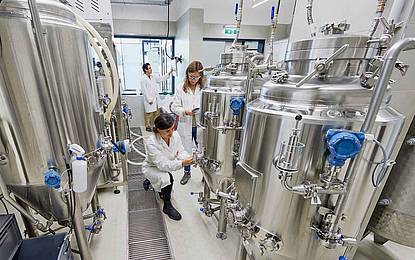

    Drei Personen in Laborkitteln arbeiten inmitten von Edelstahl-Gärtanks

    PLENTY OF SPACE FOR TEACHING AND RESEARCH

    Brewing beer, academically

    Beer has been brewed for thousands of years, and legend has it that fermentation was discovered by chance. In our Scientific Brewhouse, however, nothing is left to chance.

    Read more

    The curriculum is based on the following Sustainable Development Goals (SDGs)

    Good Health and well-being

    Industry, Innovation and Infrastructure

    Responsible consumption and production


    Studying made easy

    Bücher mit Geld
    Funding & Scholarships

    More information here

    >
    Hände zeigen auf Weltkarte
    Time abroad

    Expertise, language skills, broadening horizons

    >
    Fish jumps out of fishbowl into another fishbowl
    Open Lectures

    Find out more, in German

    >
    Books and laptop
    Center for academic writing
    >
    Intensive German course
    >
    EICC
    >
    Doctoral Service
    >
    Validation
    >
    Accessibility
    >
    queer@HCW
    >

    Networking with graduates and organizations

    We work closely with numerous industrial companies, universities such as the University of Natural Resources and Life Sciences, Vienna (BOKU), the Austrian Centre of Industrial Biotechnology (ACIB) and other research institutes. This guarantees you strong contacts for internships, employment or participation in research and development activities. You can find information about our cooperation activities and much more at Campusnetzwerk.It’s well worth visiting the site as it may direct you to a new job or interesting event held by our cooperation partners!


    After graduation

    As a graduate of this program, a wide range of occupational fields and career opportunities are open to you. Find out here where your path can take you.

    Bioprocess technology experts with a strong basis in GMP (Good Manufacturing Practice) and GLP (Good Laboratory Practice) are particularly sought after. Your professional spectrum will extend from the planning, development and implementation of biotechnological production processes all the way to the operation of biotechnological plants. You will find a career in the following occupational fields:

    • Biopharmaceutical industry

    • Industrial biotechnology

    • Food industry

      • Environmental technology

      • Plant engineering

        Downloads

        Folder for Section Bioengineering and Bioinformatics (only in German)
        pdf, 605 KB

        Contact

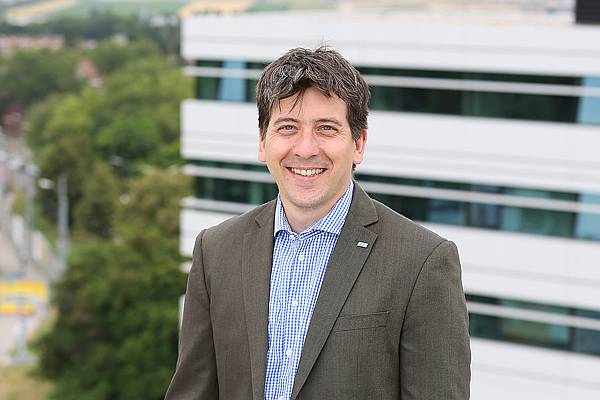
        Head of Degree Program

        Administration

        Favoritenstraße 222
        E.3.22 (study organisation)
        E.3.25 (section organisation)
        1100 Wien
        +43 1 606 68 77-3600
        bioengineering@hcw.ac.at

        HCW at Google Maps (Google Maps)

        Office hours during semester
        Mo to Thur, 4.30 p.m. to 6.15 p.m.

        Availability by phone
        Mo to Thur, 10.00 a.m. to 6.15 p.m
        Fr, 10.00 a.m. to 2.00 p.m

        Consultation via Zoom

        Make an appointment


        You want to know more? We will help you.


        Have you found all the information you are looking for?

        • Yes
        • No