Master
Public Management
part-time


Public Management is a degree program that is tailored to modern administration and the public sector and trains you in a needs-based, interdisciplinary and practical manner. Use the associated opportunity to help shape public structures and services for the common good. The degree program creates a sound basis for efficient business with social responsibility. The public sector is a labor market with a future. It includes around 8,000 public companies as well as federal, state, municipal and European institutions and international organizations.
Bachelor of Arts in Business (BA)
Tuition fee per semester
€ 363,361
+ ÖH contribution + costs for optional additional services, if applicable2
Application Winter semester 2027/28
01. December 2026 - 11. April 2027
25
1 Tuition fees for students from third countries € 727 per semester. Details on tuition fees can be found in the general fee regulations.
2 The costs depend on the additional services selected from the University of Applied Sciences Campus Vienna, such as work clothing, licenses, tutorials, or excursions.
You are interested in federal and legal framework conditions at a national and international level and have a basic understanding of business. Social benefits are important to you in your work and you strive to reconcile economic needs with social values. You value creative space, think analytically, networked and service-oriented. You are open, communicative and place an emphasis on common interests. If you are already working in the public sector, you see the bachelor’s degree program as an opportunity to combine your professional experience with theoretical know-how and new solution tools to further develop yourself professionally.
You will build a sustainable network from day one of your studies.
We invite you to join us in linking topics and thinking in a completely new way.
Decision-makers and experts in their field will teach you at Hochschule Campus Wien.
You need a general university entrance qualification, proven by
or a relevant professional qualification with additional examinations.
Limited higher education entrance qualification
The following compulsory subjects of limited higher education entrance qualifications for university degree programs are relevant admission requirements for this degree program (according to §64a UG 2002):
Limited higher education entrance qualifications for the following university degree programs are recognized as relevant admission requirement:
Relevant professional qualification with additional examinations
Apprenticeship groups
Required additional exams: German, English 1, history 2
Schools for Intermediate Vocational Education
Required additional exams: English 1, history 2
The required language level according to the Common European Framework of Reference for Languages (CEFR) is at least
Graduates of the basic training course of the federal administration (A2/v2 equivalent) or, in terms of scope and content, comparable training in public administration/executive service (e.g. E2a) can enter the 3rd semester under the following conditions:
Graduates of various basic training courses of the City of Vienna can enter the 3rd semester under the following conditions:
After positive crediting of the corresponding (service) basic training by the study programs, you must provide proof of learning outcomes in the form of substitute examinations for lectures in the 1st and 2nd semesters for which no adequate training can be credited. The procedure is as follows:
Applicants may require legalization of documents from countries other than Austria in order for them to have the evidential value of domestic public documents. Information on the required legalizations can be found here in PDF format.
For documents that are neither in German nor English, a translation by a sworn and court-certified interpreter is required. Your original documents should have all the necessary legalization stamps before translation so that the stamps are also translated. The translation must be firmly attached to the original document or a legalized copy.
As part of your online application, upload scans of your original documents including all required legalization stamps. For documents not issued in German or English, scans of the corresponding translations must also be uploaded. The head of the study program decides on the equivalence of international (higher) education qualifications. Therefore, your documents can only be checked as part of the ongoing application process.
Your path to studying at Hochschule Campus Wien (HCW) begins with your registration on our application platform. In your online account, you can start your application directly or activate a reminder if the application phase has not yet started.
Your application is valid once you have completely uploaded all the required documents. Please bring the documents with you to your admission interview. If you are unable to provide proof of your relevant admission requirements at the start of your studies (e.g. due to a repeat examination), you have the option of submitting this proof by the annual BIS registration deadline in the winter semester. Without proof by this deadline, it is not possible to continue studying.
After completing your online application, you will receive an email confirmation with information on the next steps.
The admission procedure consists of a written test and an interview with the admissions committee.
The written admission tests will take place online on
It is not possible to choose a specific date.
Interviews will take place on the following dates:
For applicants from the city of Vienna who meet the requirements for lateral entry, the admission interviews will take place on May 24 and 25, 2027 without exception.
It is not possible to choose a date. Following the written admission procedure, you will receive an invitation to your admission interview by email, provided you have achieved the minimum number of points.
Do you still have questions about the study?
Make an appointment with Nicole Frei for a a personal consultation via Zoom: publicmanagement@hcw.ac.at
Hochschule Campus Wien has built up extensive expertise and a large network in the public sector, for example with ministries, the City of Vienna and public companies such as Wien Holding and Wiener Stadtwerke. The degree program was developed together with the Federal Chancellery and other representatives of the public sector. Through our strong network, we gain excellent lecturers from the public sector as well as universities, whose know-how and experience flow into their teaching. This gives you the chance during your studies to find practical access to problems and to make valuable contacts for your professional future. Current research topics arise from the regular exchange with experts in the public sector. For example, we deal with public good balance sheets and the criteria according to which they are drawn up. Practical relevance is also guaranteed at our Campus Lectures, public lecture evenings with prominent experts, where the trends and future issues in the public sector are explored and discussed.
Public Management is a versatile degree program for modern administration and the public sector. In both areas you pursue the goal of creating social benefits. The common good acts as the engine that drives your professional activity. What makes it special is that, compared to university degree programs such as law or economics, the program is interdisciplinary and practice-oriented. An individual focus on digitalization and quantification of the world, sustainability and social transformation in administration, participation and empowerment or knowledge management makes it possible to design your studies individually and to deepen yourself in future topics of the public sector. In addition to the content, the Hochschule Campus Wien degree program provides numerous other advantages: The organizational framework allows the degree to be completed part-time and within the standard period of study. You learn in small groups and benefit in your education and in your professional career from our strong network with the public sector.
In the bachelor's degree program you acquire extensive knowledge as well as management skills and the competence needed to face the challenges of an innovative public sector. The guideline for action emphasizes public value.
You will acquire knowledge about law, the federal government and administration in an international context, economy and budget, organization and management, the common good and society. As part of the Campus Lectures, you will regularly exchange ideas with specialists and managers from the public sector.
In addition, you can design your studies individually by setting a personal focus and choosing one of these topics: Digitization and Quantification of the World, Sustainability and Social Transformation in Administration, Participation and Empowerment, and Knowledge Management.
Number of teaching weeks
18 per semester
Electives
Selection and participation according to available places. There may be separate selection procedures.
Times
Block schedule Fr and Sa, 8:00 a.m.–5:30 p.m. / Almost every two weeks,
two to four Thursdays per semester, classes are also held from 4:00 p.m.–8:00 p.m.
The elective modules (advanced subjects) take place once a certain number of participants have registered.
*Subject to changes
* Subject to approval by the relevant bodies.
As a graduate of this program, a wide range of occupational fields and career opportunities are open to you. Find out here where your path can take you.
The public sector is a large job market with a future, including around 8,000 public utilities such as water, energy and transport companies. In the administration or in an international context for example, you will be involved in performing public tasks in local authorities or at the EU level, or you will actively participate in European or international project management. Your know-how will support you in involving citizens or other stakeholders when projects are carried out in the public interest. In finance and budgeting, you will take on budgeting tasks or work on technical and financial processes using key figure systems. You will be able to define social parameters, determine performance and measure their effects. Your professional opportunities include personnel management as well as operational quality management. In public companies you will face comparable challenges. If you already work in the public sector, you will create a very good starting point for your further career with the Public Management degree.
We work closely with the BMKÖS and the BMI, renowned companies in the public sector, universities, institutions and schools, but also municipalities. These partnerships provide you with opportunities for professional internships, job opportunities or cooperation in research and development activities. You can find some of our cooperations on the Campus Network website. It is always worth taking a look and you might find a new job or an interesting event with one of our cooperation partners.

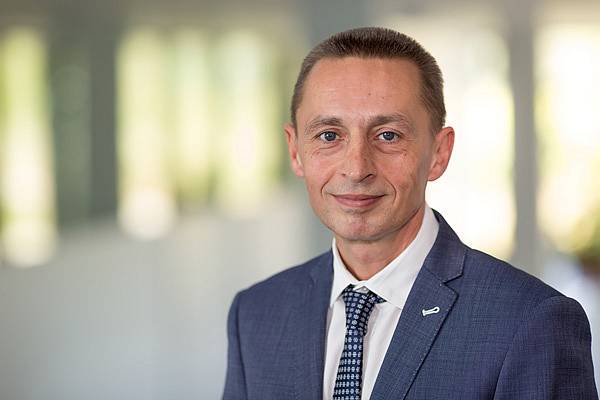
Head of Bachelor's Degree Program Public Management
+43 1 606 68 77-3810
guenter.horniak@hcw.ac.at
Favoritenstraße 226, A.2.20
1100 Vienna
+43 1 606 68 77-3800
publicmanagement@hcw.ac.at
Office hours during the semester
Tue to Thu, 9.00 a.m.-1.00 p.m.
Fri, 7.30 a.m.-2.00 p.m.
Sat, 7.30 a.m.-1.00 p.m.
Office hours during holidays
Tue to Fri, 9.00 a.m.-1.00 p.m.
Senior Lecturer
Senior Lecturer; Works Council
Head of Master's Degree Program Public Management; Head of Research Center Administrative Sciences
Senior Lecturer
Senior Lecturer
Starting in the 1st semester
Introduction to the program (mandatory)
Thursday, September 3, 2026
1.00 p.m. - 2.30 p.m.
1st course weekend
Thursday, September 3, 2026
4.00 pm - 8.00 pm
Friday, September 4, 2026
8.00 am - 12.15 pm & 1.15 pm - 5.30 pm
Saturday, September 5, 2026
8.00 am - 12.15 pm & 1.00 pm - 5.15 pm
2nd course weekend
Friday, September 11, 2026
8.00 am - 12.15 pm & 1.15 pm - 5.30 pm
Saturday, September 12, 2026
8.00 am - 12.15 pm & 1.00 pm - 5.15 pm
3rd course weekend
Friday, September 25, 2026
8.00 am - 12.15 pm & 1.15 pm - 5.30 pm
Saturday, September 26, 2026
8.00 am - 12.15 pm & 1.00 pm - 5.15 pm
4th course weekend
Thursday, October 8, 2026
4.00 pm - 8.00 pm
Friday, October 9, 2026
8.00 am - 12.15 pm & 1.15 pm - 5.30 pm
Saturday, October 10, 2026
8.00 am - 12.15 pm & 1.00 pm - 5.15 pm
5th course weekend
Friday, October 23, 2026
8.00 am - 12.15 pm & 1.15 pm - 5.30 pm
Saturday, October 24, 2026
8.00 am - 12.15 pm & 1.00 pm - 5.15 pm
6th course weekend
Thursday, November 5, 2026
4.00 pm - 8.00 pm
Friday, November 6, 2026
8.00 am - 12.15 pm & 1.15 pm - 5.30 pm
Saturday, November 7, 2026
8.00 am - 12.15 pm & 1.00 pm - 5.15 pm
7th course weekend
Friday, November 20, 2026
8.00 a.m. - 12.15 p.m. & 1.15 p.m. - 5.30 p.m.
Saturday, November 21, 2026
8.00 a.m. - 12.15 p.m. & 1.00 p.m. - 5.15 p.m.
8th course weekend
Friday, December 4, 2026
8.00 a.m. – 12.15 p.m. & 1.15 p.m. – 5.30 p.m.
Saturday, December 5, 2026
8.00 a.m. – 12.15 p.m. & 1.00 p.m. – 5.15 p.m.
9th course weekend
Friday, December 18, 2026
8.00 a.m. - 12.15 p.m. & 1.15 p.m. - 5.30 p.m.
Saturday, December 19, 2026
8.00 a.m. - 12.15 p.m. & 1.00 p.m. - 5.15 p.m.
10th course weekend
Thursday, January 14, 2027
4.00 p.m. - 8.00 p.m.
Friday, January 15, 2027
8.00 a.m. - 12.15 p.m. & 1.15 p.m. - 5.30 p.m.
Saturday, January 16, 2027
8.00 a.m. - 12.15 p.m. & 1.00 p.m. - 5.15 p.m.
11th course weekend
Friday, January 29, 2027
8.00 a.m. - 12.15 p.m. & 1.15 p.m. - 5.30 p.m.
Saturday, January 30, 2027
8.00 a.m. - 12.15 p.m. & 1.00 p.m. - 5.15 p.m.
Second exam dates for lectures:
February 11, 2027 & March 11, 2027
Note:
All specified weekends will be used for scheduling. Once the schedule has been finalized, all free half-days must be kept free as substitutes.
Starting in the 3rd semester
Introduction to the program (mandatory)
Thursday, September 3, 2026
1.00 p.m. - 2.30 p.m.
Come Together for students from B28
2.45 p.m. - 3.45 p.m.
1st course weekend
Thursday, September 3, 2026
4.00 pm - 8.00 pm
Friday, September 4, 2026
8.00 am - 12.15 pm & 1.15 pm - 5.30 pm
Saturday, September 5, 2026
8.00 am - 12.15 pm & 1.00 pm - 5.15 pm
2nd course weekend
Friday, September 18, 2026
8.00 am - 12.15 pm & 1.15 pm - 5.30 pm
Saturday, September 19, 2026
8.00 am - 12.15 pm & 1.00 pm - 5.15 pm
3rd course weekend
Thursday, October 1, 2026
4.00 pm - 8.00 pm & 8.00 am - 12.15 pm
Friday, October 2, 2026
8.00 am - 12.15 pm & 1.15 pm - 5.30 pm
Saturday, October 3, 2026
8.00 am - 12.15 pm & 1.00 pm - 5.15 pm
4th course weekend
Friday, October 16, 2026
8.00 am - 12.15 pm & 1.15 pm - 5.30 pm
Saturday, October 17, 2026
8.00 am - 12.15 pm & 1.00 pm - 5.15 pm
5th course weekend
Friday, October 23, 2026
8.00 am – 12.15 pm & 1.15 pm – 5.30 pm
Saturday, October 24, 2026
8.00 am – 12.15 pm & 1.00 pm – 5.15 pm
6th course weekend
Thursday, October 29, 2026
4.00 pm - 8.00 pm
Friday, October 30, 2026
8.00 am - 12.15 pm & 1.15 pm - 5.30 pm
7th course weekend
Friday, November 13, 2026
8.00 am - 12.15 pm & 1.15 pm - 5.30 pm
Saturday, November 14, 2026
8.00 am - 12.15 pm & 1.00 pm - 5.15 pm
8th course weekend
Friday, November 27, 2026
8.00 am - 12.15 pm & 1.15 pm - 5.30 pm
Saturday, November 28, 2026
8.00 am - 12.15 pm & 1.00 pm - 5.15 pm
9th course weekend
Thursday, December 10, 2026
4.00 pm - 8.00 pm
Friday, December 11, 2026
8.00 am - 12.15 pm & 1.15 pm - 5.30 pm
Saturday, December 12, 2026
8.00 am - 12.15 pm & 1.00 pm - 5.15 pm
10th course weekend
Friday, January 8, 2027
8.00 am - 12.15 pm & 1.15 pm - 5.30 pm
Saturday, January 9, 2027
8.00 am - 12.15 pm & 1.00 pm - 5.15 pm
11th course weekend
Thursday, January 21, 2027
4.00 pm - 8.00 pm
Friday, January 22, 2027
8.00 am - 12.15 pm & 1.15 pm - 5.30 pm
Saturday, January 23, 2027
8.00 am - 12.15 pm & 1.00 pm - 5.15 pm
12th course weekend
Friday, January 29, 2027
8.00 am - 12.15 pm & 1.15 pm - 5.30 pm
Saturday, January 30, 2027
8.00 am - 12.15 pm & 1.00 pm - 5.15 pm
Second exam dates for lectures:
February 11, 2027 & March 11, 2027
Note:
All specified weekends will be used for scheduling. Once the schedule has been finalized, all free half-days must be kept free as substitutes.