

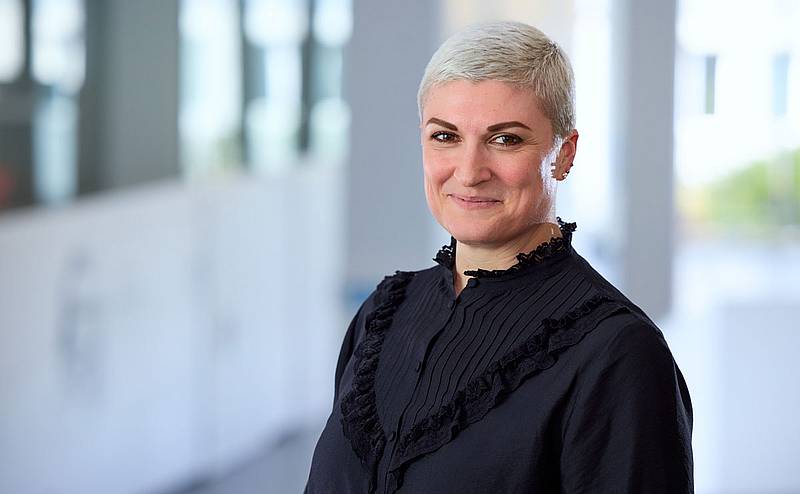
Elis Godaj, MSc
Team Leader Infectiology
+43 1 606 68 77-4114
elis.godaj@hcw.ac.at

Functional diagnostics is constantly evolving and opening up new specialization opportunities for biomedical scientists. With the micro-credentials offered by Hochschule Campus Wien, you can deepen your expertise in selected areas of functional diagnostics and acquire practical skills for challenging diagnostic tasks.
Whether in sleep medicine, pulmonary diagnostics, pharmacology, and emergency management, professional diagnostic report writing, or clinical communication: Choose the right micro-credential and enhance your professional profile with in-demand skills for modern functional diagnostics
Biomedical scientists make decisions every day that directly impact diagnostics, therapy, and patient safety. At the same time, the demands for documentation, quality assurance, and compliance with legal requirements are increasing.
This micro-credential examines the entire reporting process in functional diagnostics—from the interpretation of complex findings to legal and ethical frameworks, and on to quality and risk management. The goal is to make diagnostic decisions that are well-founded, transparent, and legally compliant, thereby sustainably enhancing the quality of diagnostic processes.
In functional diagnostics, pharmacological knowledge and the professional handling of emergency situations play a central role. Medications can influence diagnostic results, while patient-centered examinations require swift and confident action in acute situations. Those working in this field therefore need both a solid foundation in pharmacology and the confidence to act decisively in emergencies.
This micro-credential combines both: It focuses on medications that influence pre-analytical and analytical processes, the safe use of medical substances, and a structured approach to medical and organizational emergencies. This enables risks to be identified early, sources of error to be reduced, and patient safety to be strengthened in the long term.
Do you have any questions or would you like to enroll?
We would be happy to send you all further details.
Sleep-related breathing disorders and other sleep-related conditions are becoming increasingly prevalent. At the same time, the demands on the diagnosis, evaluation, and interpretation of sleep studies are rising.
This micro-credential provides biomedical scientists with practical know-how for working in a sleep lab—from preparing and conducting polysomnographic tests to scoring and interpreting the results. Participants learn to produce sleep‑medicine reports according to the latest standards and to support diagnostic processes in a quality-assured manner.
This micro-credential is designed for students and professionals in biomedical science with a focus on neurodiagnostics, functional diagnostics, pulmonary diagnostics, or cardiac diagnostics. It is also intended for POCT managers, quality management and laboratory management professionals, as well as application and clinical specialists in the field of sleep and respiratory diagnostics. Registered nurses who wish to expand their expertise in sleep medicine diagnostics will also benefit from the course content.
Do you have any questions or would you like to enroll?
We would be happy to send you all further details.
September 19, 2026, 9:00 a.m. – 12:15 p.m.
December 18, 2026, 9:00 a.m. – 12:15 p.m.
December 19, 2026, 9:00 a.m. – 3:30 p.m.
October 1, 2026, 3:00 p.m. – 9:30 p.m.
October 2, 2026, 9:00 a.m. – 4:30 p.m.
November 13, 2026, 9:00 a.m. – 11:00 a.m. (Exam)
Summer semester 2027 (dates to be announced)
Respiratory diseases are among the most common chronic conditions and require precise diagnosis. The demands on pulmonary diagnostics are constantly increasing. Modern diagnostic procedures enable an increasingly precise assessment of lung function, exercise tolerance, and respiratory diseases.
This micro-credential provides biomedical scientists with in-depth knowledge of advanced pulmonary function diagnostics and cardiopulmonary exercise testing. Participants learn to confidently apply modern testing methods, interpret measurement results professionally, and design quality-assured diagnostic processes. In addition, the micro-credential provides practical skills in the areas of patient safety, ergonomics, and efficient workflows.
This micro-credential is designed for biomedical scientists and other professionals in functional diagnostics who wish to expand their expertise in pulmonary diagnostics. It is particularly aimed at individuals working in pulmonary outpatient clinics, hospitals, sleep labs, rehabilitation centers, or other areas of performance and functional diagnostics who wish to deepen their knowledge of modern diagnostic procedures.
Do you have any questions or would you like to enroll?
We would be happy to send you all further details.
Communication has a significant impact on the quality of diagnostic processes. Whether during the medical history interview, the communication of findings, or collaboration within an interprofessional team—clear, structured, and patient-centered conversations help prevent misunderstandings, improve workflows, and enhance patient safety.
This micro-credential equips biomedical scientists with practical communication skills for their day-to-day diagnostic work. Participants learn to conduct medical history interviews in a targeted way, convey information effectively, and communicate professionally even in challenging situations. The focus is on reducing sources of error in pre-analytical care, ensuring reliable communication of test results, and fostering successful collaboration with patients, colleagues, and other healthcare professionals.
This micro-credential is intended for biomedical scientists and other medical professionals working in functional diagnostics. It is suitable for students and professionals in all specializations of biomedical science, as well as for individuals in quality management and leadership roles, POCT coordinators, study nurses, and study coordinators—and for specialists working at the intersection of diagnostics, patient care, and health IT.
Do you have any questions or would you like to enroll?
We would be happy to send you all further details.
Team Leader Infectiology
+43 1 606 68 77-4114
elis.godaj@hcw.ac.at
Susanne Flögel
+43-1-6066877-1782
Favoritenstraße 226, D.1.33 (building plan)
1100 Vienna
func-dia@hcw.ac.at
Office hours
Thursday 2.00 pm to 5.00 pm
Friday 09.00 am to 3.00 pm
or by appointment