
Dr. nat. techn. Sandra Pfeiffer, BSc MSc
Senior Lecturer

Project Duration: 01.10.2026 to 30.09.2029
The research project is investigating how microorganisms on pollen influence allergic reactions in the respiratory tract, with a view to developing new approaches to preventing allergies and sustainably improving the quality of life of those affected.
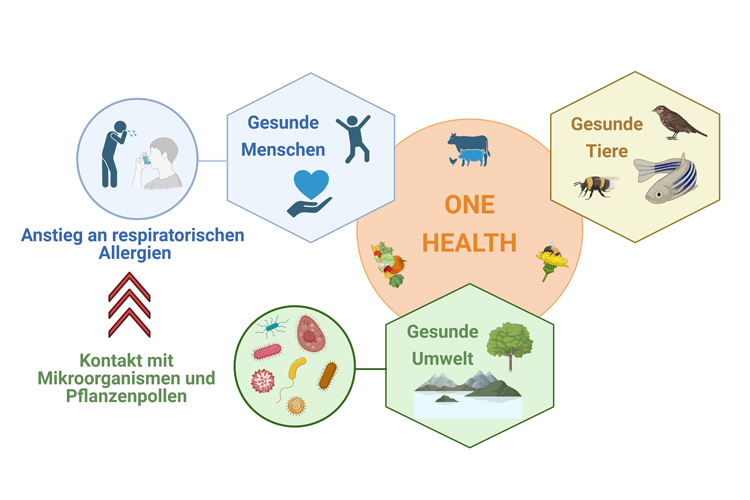
In line with the One Health concept – an interdisciplinary approach that views the health of humans, animals, plants and the environment as closely interconnected – the project ‘Pollen Allergens and the Pollen Microbiome – Environmental Factors as Drivers of Respiratory Allergies (RESPIRA)’ is investigating the influence of the pollen microbiome (the microorganisms found on and within pollen) on allergic reactions in the respiratory tract.
The findings from this project will help to develop new approaches to allergy prevention and, in the long term, improve the quality of life for those affected.
What is it about?
Pollen is home to a diverse community of microorganisms – an ‘invisible ecosystem’ that has so far been little studied. We are investigating the microbiome of birch, ragweed and timothy grass pollen and exploring how microbes can alter the structure and immunogenicity of allergens, thereby influencing the human immune response. In this way, we are gaining new insights into the complex interactions at the interface between the environment, pollen and the human immune system.
Senior Lecturer
Assistant Researcher