
FH-Prof. Dr. Thomas Czerny
Senior Lecturer

Project Duration: 01.08.2021 to 31.07.2024
Bioassays, standardised tests for detecting substances in samples, are intended to enable improved toxicological risk assessment of contact materials in pharmaceutical products in extractables/leachables studies.
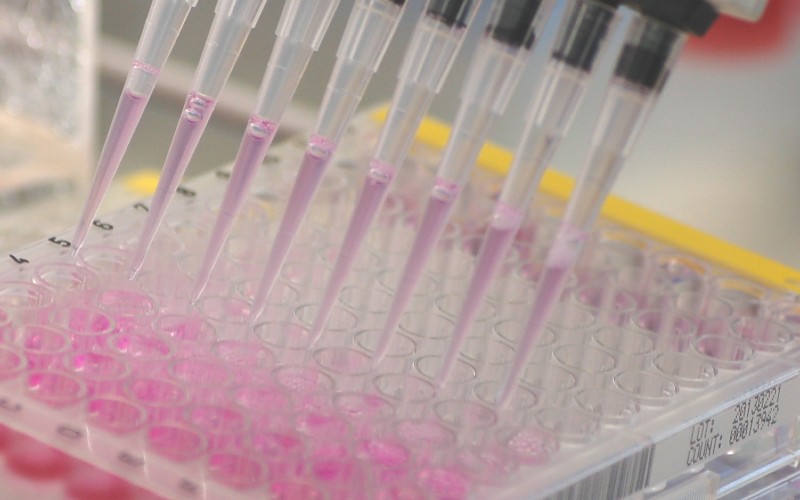
These investigations are carried out as extractables/leachables studies using chemical analyses. The use of bioassays can further improve this toxicological risk assessment. They can reduce the reaction of a complex organism to individual cells (bacteria or human cell lines) and thus characterise substance mixtures without the need to identify the individual substances. With analytically sensitive bioassays, individual substance classes can be excluded, thus not only improving product safety, but also reducing the effort involved in toxicological assessment.
This project "PharmaTox - Application of bioassays in extractables/leachables studies" deals with the endpoint of genotoxicity (DNA damage, mutations, chromosome damage), where particularly low limit values apply due to its serious consequences (tumour development). Existing bioassays are optimised for the assessment of pure substances and therefore show insufficient analytical sensitivity for complex mixtures from extractables/leachables studies. Therefore, assays are to be improved by genetic modifications (cell tinkering) using CRISPR/Cas9 and misexpression so that they detect the lowest possible concentrations. In addition, existing 2D cell culture systems are to be transferred to 3D. Based on the results, a new testing strategy consisting of chemical analysis combined with bioassays will be developed to provide the industry with tools for improved risk analysis in the area of genotoxicity and thus protect consumers from possible negative consequences.
Senior Lecturer