Dipl.-Ing. Lukas Prielinger, BSc
Senior Researcher

Project Duration: 01.07.2021 to 30.06.2024
The EU Green Deal stipulates that by 2030, plastic packaging must be 100% recycled and/or recyclable. This poses a major challenge for the industry, as this goal is currently unachievable. Packaging that has previously been used by consumers is particularly important in this context, as unexpected post-consumer (PCR) substances can enter the cycle.
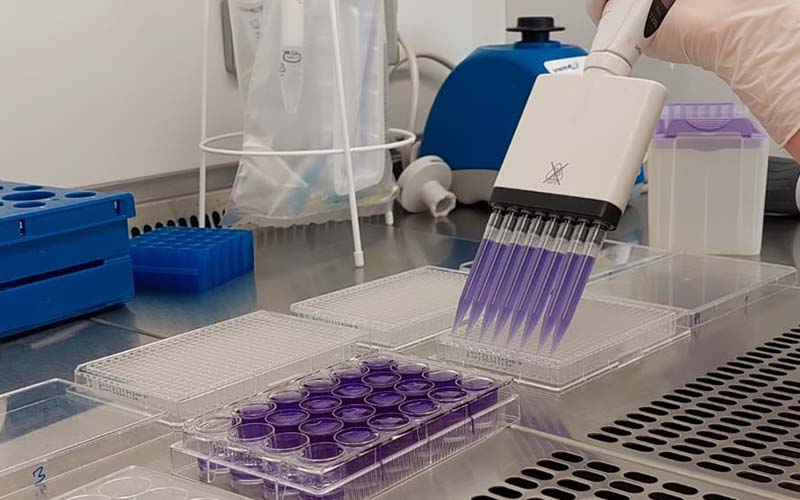
Packaging that was previously used by consumers is particularly important here, as unexpected post-consumer (PCR) substances can enter the cycle. If these substances are unknown, a worst-case assumption must be made and the substances must be categorised as potentially mutagenic. PCR materials pose a particular challenge for food packaging, as the packaged food is consumed and potentially mutagenic substances ultimately enter the body via the stomach. The situation is different for cosmetic products, detergents and cleaning agents. The products often only come into contact with the body/skin in highly diluted form and usually in considerably smaller quantities. In principle, a distinction is made between cosmetics that remain on the skin (leave-on) and those that are washed off (rinse-off). Rinse-off products such as shower gel, hair shampoo or detergents are of particular interest here, as potentially problematic substances can be washed out quickly, which is not the case with leave-on cosmetics.
To date, there is no standardised safety assessment for the use of recyclates in cosmetics packaging, which is why the CosPaTox consortium has set itself the goal of developing a voluntary safety standard for high-quality post-consumer plastic recyclates for cosmetics packaging (rinse-off and leave-on) and household packaging (detergents and cleaning agents) as part of the project.
Senior Researcher
Head of Department; Head of Degree Programs Sustainable Packaging Technology, Sustainable Packaging Design and Technology