DIin Dr.in techn. Ana-Maria Simionovici
Former employee

Project Duration: 01.02.2017 to 31.07.2017
Since 2013, the Department of Building and Design at Hochschule Campus Wien has been offering a bachelor's degree programme in Green Building, an architecture course with a focus on sustainability. Building on this, the master's degree programme in Architecture - Green Building was launched in autumn 2016. Both courses train architects to meet the requirements of the EU's EPBD 2010 building directive. According to this directive, member states are obliged to construct only low-energy buildings from 2020 onwards. In conjunction with the goals of the 2015 Paris Climate Agreement and those of the IBA - International Building Exhibition Vienna - project of the City of Vienna, the topics of sustainable architecture and sustainable cities are highly topical.
Against this backdrop, WANA is addressing the current projects, issues and criteria of sustainable architecture in Vienna and the surrounding area. The aim is to catalogue and analyse this information and make it available to the public.
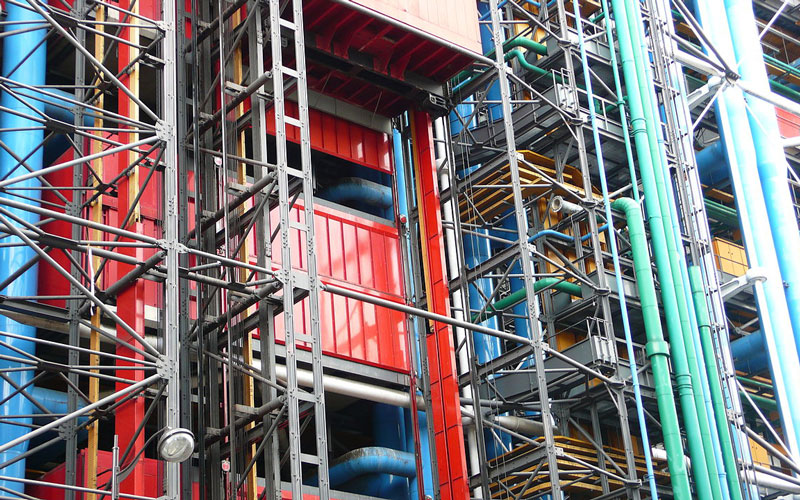
The research project is dedicated to cataloguing Vienna's sustainable architecture and building equipment since 2005 and includes the analysis of the architecture on the one hand and the building equipment on the other. This approach enables a conceptual categorisation of the sustainable architecture projects examined. The catalogue compiled in this way is intended to show which projects are primarily attributable to architectural strategies (construction method, mechanical heating, cooling and ventilation concepts, local building typologies, engagement with the location), which are primarily attributable to building equipment and which are attributable to a combination of architectural strategies and building equipment.
The results will be analysed in a final report. WANA thus creates the basis for future discussions on the respective roles of architecture and building equipment in sustainable building projects in Vienna.
Former employee