
FH-Prof. Dr. Thomas Czerny
Senior Lecturer

Project Duration: 01.05.2010 to 30.04.2014
Understanding the human genome is of central importance for medical research and, above all, for the development of new therapies. As part of an endowed professorship in the Department of Molecular Biotechnology, the fish model system is used to study the function of genes.
In recent years, functional genome research has moved to the centre of biotechnological research. The new methods of genome research have multiplied our knowledge about the function of genes. In particular, the parallel approach, which involves working on many genes simultaneously with the help of new technologies, has enabled a rapid increase in available data. The efficient utilisation of this data and the combination of bioinformatics and high-throughput methods have significantly influenced the strategies of the pharmaceutical industry in the search for new drugs. In particular, high-throughput methods with cell-based test systems now occupy a central position and integrate the method repertoire of functional genome research.
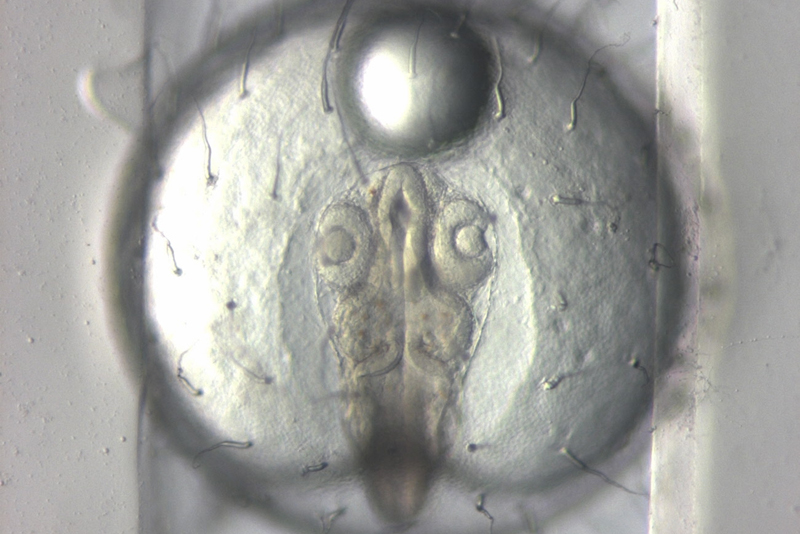
An unexpected result of genome research in recent years is the good correspondence between human genes and those of animals, especially vertebrates. It is therefore also possible to carry out initial analyses in animals in order to determine the function of a human gene. The fish model system is particularly well suited for this, as fish embryos can be genetically manipulated very well.
As we integrate new methods of genome research into the training programme, we prepare our graduates for tasks in the biotechnological-pharmaceutical industry. With the help of this City of Vienna Endowed Professorship, we have succeeded in establishing an R&D focus that is incorporated into teaching both in theory and in practice.
Senior Lecturer