Effects of real-time feedback during downhill walking on kinematic and kinetic gait parameters

This page contains automated translations.

Research duration: August 2020 to June 2021

Biomechanical joint loads and inadequate control of the functional leg axis are considered risk factors for the development of osteoarthritis.


These cause pain and functional impairment and thus a reduction in quality of life. Walking on level ground has been extensively researched in this regard. However, there are research gaps with regard to the everyday movements of walking uphill and downhill. The effectiveness of real-time feedback has been demonstrated for the prevention and treatment of some musculoskeletal symptoms. In addition to the effectiveness of real-time feedback when walking downhill, the comparability of walking on inclined treadmills (inclined plane) and fixed ramps has not been fully clarified.
Therefore, the following questions are investigated in "Up & Down" in healthy individuals:

  1. Can real-time feedback during downhill walking favourably influence knee joint control and knee joint loads?
  2. How well do the parameters of the gait pattern and the acting forces match when walking on an inclined treadmill compared to walking on a fixed ramp?

Methodology
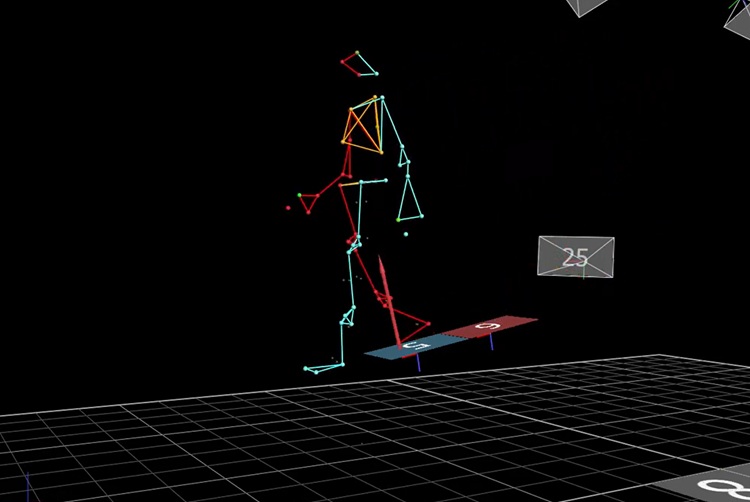
The individual gait pattern is analysed on level ground and on a ramp or treadmill uphill and downhill in the movement laboratory. When walking downhill, real-time feedback is provided via the projection screen of the GRAIL (Gait Real Time Interactive Lab) virtual reality system. The movements and forces are recorded using an optoelectronic 3D movement analysis system and force plates.

Research Goals

The findings should help to understand the effectiveness of real-time feedback to improve control of the leg axis and therapy in knee osteoarthritis. Furthermore, with available infrastructure, the evidence-based use of inclined planes for patient-centred therapy settings can be assessed.

Competence centre

INDICATION

Project Team


Study Courses Involved