FH-Prof. DI (FH) Godoberto Guevara Rojas, PhD
Radiographer; Senior Lecturer
godoberto.guevara_rojas@hcw.ac.at
+43 1 606 68 77-4810

Rapid prototyping can be used to produce plastic models of patients on the basis of computer tomography data sets (Fig. 1). Such models enable more precise surgical planning in oral and maxillofacial surgery and facilitate individualised surgical preparation. The surgeons simulate the upcoming operation on the plastic model, for example by sawing the model and positioning the resulting bone segments in the correct position (Fig. 2).
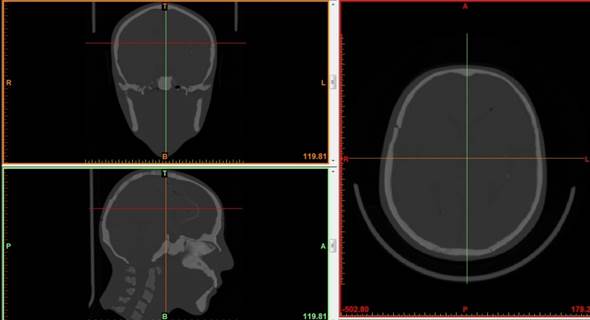
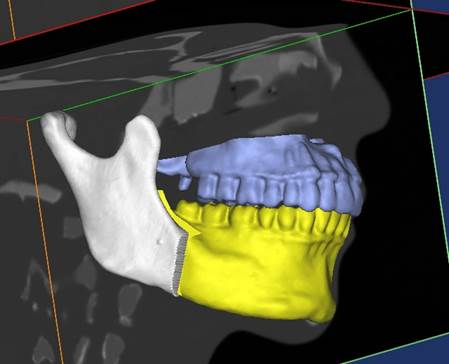
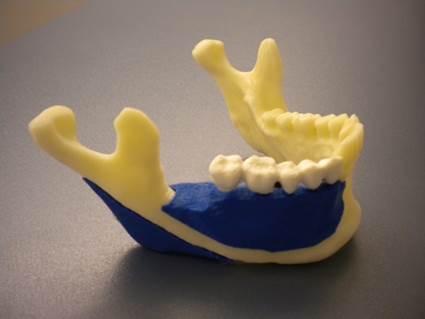
Sections of the face or jaw that are affected by a deformity or an accident are examined using computer tomography. From this, we create a three-dimensional data set that is used to print out a plastic model of the affected body part. Other areas of application for this new technology include the prefabrication of customised and precisely fitting implants and metal plates that are used to fix bone segments(Fig. 3).
This technology shortens the operation time and helps to reduce the stress for patients. Furthermore, implants and fixation components can be manufactured much more precisely.
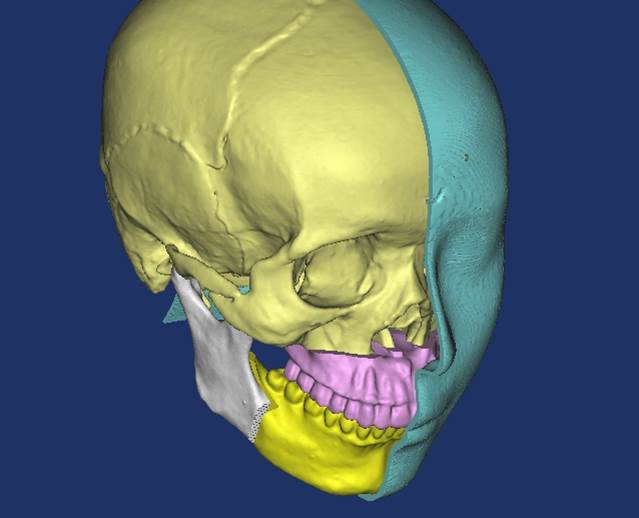
The cooperation project combines the clinical knowledge of the Radiological Technology study program with the technical know-how of the High Tech Manufacturing study program and thus delivers improved, application-oriented results. The project goal is to simulate surgical operations in a virtual environment (Fig. 4) and transfer the results directly into rapid prototyping biomodels.
Manufacturing and Automation
Since 1 August 2020, five interdisciplinary research areas have replaced existing research fields.
Radiographer; Senior Lecturer
godoberto.guevara_rojas@hcw.ac.at
+43 1 606 68 77-4810
Senior Lecturer