



Ing. DI (FH) Dr. Harald Kühnel, MSc
Senior Lecturer

Project Duration: 01.07.2021 to 30.06.2025
As pests on plants, phytopathogenic fungi pose an enormous challenge to agriculture. So-called mycoparasites are used as biological plant protection agents in agricultural biotechnology as a promising alternative to conventional pesticides. Pathogens are attacked and killed by special infection structures, the production of metabolites and the secretion of enzymes by mycoparasites. Some filamentous soil fungi of the genus Trichoderma are known for their parasitic behaviour towards phytopathogenic fungi.
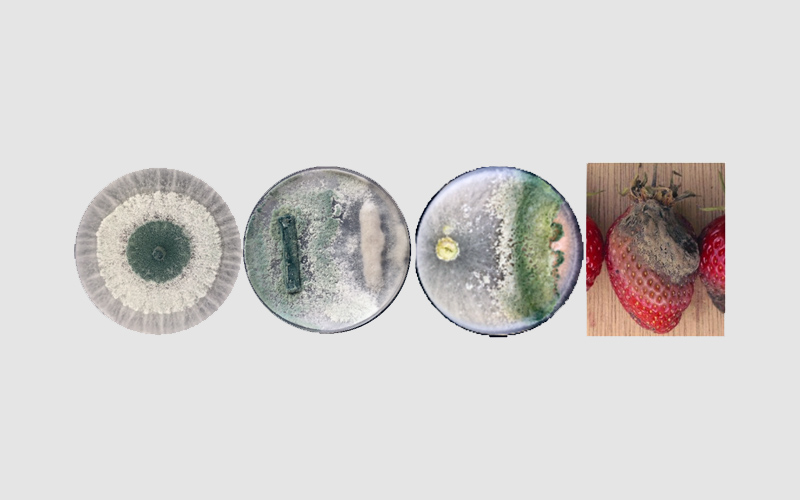
The most important components of the cell wall of fungi are chitin, chitosan and glucan. In particular, chitosan, the deacetylated form of chitin, plays a crucial role in the resistance of filamentous fungi during interaction with hosts. Strategies by which the cell wall evades the host immune system are common to all plant and human pathogens, but have not yet been investigated in mycoparasites.
The present project "Dynamic cell wall architecture in TRICHODERMA mycoparasitism" deals with the characterisation of the modular structure of the components chitin, chitosan and glucan in the cell wall of Trichoderma atroviride and the interaction of selected enzymes. The synergistic behaviour of chitin-, chitosan- and glucan-modifying enzymes during mycoparasitic interaction and during hyphal development is analysed using fluorescence microscopy methods. The development of a specific probe enables detection processes of chitosan during fungal interactions in vivo, and could also be further developed for rapid tests to detect other pests.
The aim is to obtain a holistic picture of the dynamic cell wall of fungi during their attack on a host. In addition, Trichoderma atroviride as a mycoparasite contributes to expanding knowledge about organic farming with regard to biocontrol. The climate crisis requires a rethink in agriculture and in particular with regard to the amended EU directives with the aim of reducing the use of pesticides. Ultimately, the knowledge gained could also be transferred to pathogenic fungi for humans, animals and plants and thus drive the development of new and alternative drugs used for fungal infections, so-called antimycotics.
Senior Lecturer
Researcher
former employee