FH-Prof. Mag. Dr. Simone Grandy
Head of Programs Child and Adolescent Nursing, Psychiatric Health Care and Nursing, Simulation in Health Care a.o. Master

Project Duration: 01.12.2020 to 31.01.2024
TEAM SIM aims to train interprofessional collaboration between nursing students and medical students during their education, in preparation for emergency scenarios.
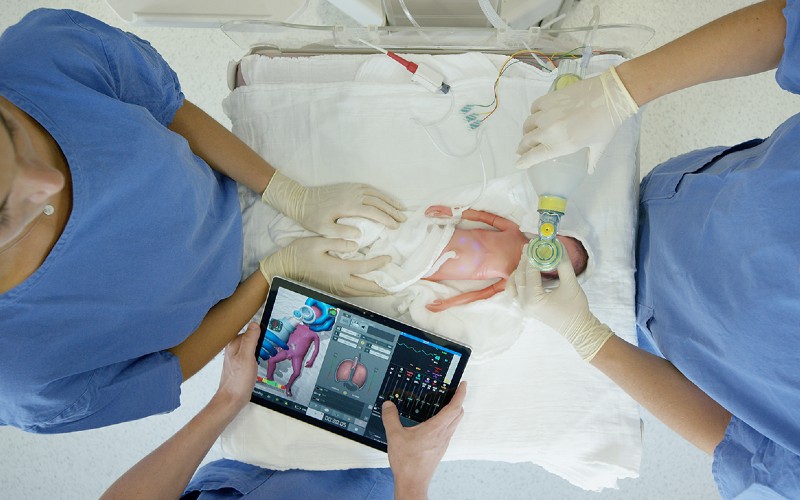
In daily practice, Health Care and Nursing staff and doctors work very closely together in the hospital setting, but the training of both is currently carried out in separate systems. The curricula between the healthcare disciplines differ greatly, and technical and practical skills are usually learnt during training without interaction with colleagues from other fields of study and branches of training. However, in an effective healthcare system, healthcare professionals need teamwork and collaboration as key competences.
The IPE project "Interprofessional Team Simulation Training in Education" has been running in Vienna since 2016 (see Atlas of Good Teaching 2019), a cooperation project between the Medical University of Vienna and the School of General Health Care and Nursing of the City of Vienna at the Floridotower campus - a cooperative study location of the Hochschule Campus Wien. Since the summer semester of 2022, interprofessional simulation training courses have been held at the Department of Paediatrics and Adolescent Medicine at the Medical University of Vienna with students from the Medical University of Vienna and Bachelor's students of Health Care and Nursing at the Hochschule Campus Wien. These paediatric simulation training courses focus on paediatric emergencies, using a high-fidelity simulator, with interdisciplinary support from lecturers and tutors.
Head of Programs Child and Adolescent Nursing, Psychiatric Health Care and Nursing, Simulation in Health Care a.o. Master